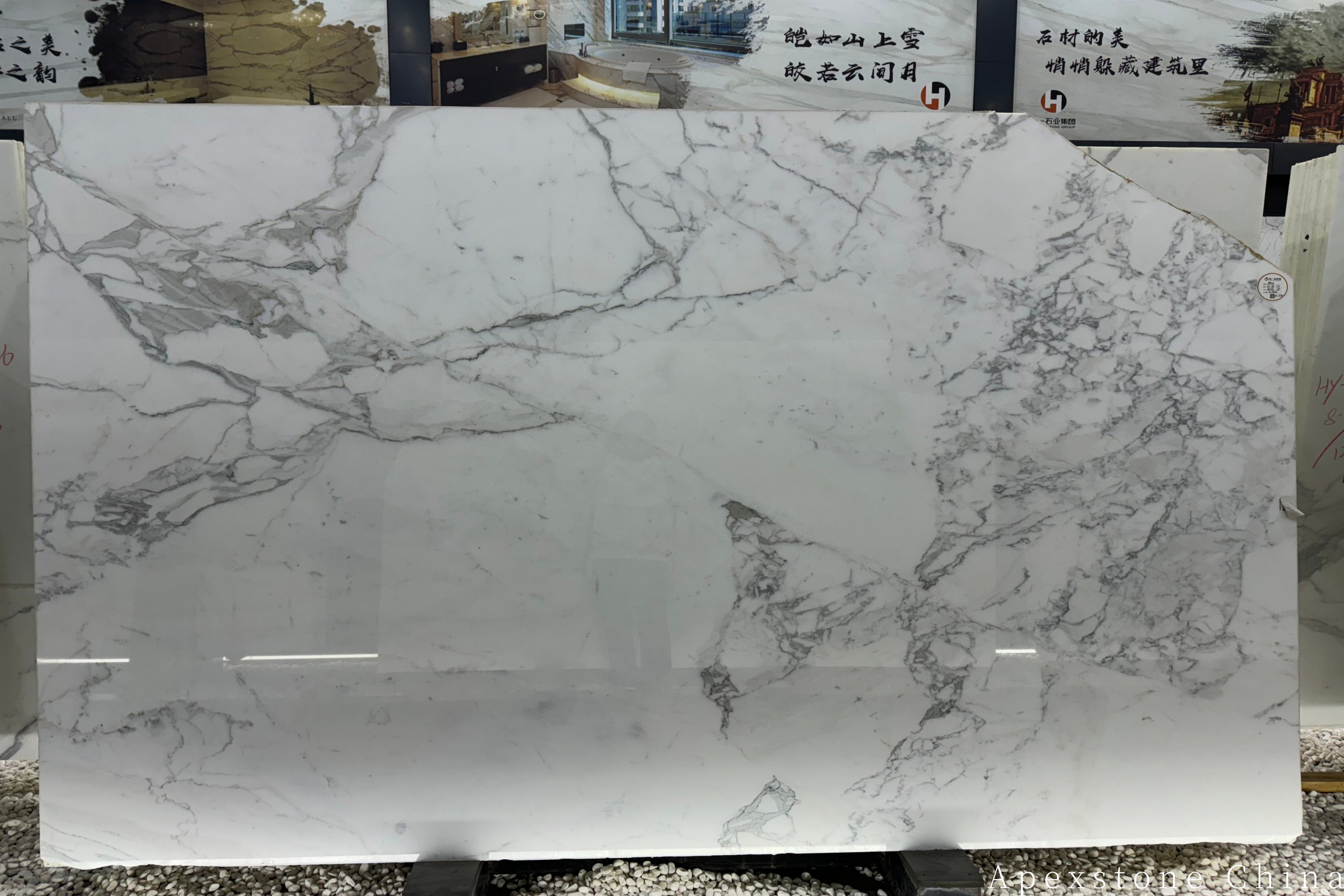
A decision framework comparing natural Calacatta marble, engineered quartz and sintered stone by appearance, etching, staining, heat, fabrication, repairability and owner expectations—without pretending one material wins every project.
Apexstone material brief
Natural Calacatta Marble vs Quartz vs Sintered Stone: How to Choose
The right surface is the one whose behaviour matches the project brief. Natural Calacatta offers geological variation; quartz prioritises repeatability; sintered stone prioritises a dense, manufactured surface. None of the three removes the need for correct fabrication and installation, and none wins every project. This guide walks through the questions a homeowner, designer or builder should answer before committing to a material family.
First question: do you want a one-off surface?
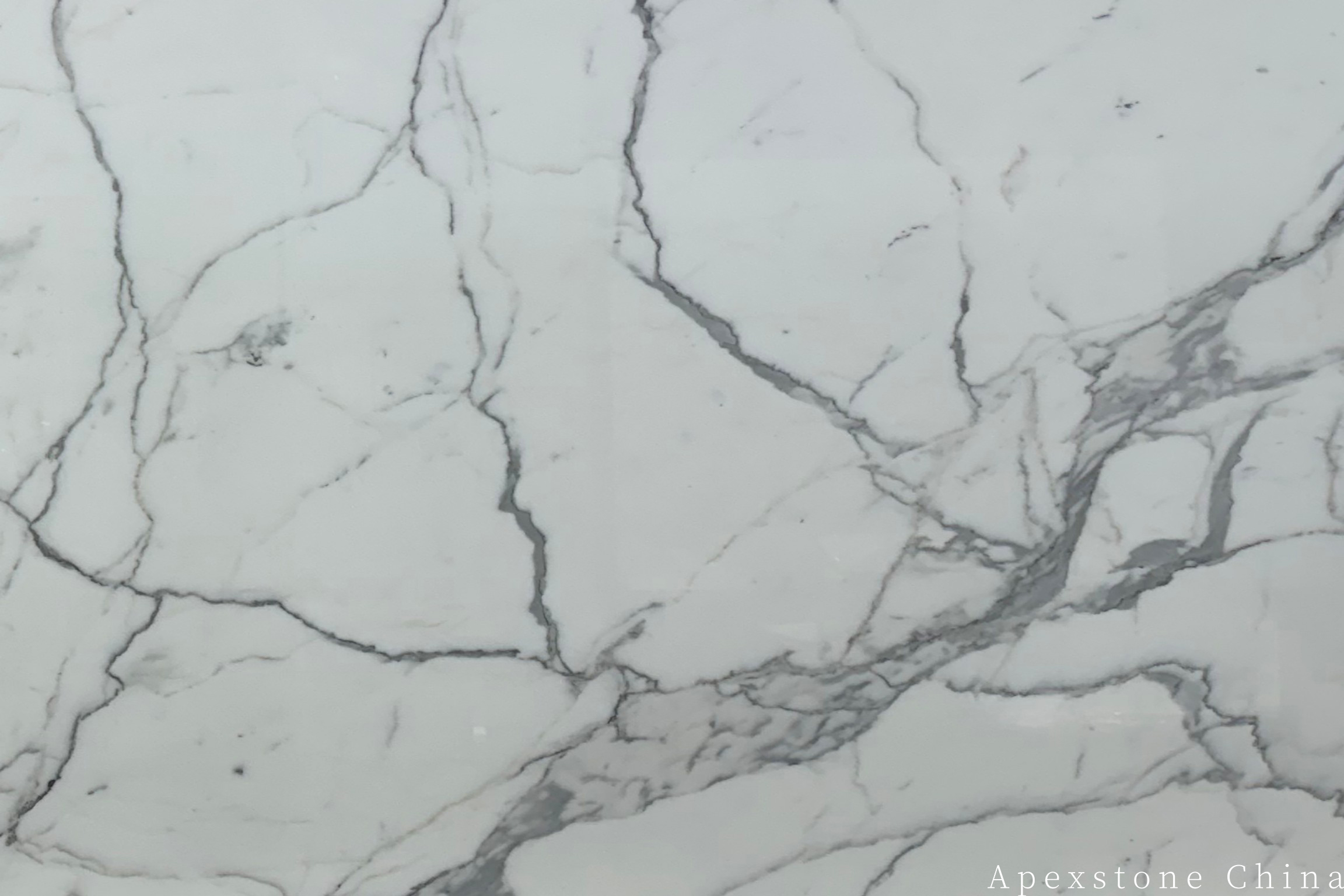
Natural Calacatta White is an Italian marble with a snow-white ground and light-grey random veining. Every slab is different, so the buyer approves the actual piece and its vein layout before cutting begins. Quartz and sintered stone use controlled manufacturing and repeatable designs, although batches can still vary between production runs. If the project demands an exact repeated visual across many units—say a hotel programme with forty identical bathroom vanity tops—manufactured material has an operational advantage. If the project values a unique slab and accepts natural variation, marble offers something a printed or engineered pattern cannot duplicate: a 96 x 48 in island cut from a single book-matched block has no twin anywhere.
Acids, stains and daily use
Natural marble is calcite-based and can etch when acids contact it. A cut lemon left overnight on a polished kitchen worktop will leave a dull spot; sealer can slow absorption but cannot stop the acid reaction itself. The practical answer is behaviour, not avoidance: wipe spills promptly, use boards for prep, and accept that a honed finish hides etching far better than a high-gloss polish. Engineered quartz generally resists common household staining, but its resin content means heat and product-specific chemical guidance matter. Sintered stone is dense and typically selected for strong stain and heat performance, yet edge damage and fabrication quality remain important. Always use the manufacturer or supplier's current technical sheet for a final specification—brand chemistry differs more than most buyers expect.
Heat is not one simple ranking
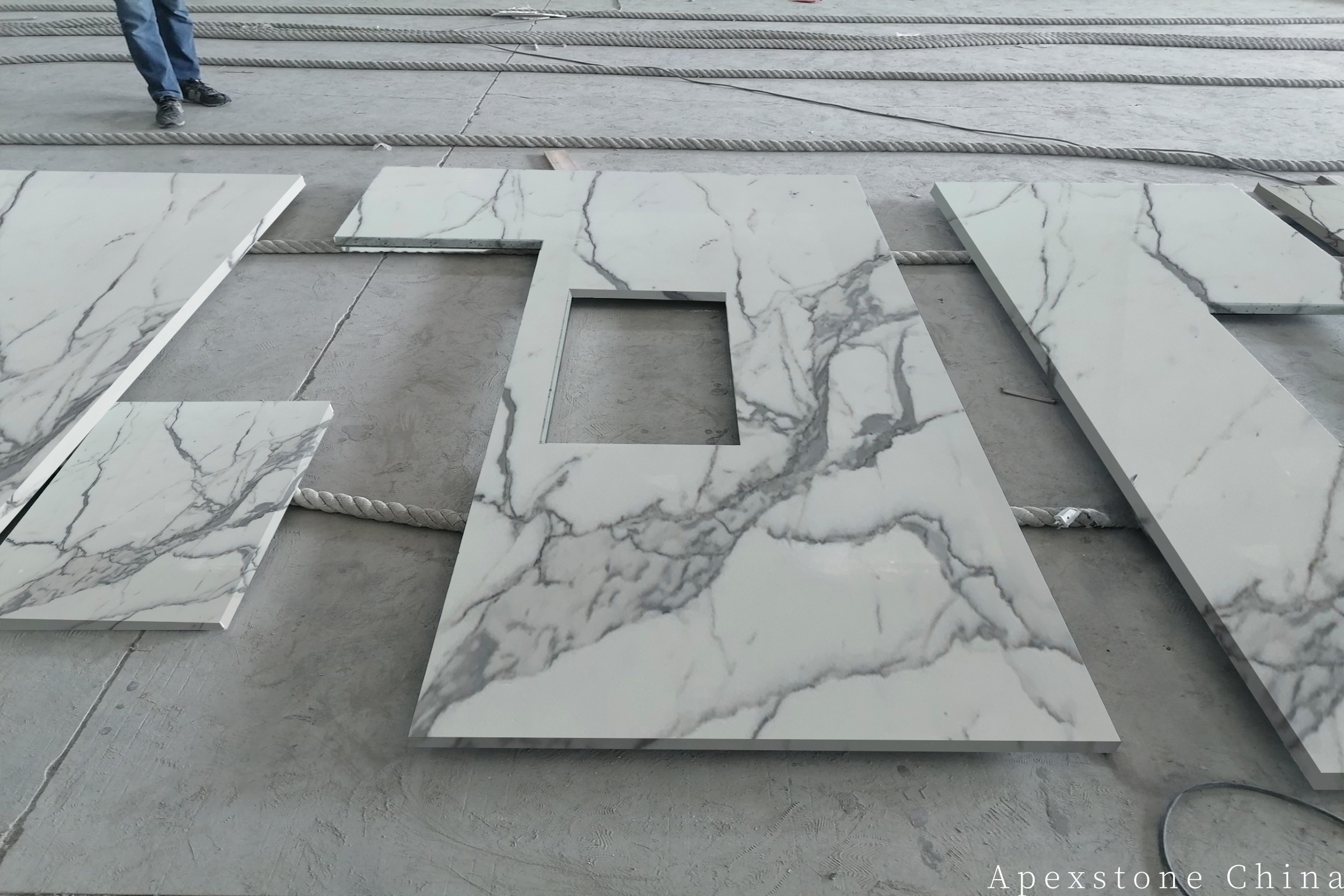
A hot pan also tests the support, adhesive, cut-out geometry and any resin or reinforcement in the fabricated piece. Sintered material is often chosen for heat tolerance; quartz requires attention to resin and thermal-shock guidance; marble itself is mineral, but the finished benchtop is a system of stone, substrate, adhesive and edge profile. A 1-1/4 in (30 mm) mitred edge on a waterfall island behaves differently from a 3/4 in (20 mm) straight top on a 36 in vanity. Trivets remain a sensible owner rule for all three materials, and any fabricator who promises otherwise is selling confidence rather than physics.
Fabrication and edge risk
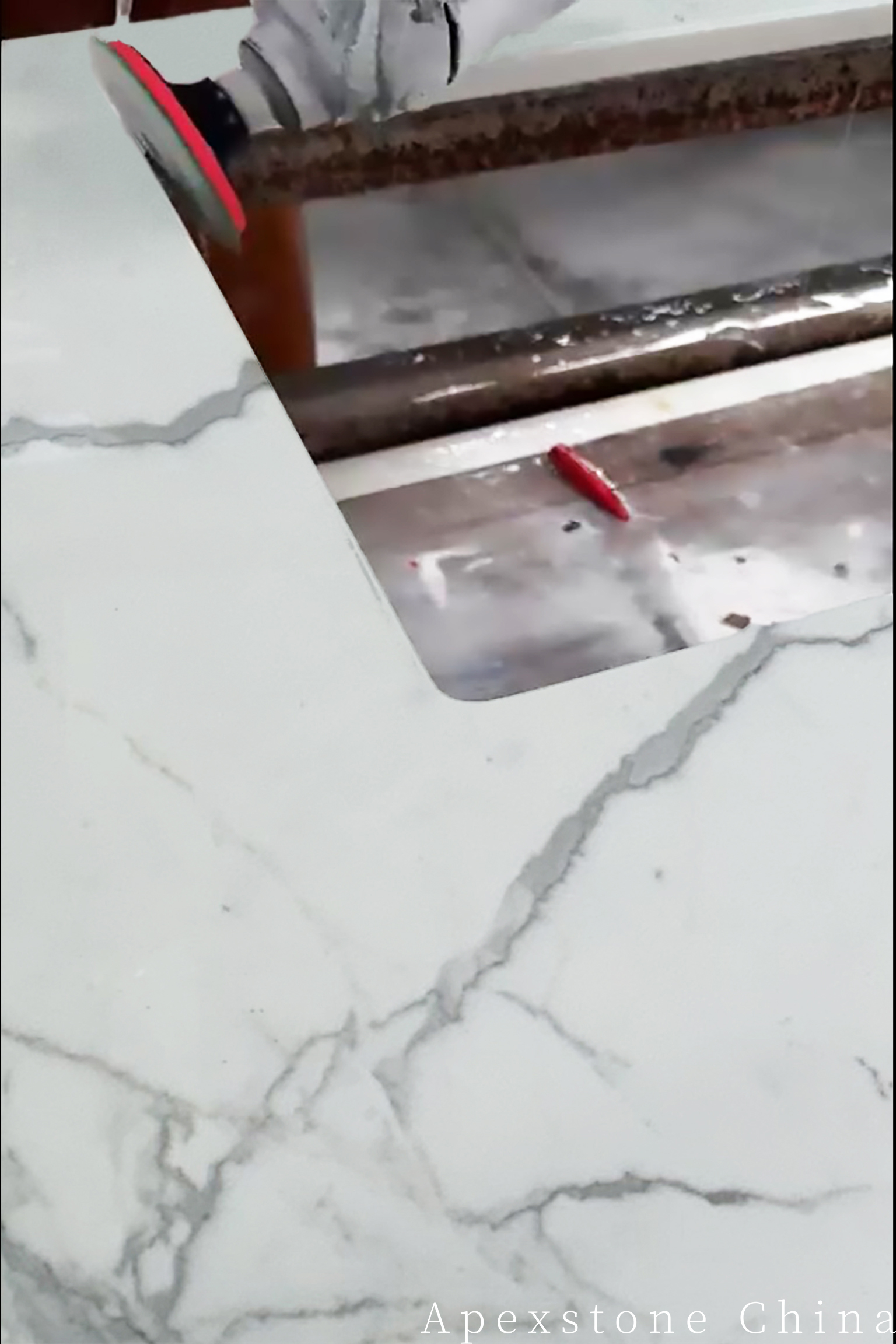
Marble is worked with established stone tools and can often be refinished locally—chips, etch marks and worn polish can be ground out and re-honed years later, which is why centuries-old marble floors still serve. Quartz fabricates like an engineered slab but requires controls appropriate to silica-bearing dust. Sintered stone is hard and thin, so transport, handling, cutting parameters and edge support need experienced fabricators; a 12 x 24 in wall tile is forgiving, but a large-format panel with a cut-out for a cooktop is not. A material with excellent surface performance can still fail at an unsupported edge or poorly placed cut-out, so the fabricator's track record matters as much as the material datasheet.
Floors and walls change the answer
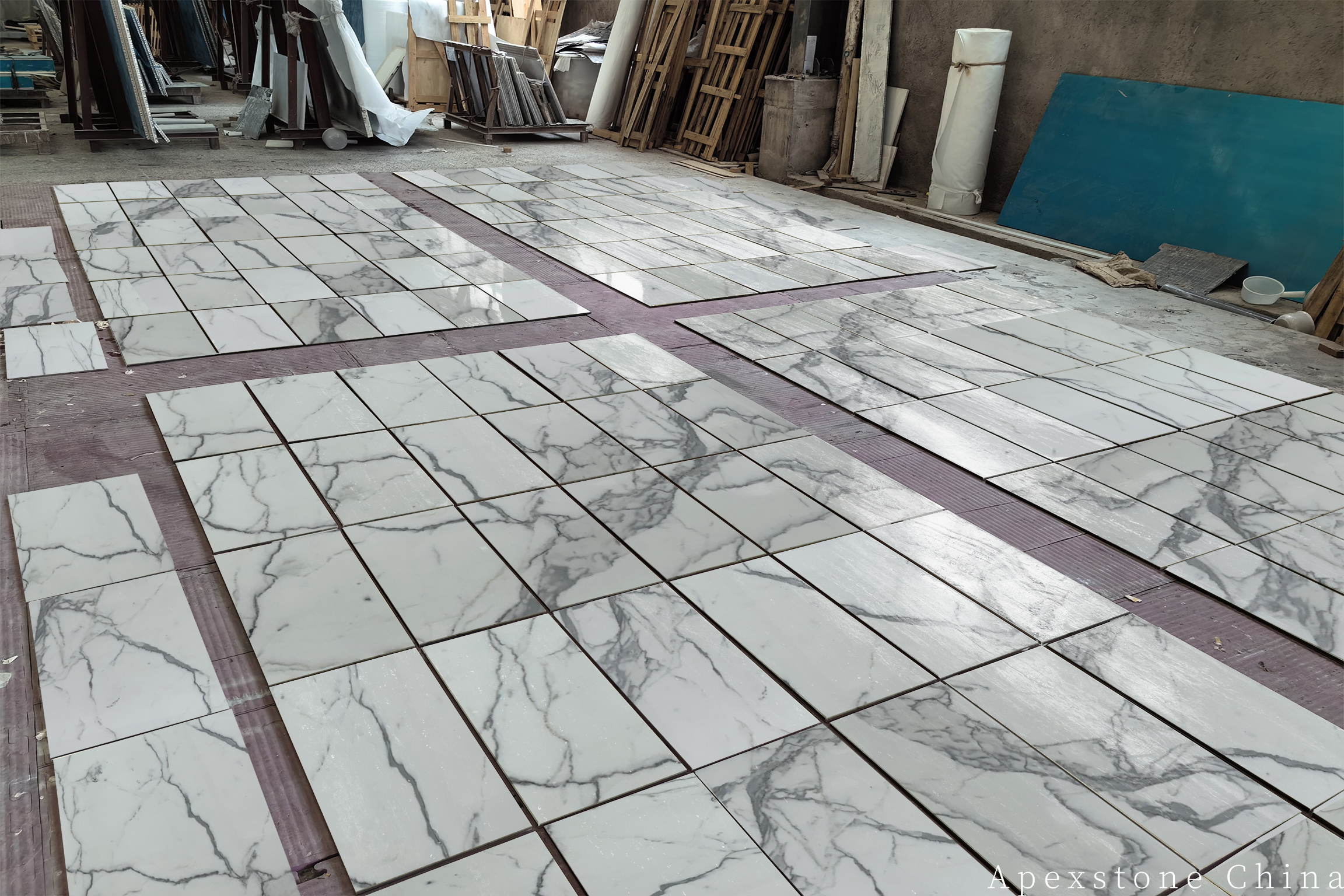
A honed natural marble floor offers authentic depth and can be refinished, but it develops wear and needs an appropriate slip and maintenance plan—entryways and bathrooms see different traffic. Manufactured alternatives offer more consistent modules in standard sizes such as 12 x 12 in and 12 x 24 in, which simplifies layout and grout planning. On a wall, staining and heat may matter less than panel size, joint design, weight and whether the visual should be unique or repeated. A book-matched marble feature wall behind a vanity is a design statement; a uniform sintered panel system is a maintenance calculation. Both are legitimate answers to different briefs.
Bathroom vanity decision
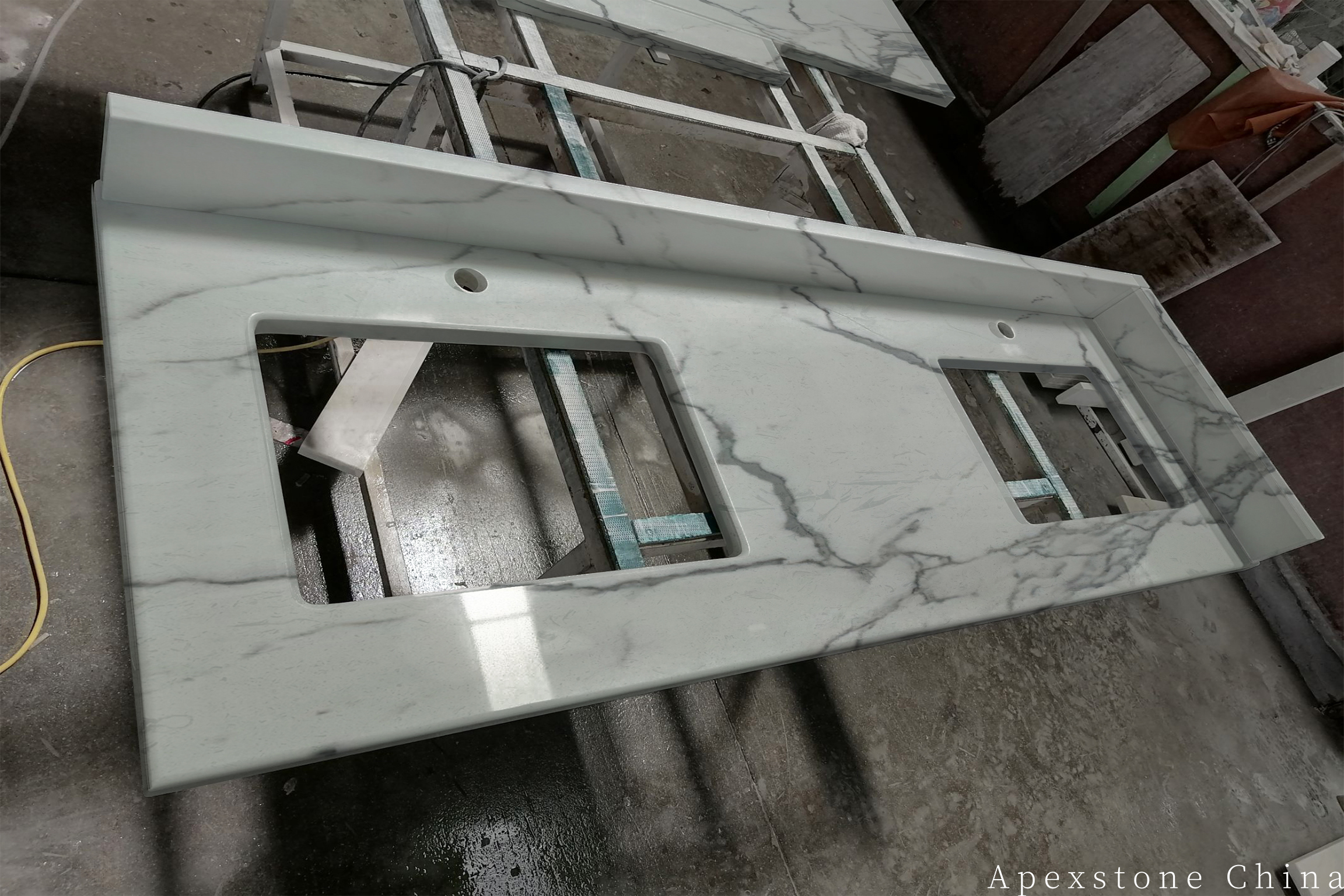
For a vanity, ask whether the owner accepts occasional etching from cosmetics and toiletries, whether a repeated look is needed across many rooms, and whether local repair capability exists. Natural Calacatta is compelling in a design-led residence where a 36 in single-bowl or 60 in double-bowl top becomes the room's centrepiece; quartz may simplify a multi-unit programme where every 25.5 in guest-bath top must match; sintered stone may suit a low-absorption brief in a rental or commercial setting. The fitting schedule and wall support still govern the fabricated result—no material survives a twisted cabinet run or an out-of-level floor.
Buyer matrix
| Priority | Natural Calacatta marble | Engineered quartz | Sintered stone |
|---|---|---|---|
| Unique appearance | Strongest: approve actual slab | Repeatable design | Repeatable design |
| Acid etching | Expected risk; honed helps | Check brand chemistry guidance | Generally strong; check technical sheet |
| Batch consistency | Natural variation | Good within a managed batch | Good within a managed batch |
| Local refinishing | Often possible | Repair options depend on defect | Edge/chip repair can be specialised |
| Heat tolerance | Mineral, but system matters | Resin limits; use trivets | Typically strongest |
| Approval focus | Slab image and vein map | Colour/batch and brand sheet | Colour/batch, thickness and fabricator capability |
A procurement sequence that avoids false certainty
- Rank appearance, etching tolerance, heat exposure, repeatability, repair and budget.
- Choose the material family.
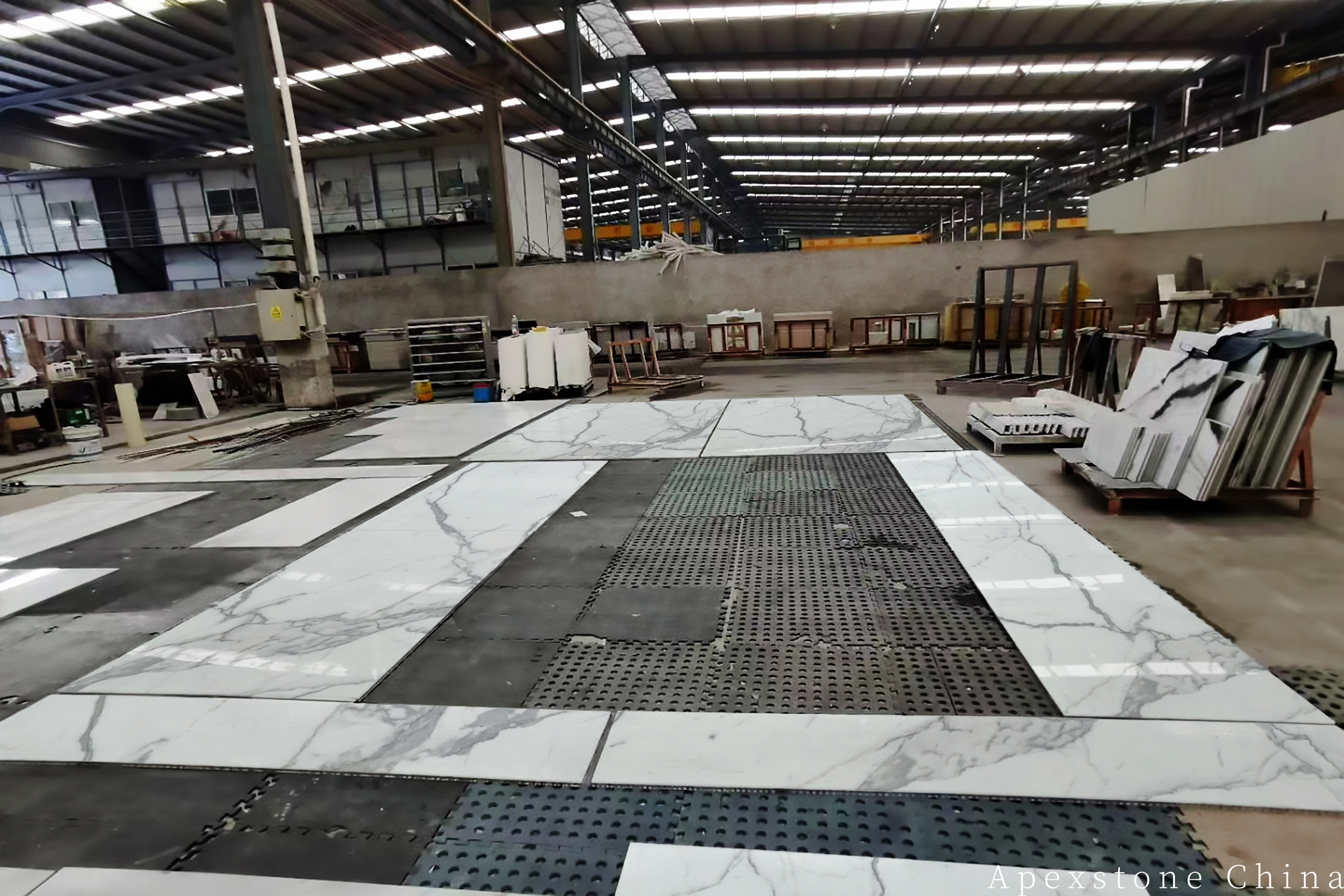
- Approve the actual slab or manufactured batch—photos of the real piece, not a pattern book.
- Freeze thickness, edges, cut-outs and support in the shop drawing.
- Review a fabricated sample or the critical detail, such as a mitred waterfall joint.
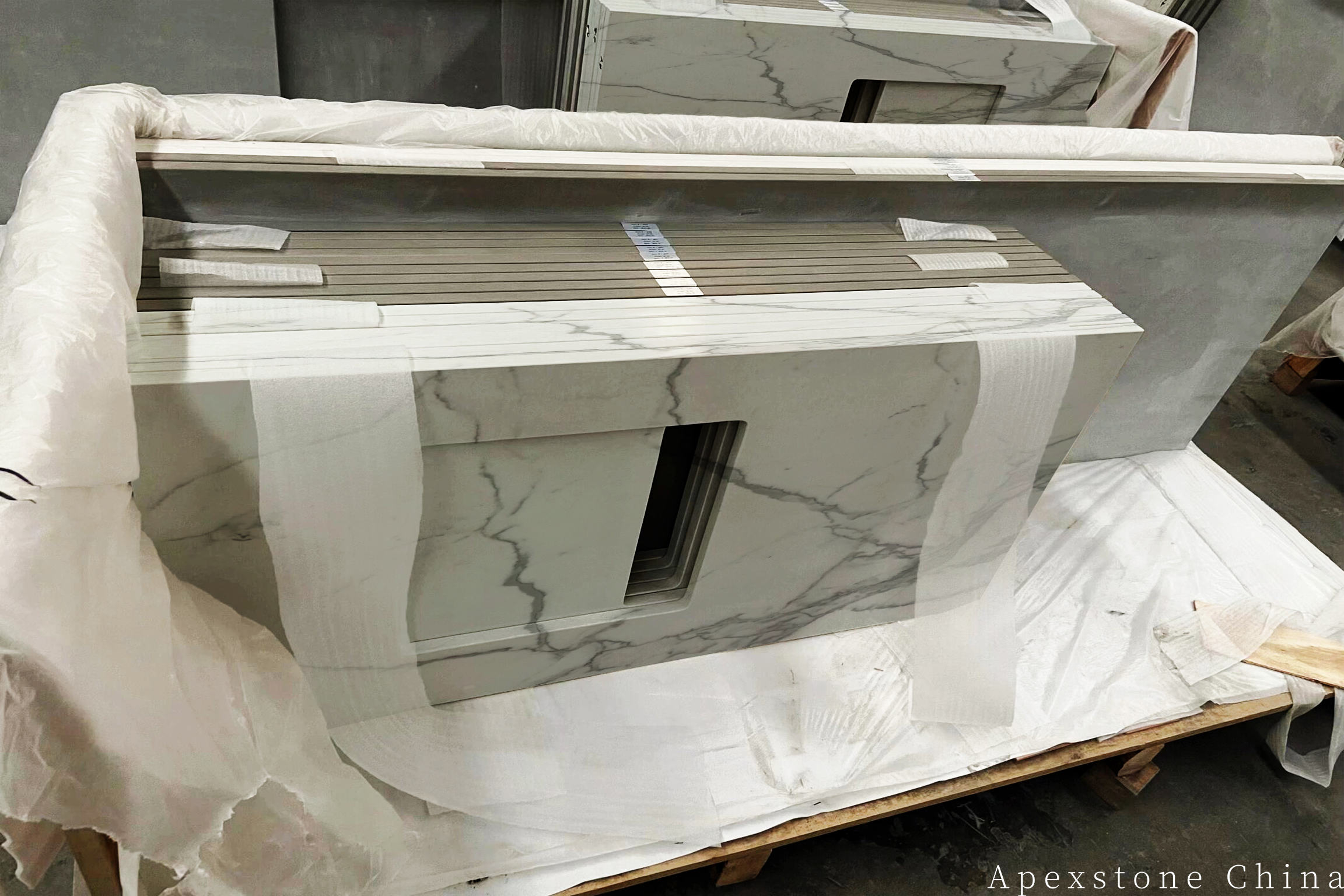
- Inspect and document every finished piece before packing.
Buyers who follow this sequence rarely dispute the delivered result, because every decision that could surprise them was made while it was still cheap to change.
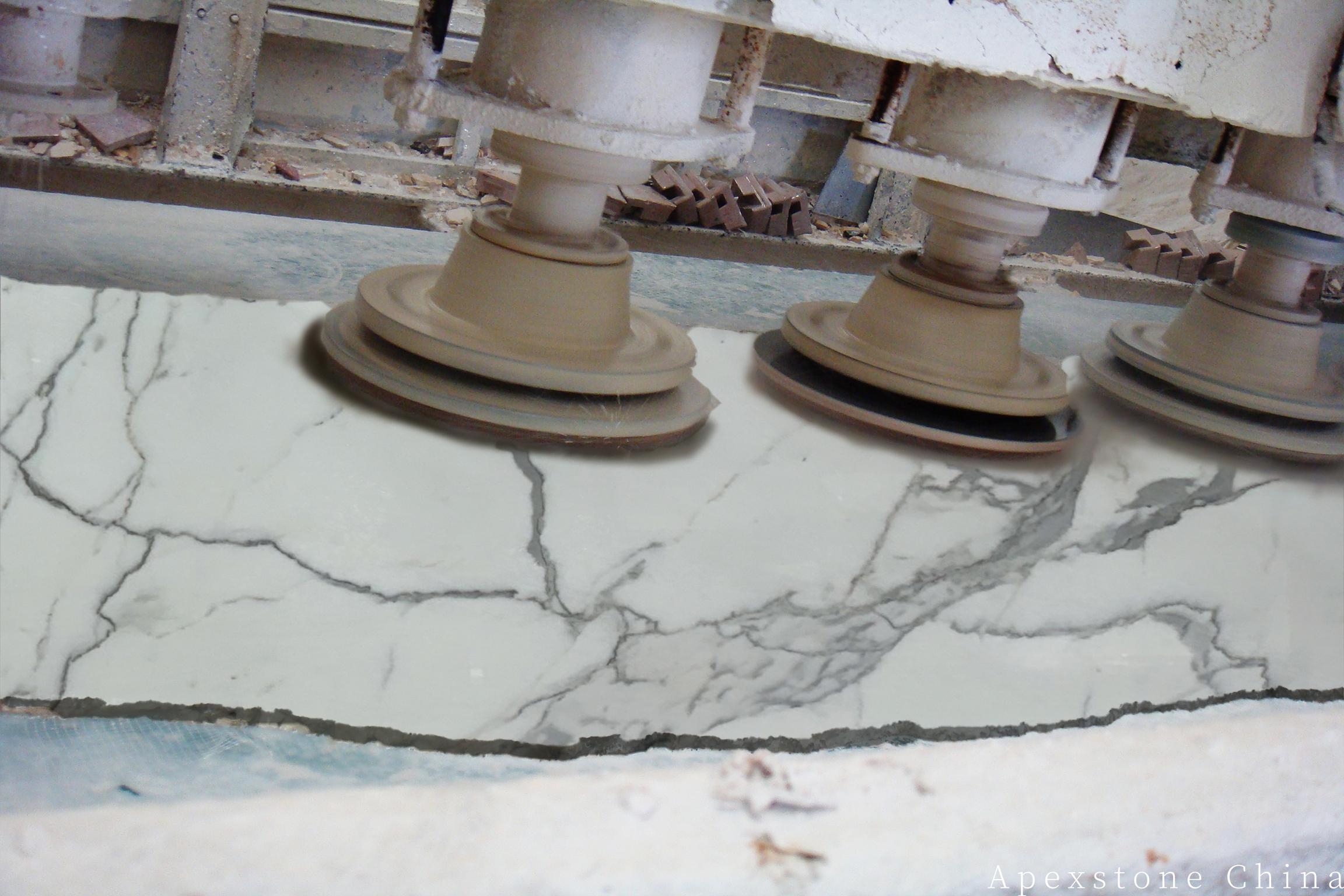
Choose by owner behaviour and project repetition
Share where the surface will be used, how many units repeat, the maintenance tolerance and the fabrication location. A family that cooks daily, a landlord managing turnover and a hotel engineer running preventive maintenance will each land on a different answer—and that is the point. The shortlist should follow those facts, not a showroom display or a single online review.
Material in view
Natural marble evidence to include in a material comparison
A comparison becomes more useful when the team can see natural variation, edge workmanship and export protection—not only a performance table.