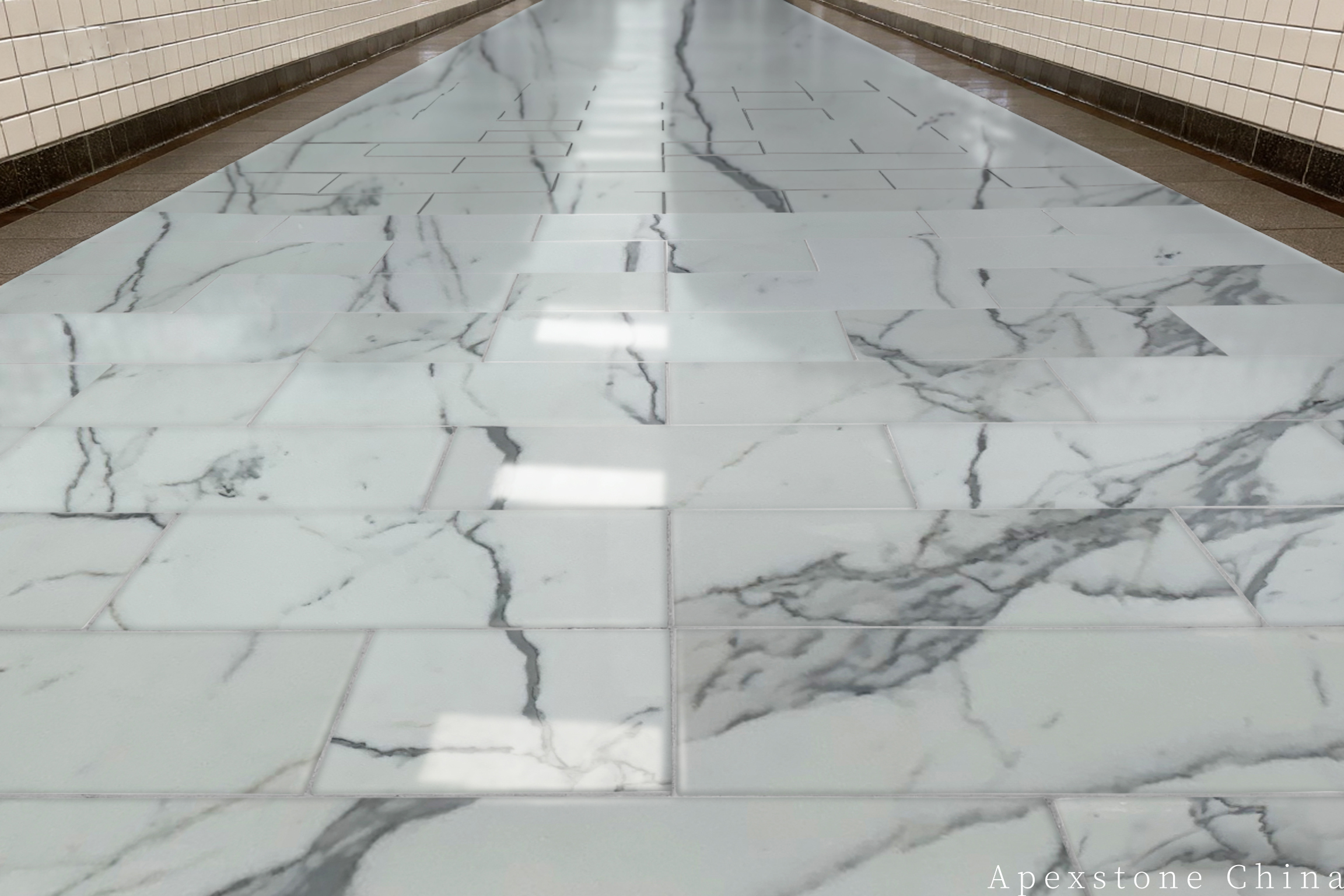
Calacatta White Marble Tiles
Calacatta White marble tiles for floors, walls, backsplashes and bathrooms in the modules the market actually asks for — 12 x 12 in, 12 x 24 in, 18 x 18 in, 24 x 24 in and 24 x 48 in — with honed or polished finish, subway, hexagon and herringbone formats, and lot-mixing guidance for installers.
Highlights
- Natural Calacatta White marble floor and wall tile with batch-visible veining
- Market modules: 12 x 12 in, 12 x 24 in, 18 x 18 in, 24 x 24 in and 24 x 48 in, plus cut-to-size
- Reference thickness 10 mm (3/8 in), 12 mm (1/2 in) or 20 mm (3/4 in) by use
- Subway, hexagon and herringbone formats with grout and layout guidance
- Installer-focused lot mixing, dry layout, substrate and sealer guidance
Specifications
| Material | Italian Calacatta White natural marble |
|---|---|
| Planning Sizes | 12 x 12 in (300 x 300 mm), 12 x 24 in (300 x 600 mm), 18 x 18 in (450 x 450 mm), 24 x 24 in (600 x 600 mm), 24 x 48 in (600 x 1200 mm), cut-to-size |
| Reference Thickness | 10 mm (3/8 in), 12 mm (1/2 in), 20 mm (3/4 in), project use governs |
| Formats | Square, rectangle, subway, hexagon, herringbone and custom waterjet |
| Finish | Honed or polished; slip strategy must match the location |
| Applications | Interior floors, walls, shower surrounds, backsplashes |
| Installer Approval | Lot sample, dry layout, grout joint, adhesive and movement-joint plan |
Product Detail
Apexstone material brief
Calacatta White Marble Tiles
Cut from the same Italian blocks that supply our slab programme, Calacatta White marble tiles carry a snow-white ground and light-grey random veining into formats that a whole room can wear. At slab scale the vein reads as drama; at tile scale it reads as rhythm. The questions that decide whether a calacatta marble floor tile or wall tile project succeeds are practical ones: which module suits the room, how the veined and quiet pieces are distributed, and what the substrate, grout and finish are asked to do.
How the vein behaves at tile scale
Calacatta White is a calcite marble, and its grey movement is directional rather than uniform. On a polished marble wall tile the veining sharpens and the white ground gains depth, which is why polished faces dominate feature walls and bathroom feature panels. A honed face softens glare and gives better wet-area footing, which is why honed marble floor tile is the usual choice for bathrooms and covered entries. Neither finish changes the mineral: the stone will etch on contact with lemon juice or descaler, and a etch mark on marble is a polish issue that can be re-honed, not a hole. That repairability is one of the honest advantages of natural marble tile over printed porcelain lookalikes, which must be replaced once damaged.
Modules the market actually asks for
Across our export enquiries, five modules account for most calacatta tile orders: 12 x 12 in (300 x 300 mm), 12 x 24 in (300 x 600 mm), 24 x 24 in (600 x 600 mm), 18 x 18 in (450 x 450 mm) and 24 x 48 in (600 x 1200 mm) large-format pieces. The 12 x 24 in rectangle is the workhorse for kitchen floors and hallway fields; 24 x 24 in suits open living areas where fewer joints calm the veining; 24 x 48 in pushes the marble-look toward a slab-like wall panel effect but demands a very flat substrate and experienced setters. Reference thicknesses run 10 mm (3/8 in) for wall cladding, 12 mm (1/2 in) for standard floor tile and 20 mm (3/4 in) where steps or heavy traffic are involved. Final dimensions, thickness and calibration tolerances belong on the purchase order and the installation drawings, not in a brochure.
Subway, hexagon and herringbone: pattern with a purpose
Small formats change how the stone reads. A 3 x 6 in (75 x 150 mm) subway tile breaks the long grey movement into short, regular waves — a good match for splashbacks and shower niches. A 4 x 4 in (100 x 100 mm) hexagon tile turns the same marble into a honeycomb field that suits bathroom floors and powder-room walls, and 4 x 12 in (100 x 300 mm) pieces set in a herringbone pattern give an entry floor a sense of direction. The trade-off is grout: more joints mean more lines for the eye to read and more surface to maintain, so grout colour should be approved against real samples, ideally a shade quieter than the vein so the pattern stays elegant rather than busy.
Pairing a white marble field
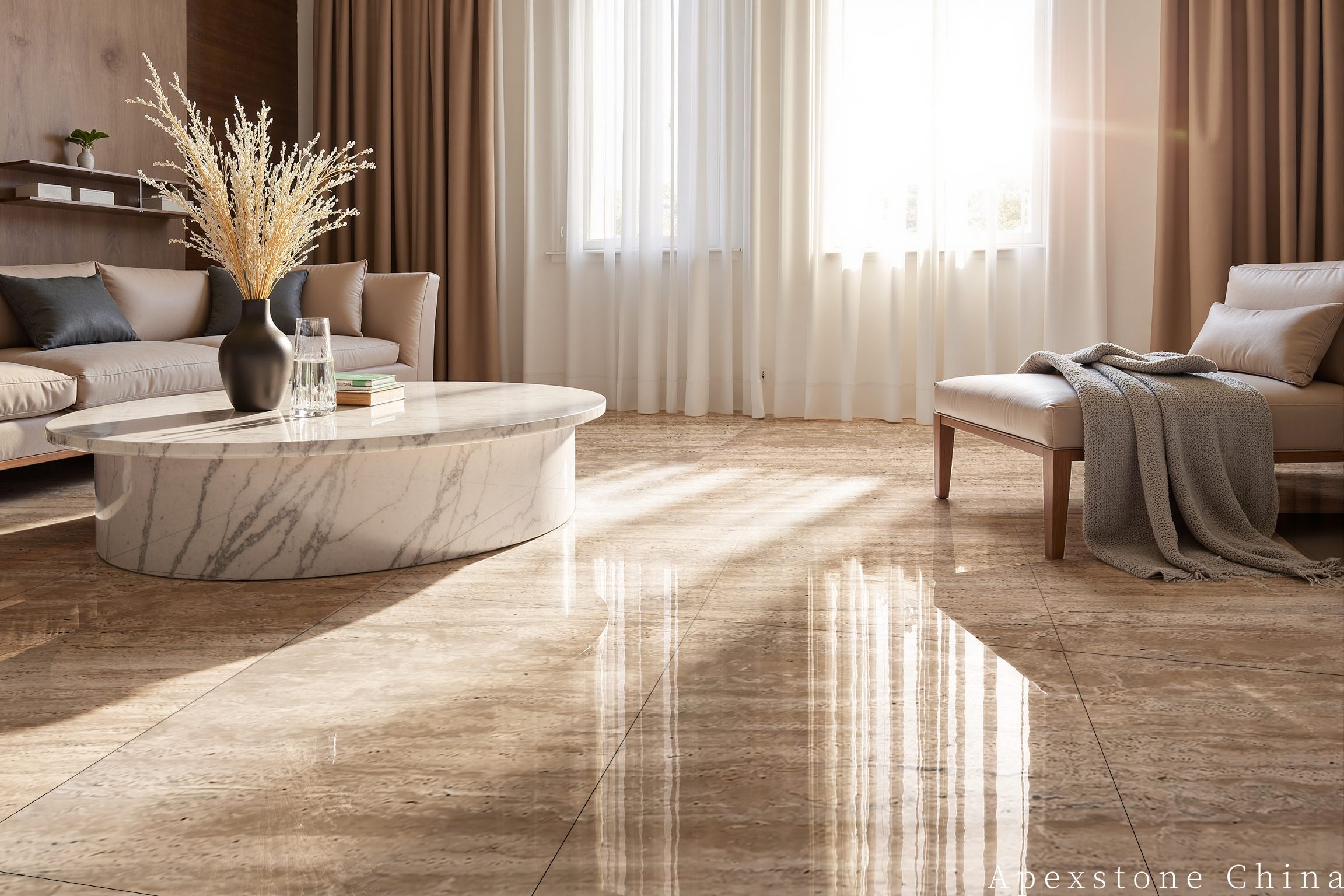
Designers rarely specify Calacatta White tiles alone. The stone is at its best against quiet neighbours: warm oak joinery, brushed brass or black steel trims, and matte off-white paint that lets the grey veining do the talking. In a calacatta tile bathroom, a polished marble wall tile behind the vanity can share the room with honed floor tiles of the same stone — the contrast in sheen marks the zones without introducing a second material. On kitchen floors, a mid-tone grout hides traffic soiling better than a bright white one, and the veining disguises everyday wear far better than a plain white stone would.
Installer practice: open, sort, dry-lay
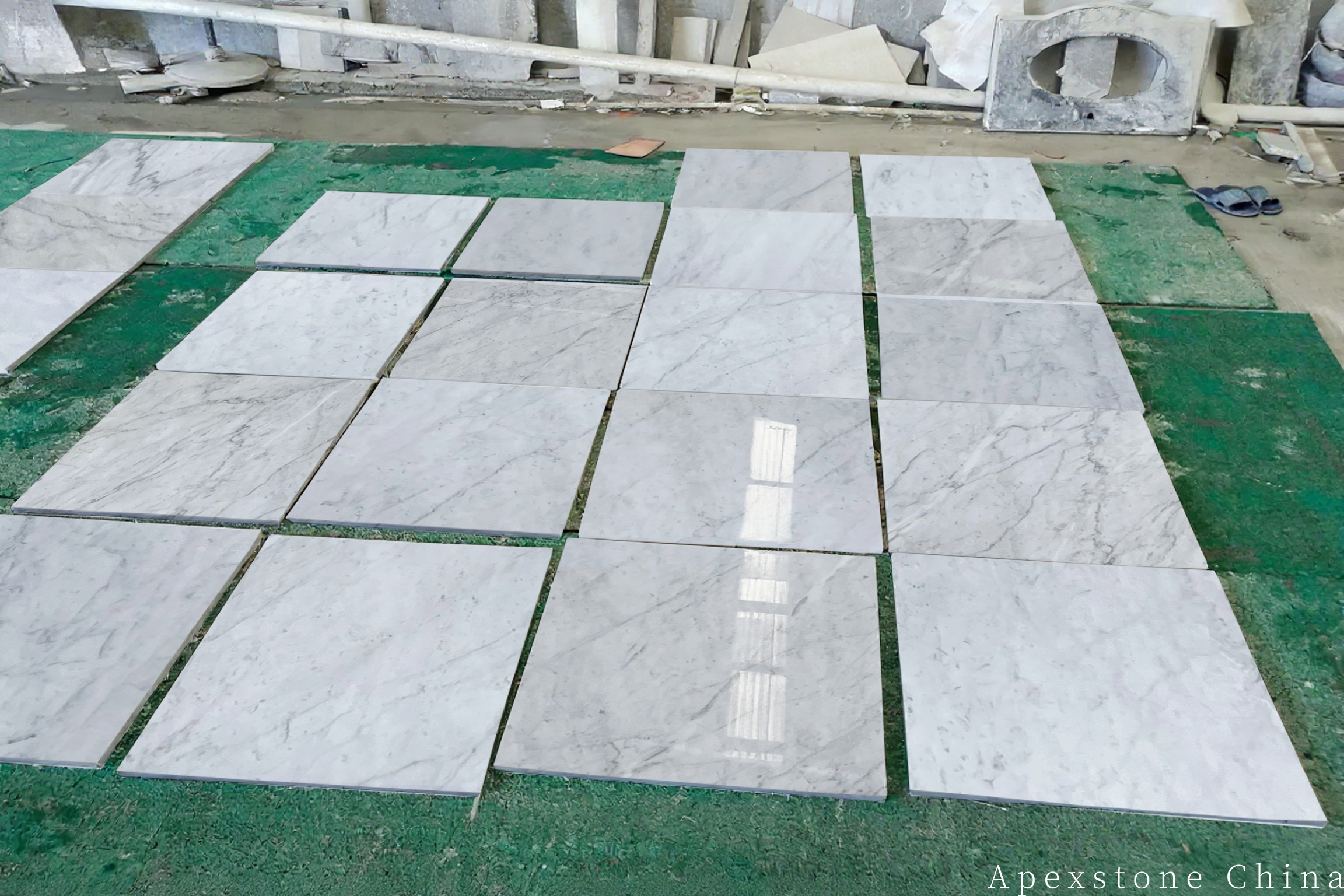
Natural marble tile is sold by lot, and every lot of Calacatta White mixes quiet pieces with strongly veined ones. Setters who open several crates first, sort by vein strength and dry-lay a representative area before fixing get a floor that looks planned rather than accidental. Photograph the approved layout, keep control samples on site, use a white adhesive formulated for light natural stone, and respect the movement joints the substrate requires. Factories that calibrate each lot on the same line keep thickness and squareness within the tolerances the schedule calls for, which is what lets a large field go down without lipping — it is worth confirming the calibration standard before release rather than discovering it on site.
Wet areas and long-term care
For shower walls and bathroom floors, coordinate falls, waterproofing, drains and movement joints before the stone arrives. Penetrating sealer reduces absorption and slows staining; it does not make the stone acid-proof. A pH-neutral cleaner, a squeegee after showers and prompt attention to spills will keep a polished marble shower wall bright for years, and a professional can re-hone a tired floor long before replacement is worth considering. Because stone, grout and sealer each shift the final white slightly, a mock-up panel of all three is the cheapest insurance a specification can buy.
What to send for a quotation
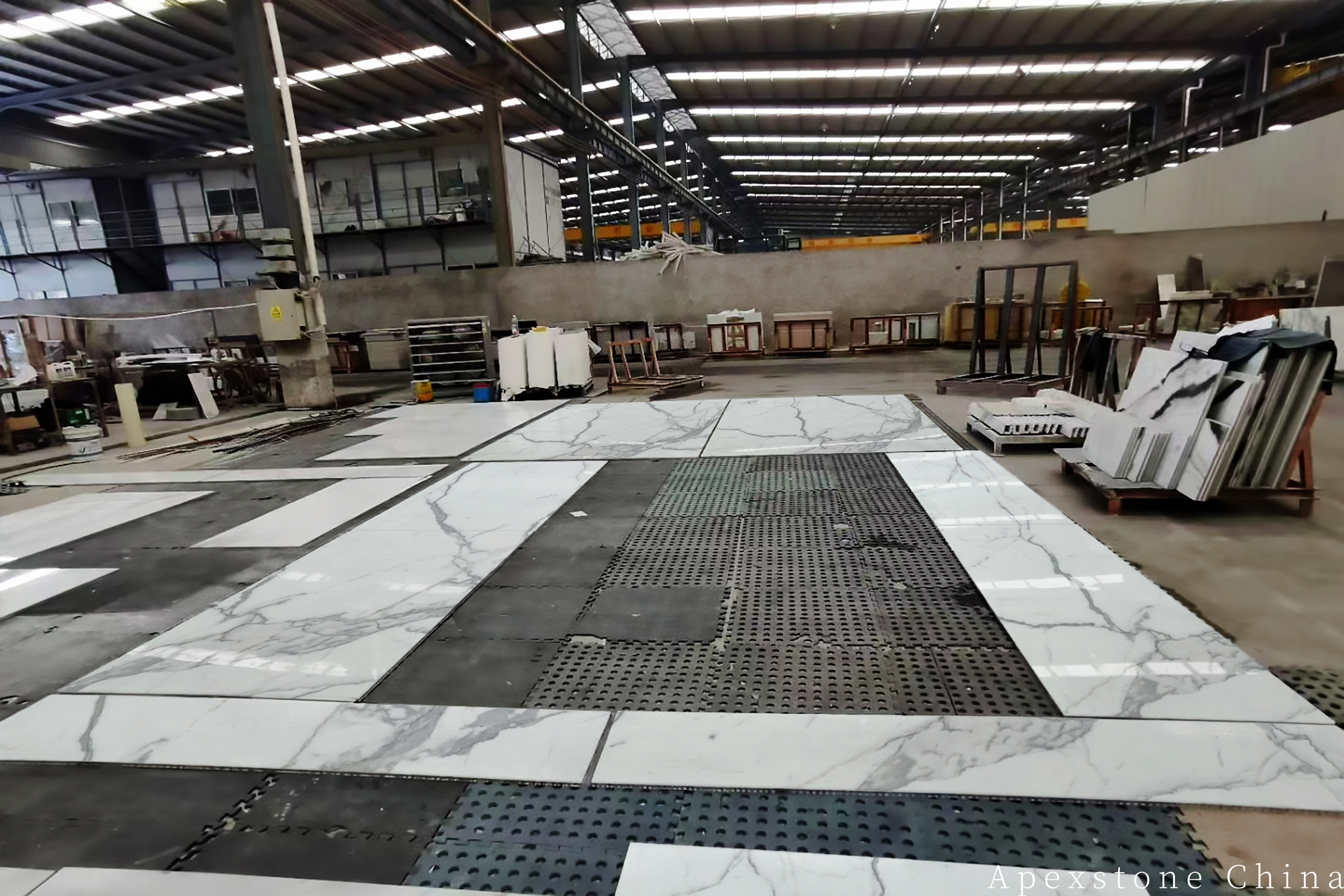
A tile schedule that states module, quantity with waste allowance, thickness, finish, grout intent and destination port allows a factory to quote a mapped lot with packing plan rather than a guess. Ask for lot samples and, for large wall panel or floor fields, a dry-lay photograph of the actual crates before production release — reputable suppliers expect the request and answer it with images of real stock, not renders.
Compare module, pattern and installation scale
These views show how format changes the marble — from rectangular kitchen flooring to splash tiles, patterned bathroom walls and factory cutting.
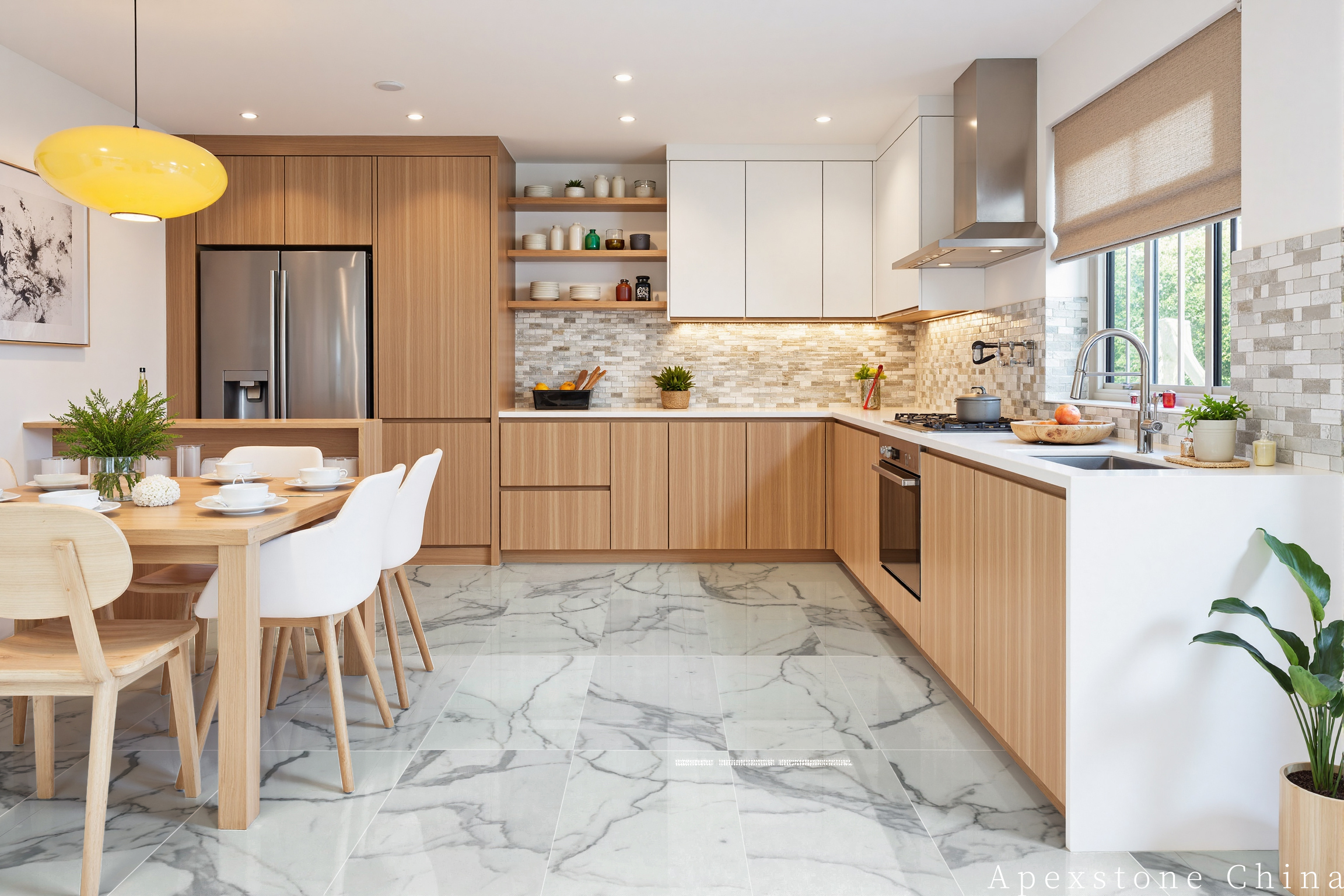
Rectangular floor module: plan direction and batch blending.
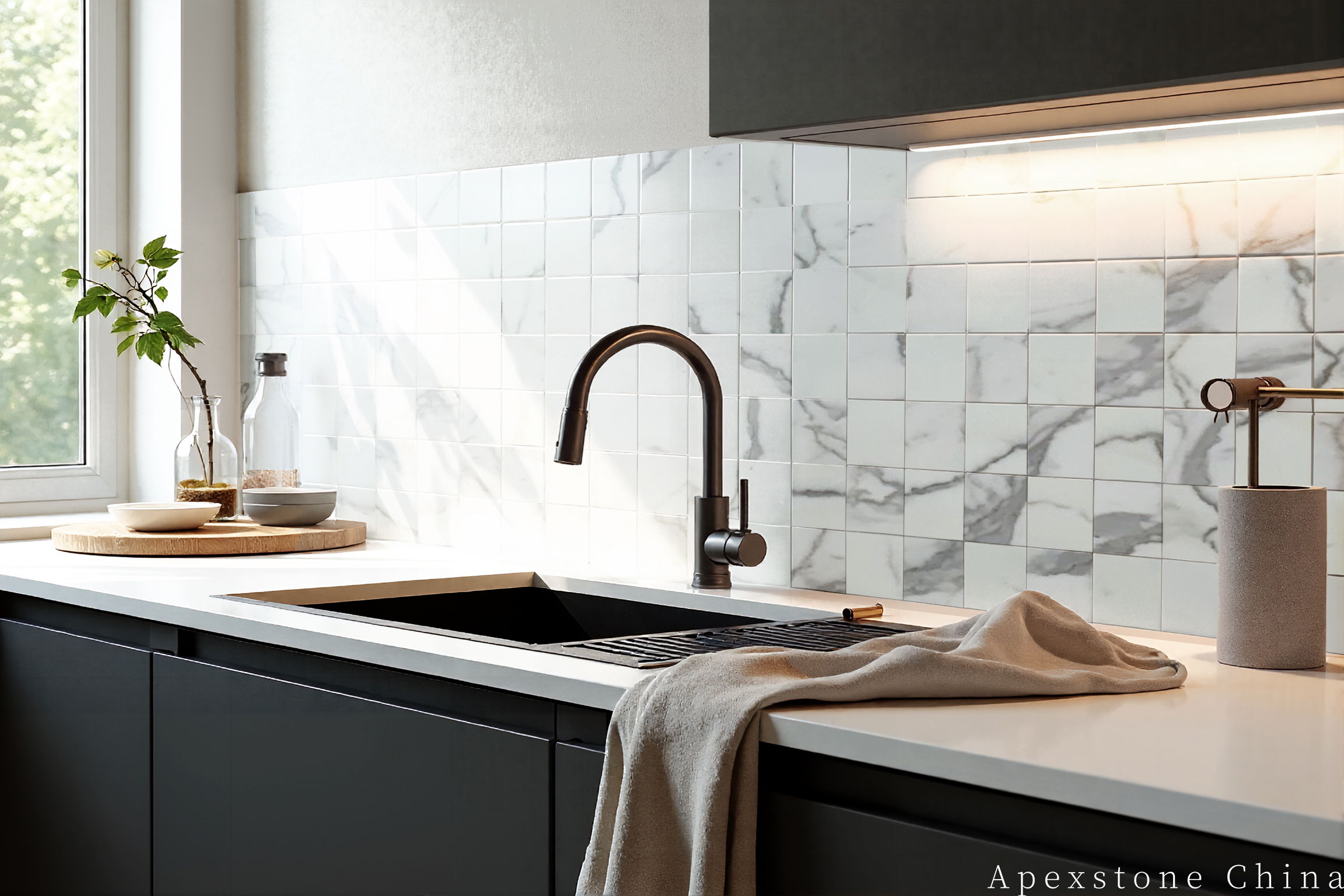
Square wall tile: coordinate grout grid with cabinets and sockets.
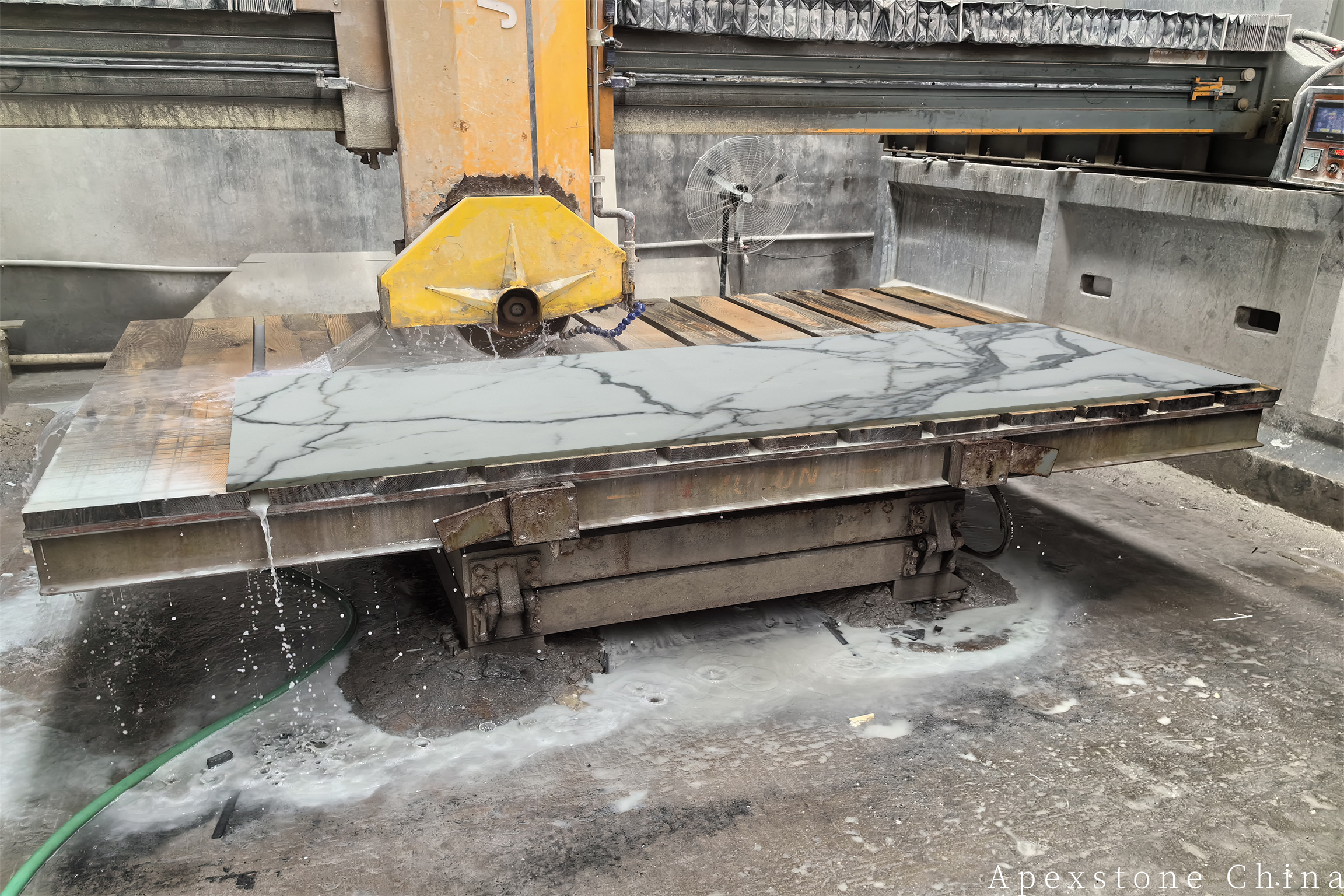
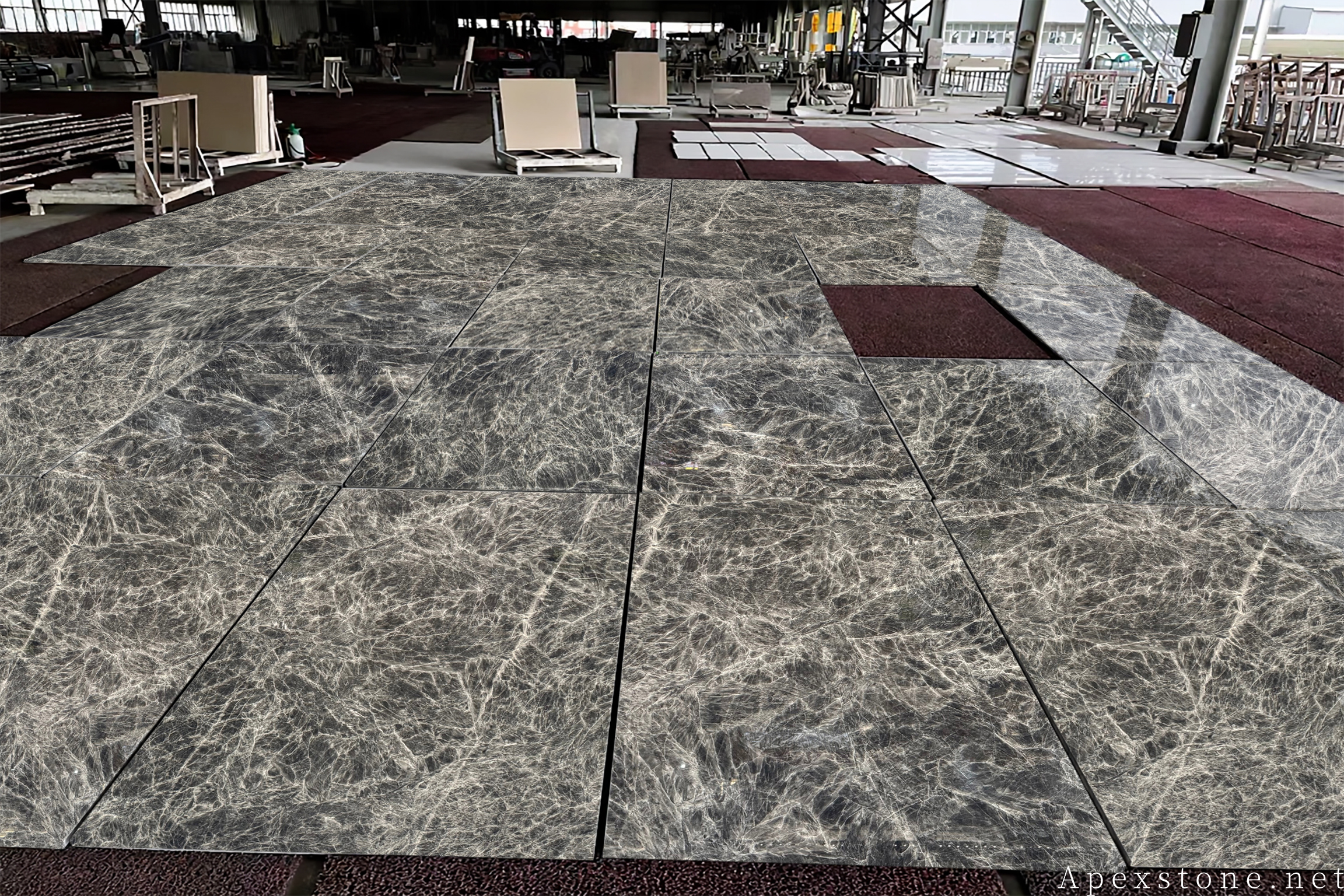
Tile cutting: control calibration and edge quality by lot.
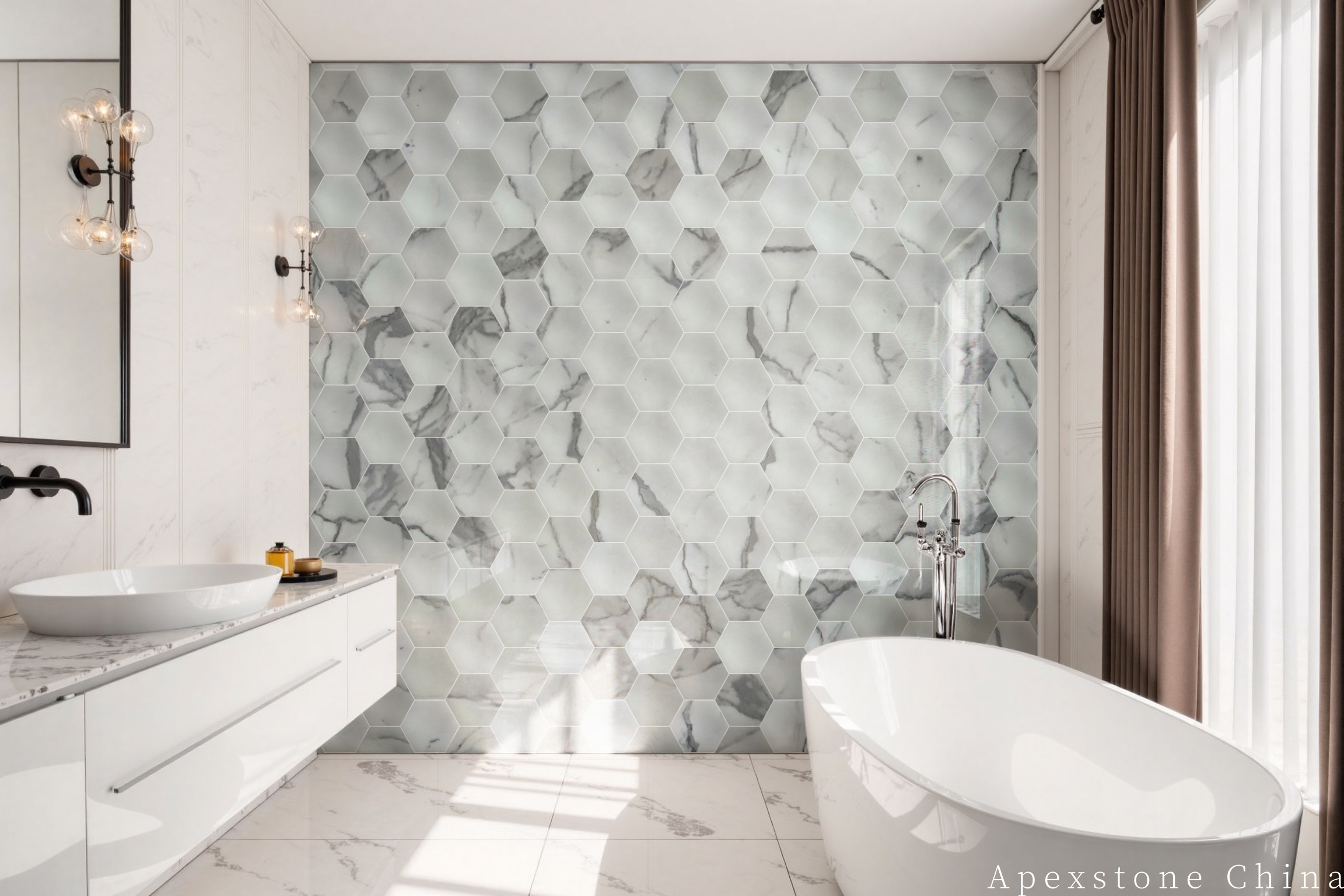
Patterned wall: approve contrast, grout colour and field-to-edge cuts.