Apexstone material brief
Pandora Quartzite Bathroom Vanity Tops
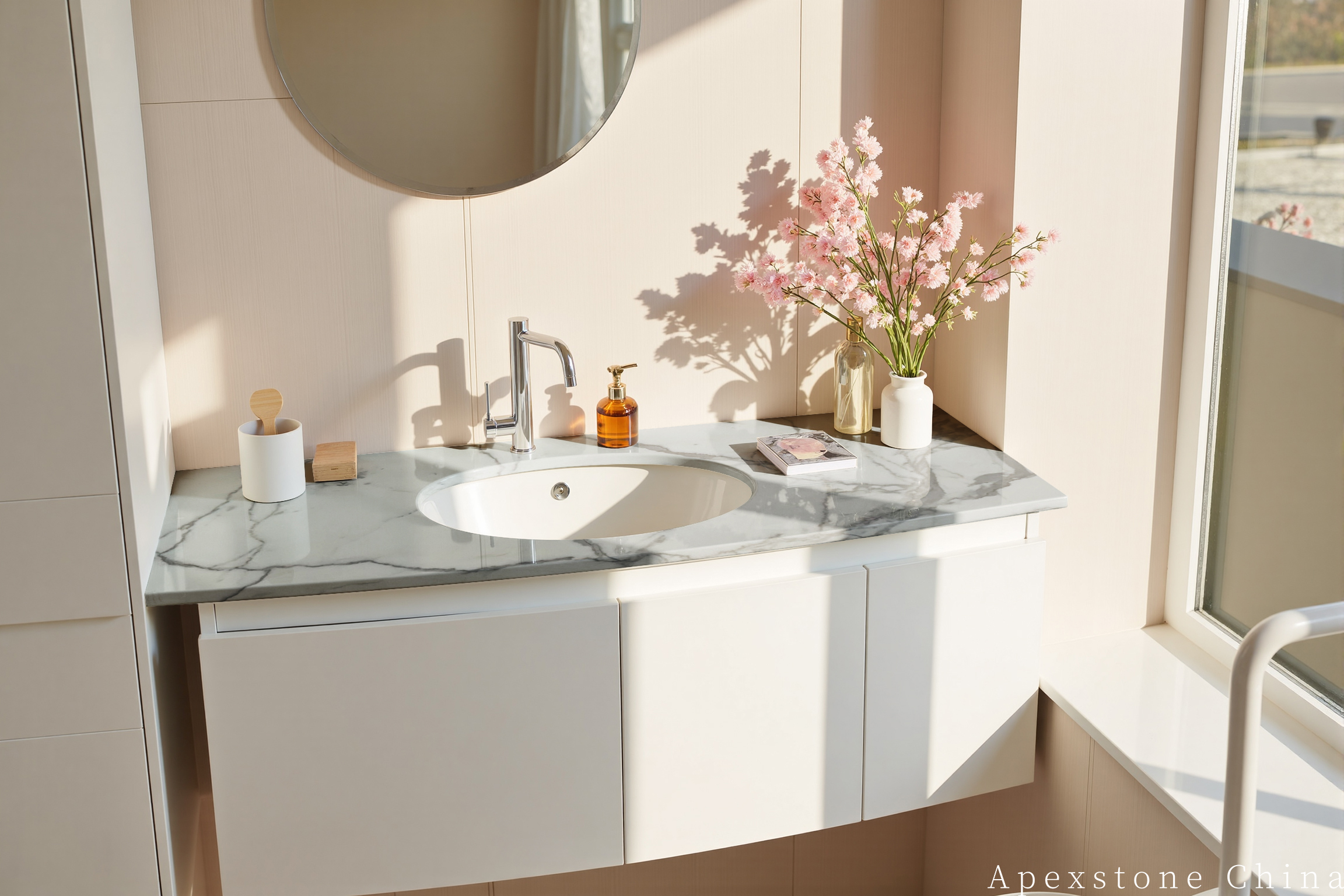
A vanity top is the smallest stone purchase that changes the whole room. Pandora makes the argument unusually well in a bathroom: the cream ground keeps the space warm, the brown floral movement gives a single-slab top the presence of a much larger installation, and the natural crystal sparkle catches vanity lighting in a way flat engineered surfaces cannot. For importers and bathroom contractors, it is also a quartzite — harder than the marbles usually offered at this look, which is why it survives daily splash, cosmetics and cleaning far better.
Why Pandora suits a vanity
Pandora is a natural quartzite from Brazil, recrystallized quartz with a hardness well above marble. On a vanity that matters: tops take standing water, toothpaste, makeup and the occasional dropped bottle, and a polished quartzite surface holds its finish where a calcite marble would slowly dull. The stone's other signature trait shows up beautifully at vanity scale — thin sections are translucent and the crystal structure glitters under light, so a Pandora top above a lit mirror carries a subtle inner glow. The large brown floral pattern also does more work per square foot here than in a big kitchen: on a 36 in single-slab top, one bloom can carry the entire design.
Stylistically the stone leans romantic. It sits naturally in French country and farmhouse bathrooms with shaker fronts and bridge taps, and equally in bohemian schemes with rattan, brass and warm plaster walls. Against dark cabinetry the cream-and-brown movement reads as jewellery; against pale oak it becomes the quiet focal point.
Standard formats and what drives them
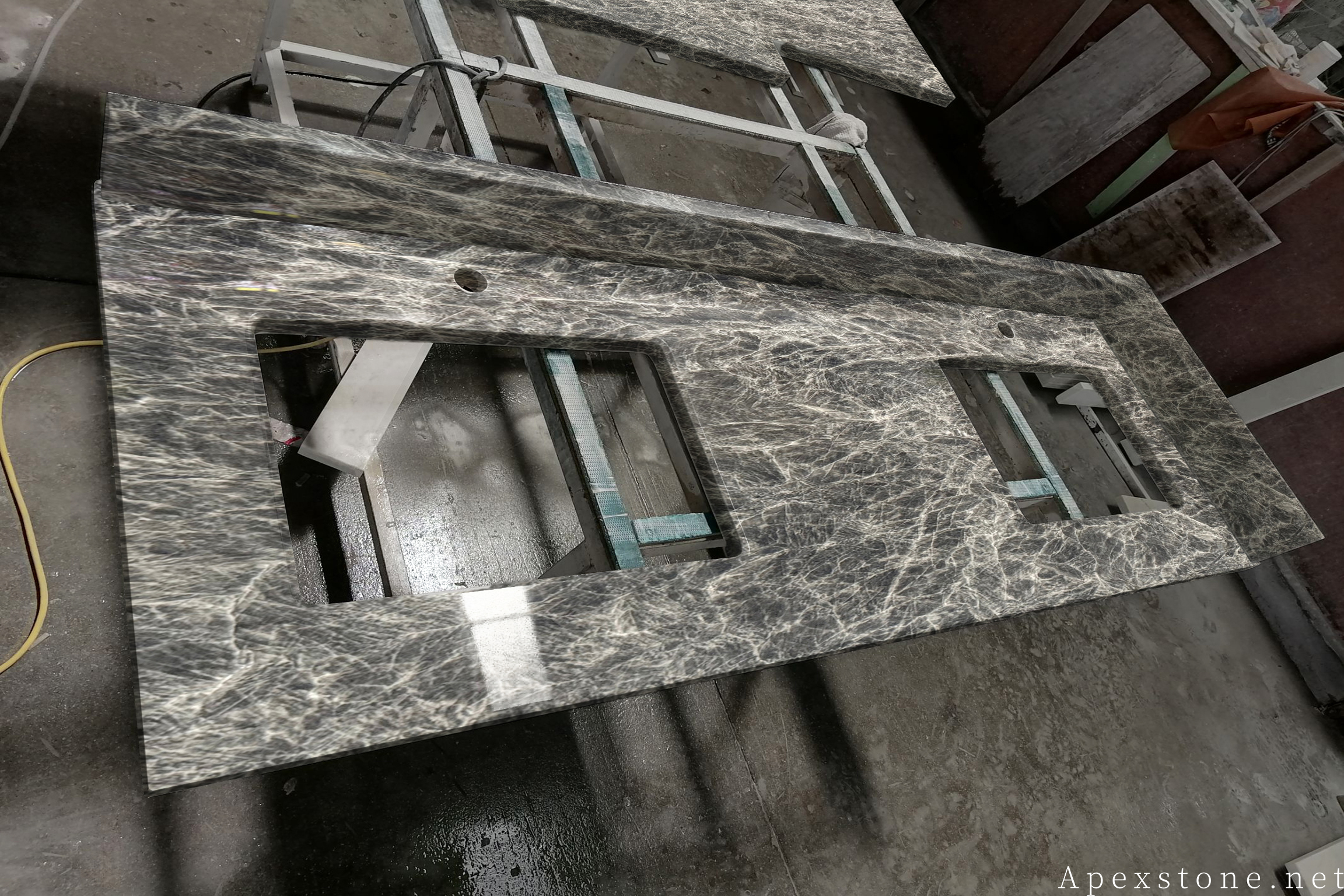
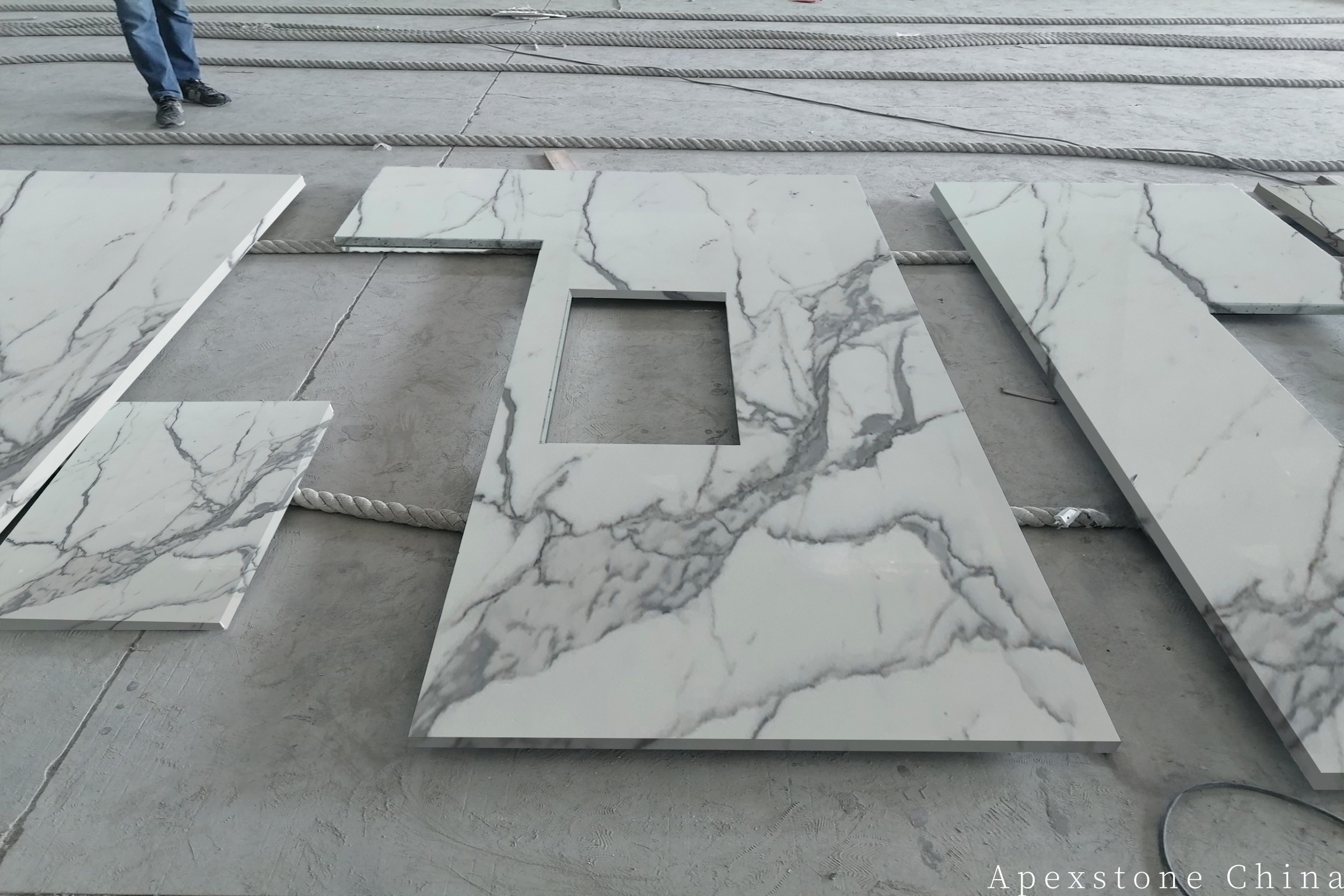
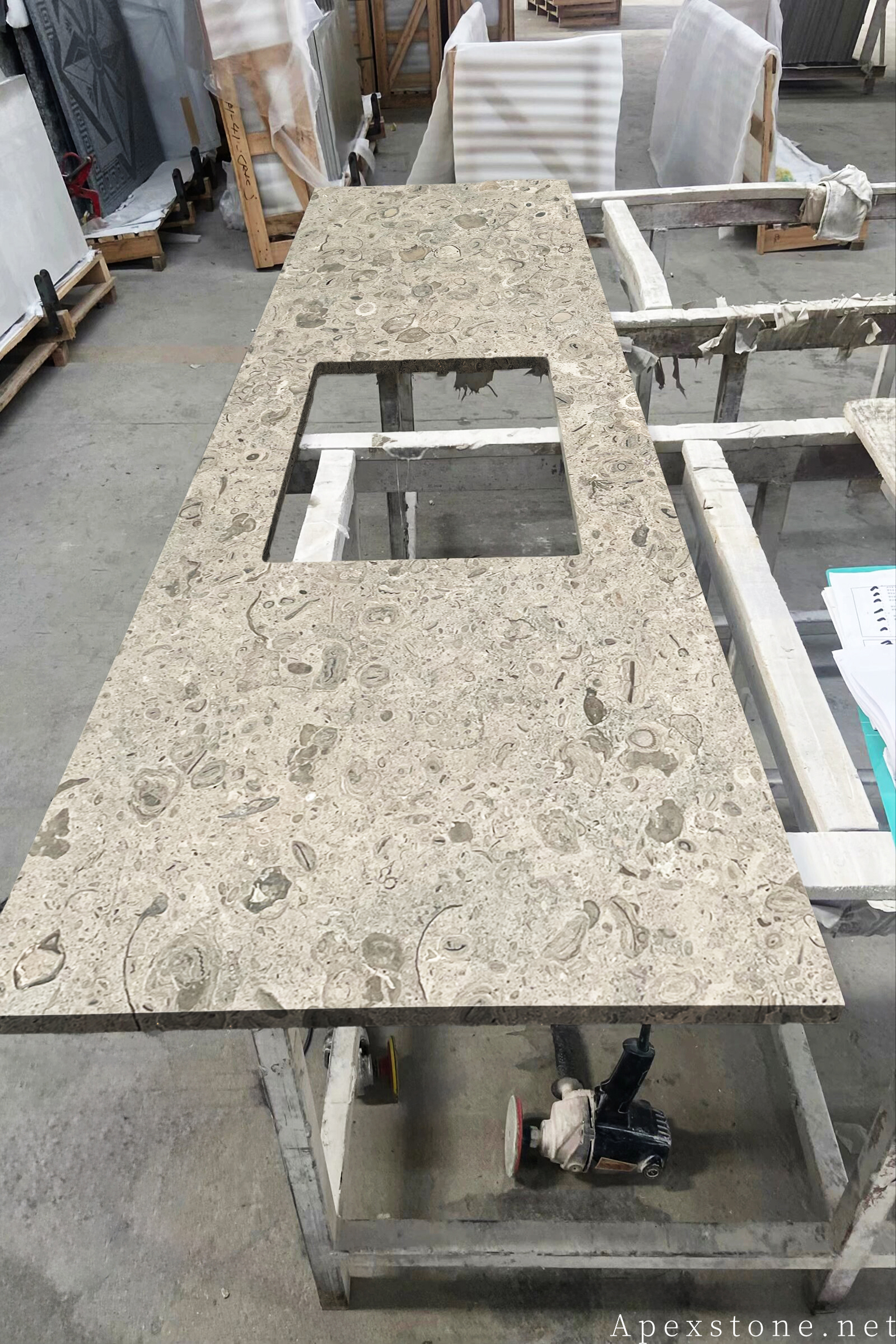
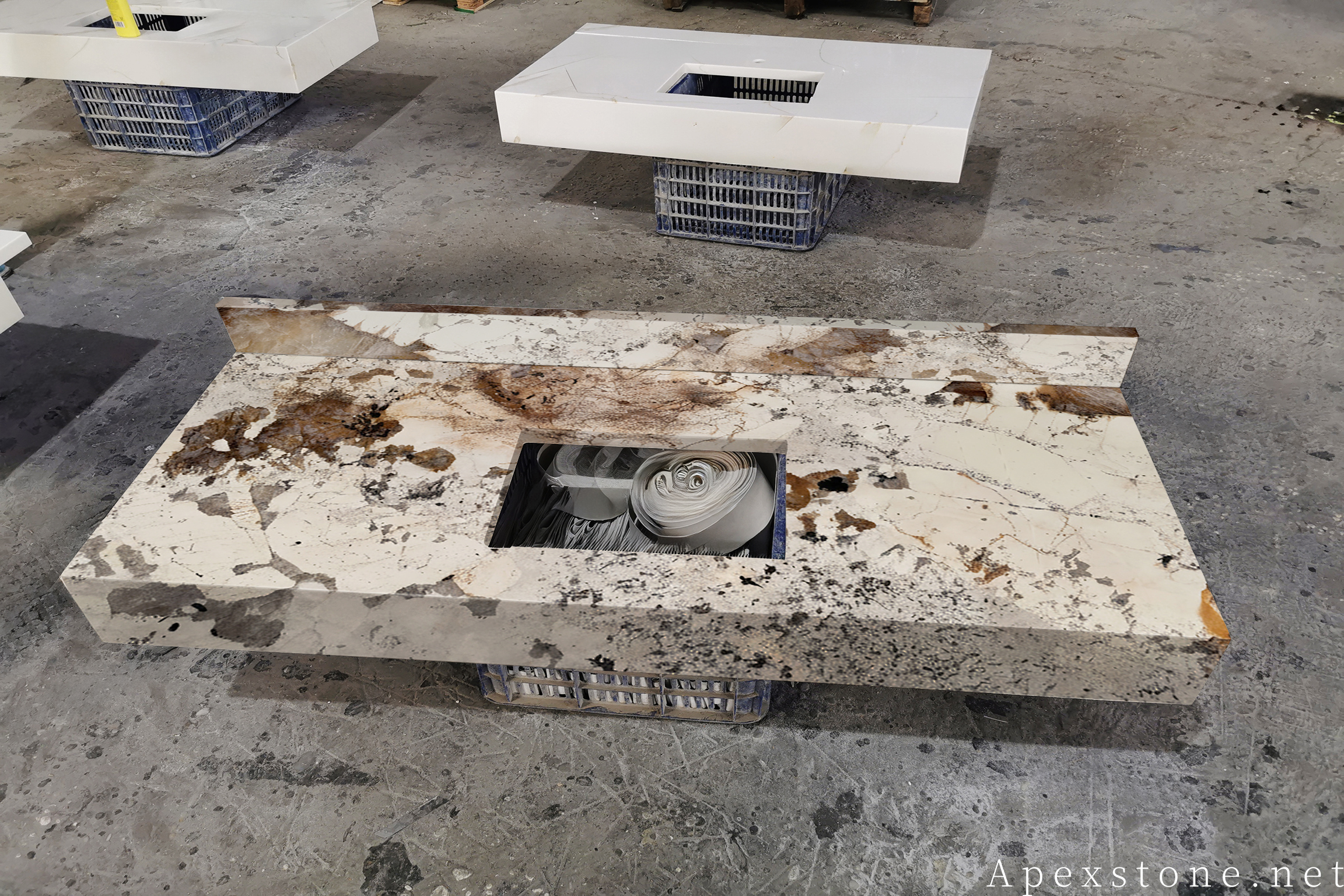
Most vanity work runs on a short list of formats, and we cut Pandora to all of them: 25.5 in tops for standard single-sink base cabinets, 36 in and 37 in for the common single-vanity sizes, and 60 in or 72 in tops for double-sink vanities. Depth follows the cabinet — typically 22 in with a small overhang — and thickness is 2 cm (3/4 in) as standard, with a mitred build-up available when a deeper 1-1/2 in or 2 in edge is specified. Because the pattern is large-scale, we plan each top on the image of the actual slab before cutting: on a 60 in double top, the two sink cut-outs are placed so the movement stays balanced rather than chopped, and the front rail between cut-out and edge keeps enough solid stone to stay strong.
Cut-outs are machined on CNC equipment to the sink manufacturer's template — undermount rectangular, oval, or vessel openings with matching tap holes. Edge profiles run from a simple eased edge for modern vanities to bullnose and small ogee for traditional ones, and a 4 in backsplash or a full-height splash panel can be cut from the same slab so the movement continues up the wall.
Fabrication and inspection, one workshop
Every Pandora vanity order — including single-piece orders — goes through the same sequence: slab selection from photographed stock, layout drawing on the actual slab images, approval, CNC cutting, edge polishing, and a final inspection against the numbered drawing before packing. Tops are packed face-to-face with polished surfaces protected and corner protection on every piece, because a vanity top is the piece most likely to be handled twice between our floor and the installer's. For wholesale buyers, the same discipline scales across a container of mixed 25.5 in, 36 in and 60 in tops: each piece is labelled to its order, so sorting on arrival takes minutes rather than an afternoon.
Quartzite's density also helps the logistics argument: a 2 cm Pandora top is lighter than an equivalent marble slab of the same size, which reduces breakage risk in transit — and the pieces that do travel are inspected twice, once after polishing and once at packing.
Care that fits real bathrooms
Day-to-day care is simple: a pH-neutral cleaner, a soft cloth, and prompt wiping of hair dye, nail-polish remover or strong cosmetics. Sealing is a cycle rather than an event — a drop of water that darkens the surface within minutes is the usual signal for a fresh coat. Unlike marble, a quartzite top will not etch from a forgotten splash of mouthwash; unlike engineered quartz, it tolerates a hot curling iron briefly. That combination of looks and forgiveness is exactly why Pandora has become a go-to specification for bathroom vanities at the premium end.
Specifying Pandora vanity tops
Send the cabinet sizes, sink models and tap positions, preferred thickness, edge profile and finish, and the destination port. The order comes back as a layout on the actual Pandora slab images — cut-outs, splash height and pattern placement resolved on paper before the first cut. Single-piece orders are accepted, and every top is inspected against the numbered drawing before it is packed. When one workshop controls cutting, finishing, inspection and packing, a replacement piece for a damaged top is a phone call, not a negotiation between three suppliers.