Apexstone material brief
Pandora Quartzite Accent Wall & Feature Wall Panels
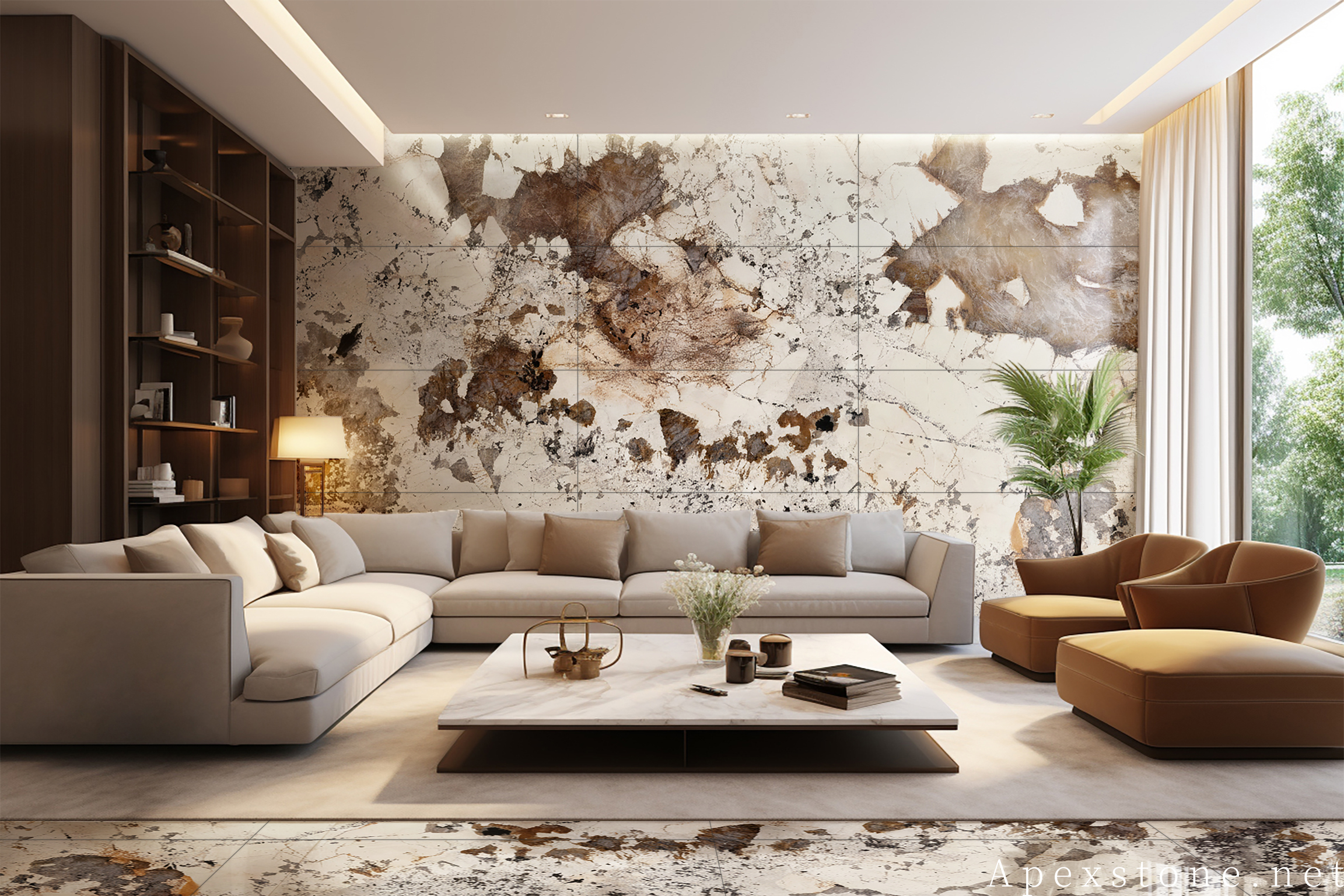
An accent wall is the one surface in a room that is allowed to be dramatic, and few stones deliver drama as naturally as Pandora. Quarried in Brazil, this quartzite carries a warm cream ground crossed by large brown floral movement — and because the pattern is geological, a book-matched pair of panels opens like a butterfly's wings, with no two walls ever repeating. For interior contractors and designers, it is also a practical choice: quartzite is hard, takes a fine polish, and, in thin sections, is translucent — which turns a backlit Pandora wall into the single most memorable surface in a lobby, dining room or entrance hall.
Why Pandora works as a wall material
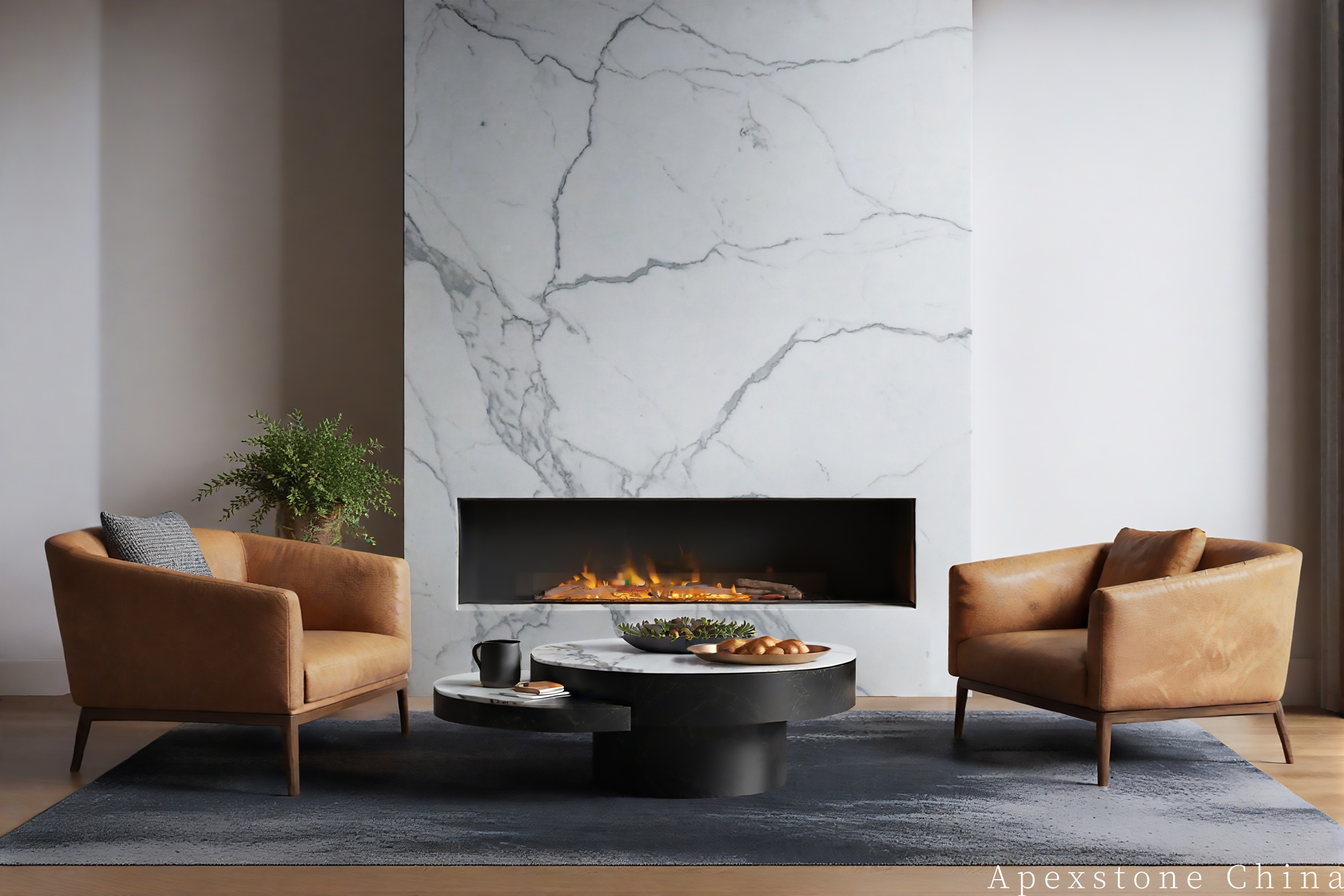
Wall panels ask different things of a stone than countertops do. Weight, panel size and pattern continuity matter more than scratch resistance, and this is where Pandora's large-scale movement becomes an asset rather than a risk. On a feature wall, the blooms read as composition: a single panel can anchor a fireplace wall, while a run of book-matched panels turns a staircase or lobby wall into a mural. The natural crystal structure glitters under grazing light, giving polished panels a quiet sparkle that flat engineered surfaces cannot imitate, and the translucency means a wall lit from behind glows with warm amber depth — an effect usually reserved for onyx, achieved here in a far harder stone.
The palette keeps interiors warm rather than clinical. Cream and brown sit naturally with French country and farmhouse schemes — timber beams, linen, aged brass — and equally with bohemian rooms built on rattan, plaster and plants. Against dark cabinetry or charcoal plaster, a Pandora wall reads as jewellery.
Panel formats and finishes
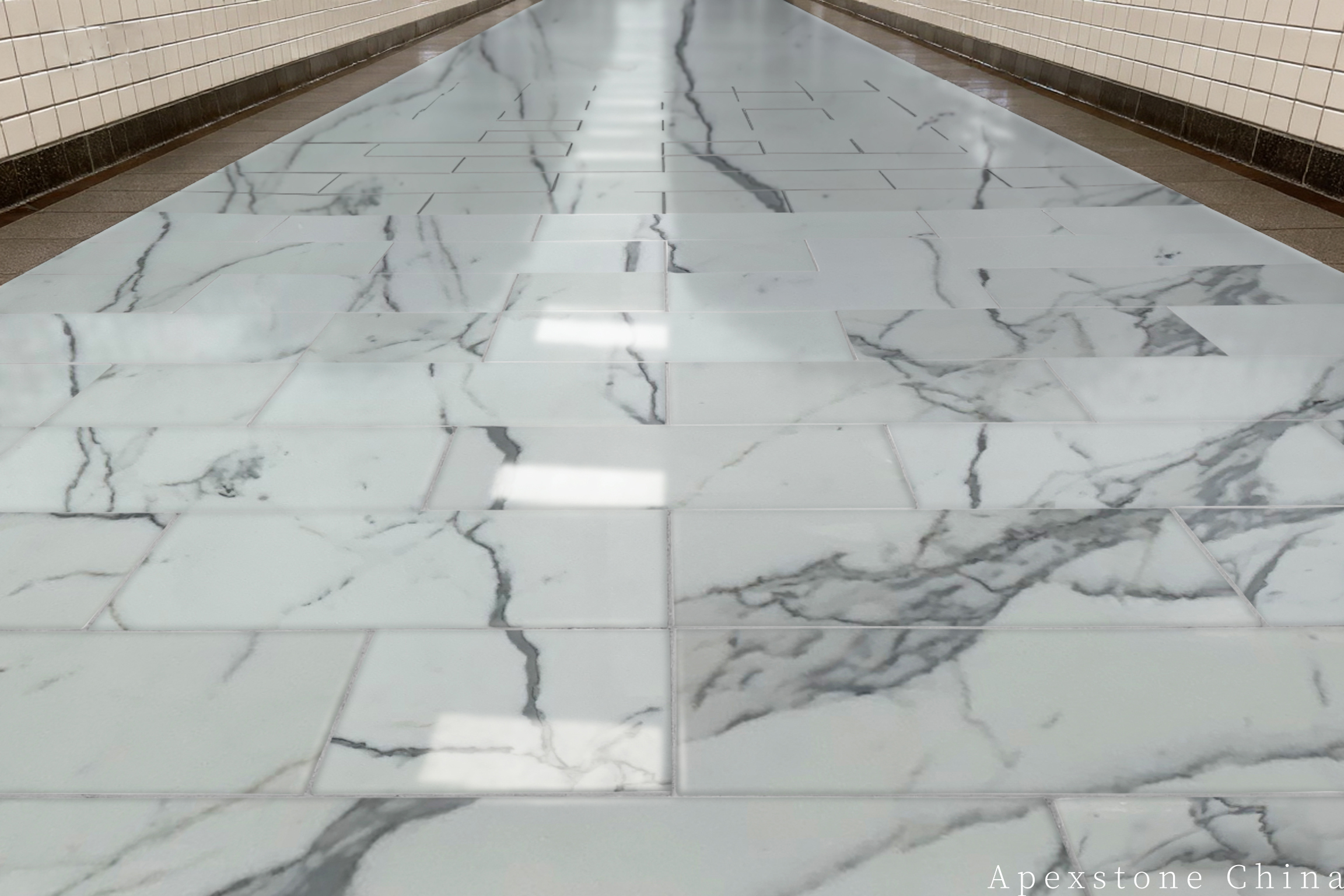
Pandora panels are cut to the project's grid. Common formats include 12x24 wall tile for a more traditional laid-stone look, 24x24 squares, and large-format panels cut to full slab height for seamless feature walls — the format most specified for fireplace walls and lobby features. Metric projects typically run 600x600 or larger custom panels; both unit systems are cut from the same slabs, so mixed-market orders ship from one stock. Finishes follow the room: polished maximizes the sparkle and deepens the brown movement; honed gives a matte, chalky surface that suits country and bohemian interiors and hides minor wear; a light leathered texture is available for feature walls that want tactile depth.
Book-matching is the signature option. Because the movement is large and directional, consecutive slabs from one block mirror almost perfectly, and we plan every book-matched wall on the images of the actual slabs before cutting — panel numbering, mirror direction and joint lines all resolved on the drawing. Where a wall meets a corner or a reveal, the layout decides whether the pattern turns the corner or stops cleanly, and that decision is made on paper, not on site.
Fabrication, inspection and packing
Wall work punishes improvisation, so every Pandora panel order follows the same sequence: slab selection from photographed stock, layout drawing on actual-slab images, approval, cutting, surface finishing, and a final inspection against the numbered drawing. Panels are labelled in installation order, edges protected, and packed vertically in reinforced crates — the orientation that survives container transport best. For wholesale buyers, mixed orders of 12x24 tile and large-format panels are sorted and labelled per room or per elevation, so a fit-out team unpacks one crate per wall rather than hunting through a mixed pallet.
Because quartzite is dense and strong, panels can be cut thinner than many marbles at the same panel size, which reduces both weight on the substrate and freight cost — a quiet but real advantage on large lobby walls where every square metre is suspended.
Installation and care
Panels install on standard stone wall systems — adhesive over prepared substrate for tile formats, mechanical anchoring or adhesive-and-anchor hybrid for large panels, following the project engineer's specification. Joints are set tight for a seamless read or expressed deliberately where the design wants a panelled rhythm. Day-to-day care is minimal: a pH-neutral cleaner and a soft cloth. Sealed once at installation, a Pandora wall resists moisture and staining in normal interior conditions, and the polished face needs no wax or periodic re-coating to keep its depth.
Specifying Pandora wall panels
Send the wall elevations, panel grid, finish and book-match preference, and the destination port. The order comes back as a layout on the actual Pandora slab images — mirror direction, joint lines and panel numbering resolved before the first cut. Single-panel orders are accepted for sample walls and showrooms, and every panel is inspected against the numbered drawing before packing. When one workshop controls cutting, finishing, inspection and packing, the wall that arrives is the wall that was drawn.