Outdoor & Landscape
A Landscape Designer's Guide to Travertine Romano Paving
Build calm garden paths, terraces and pool surrounds with warm Italian travertine—using the right module, surface texture, drainage and edge detail for the climate.
Landscape Planning
Let the paving connect architecture, planting and water
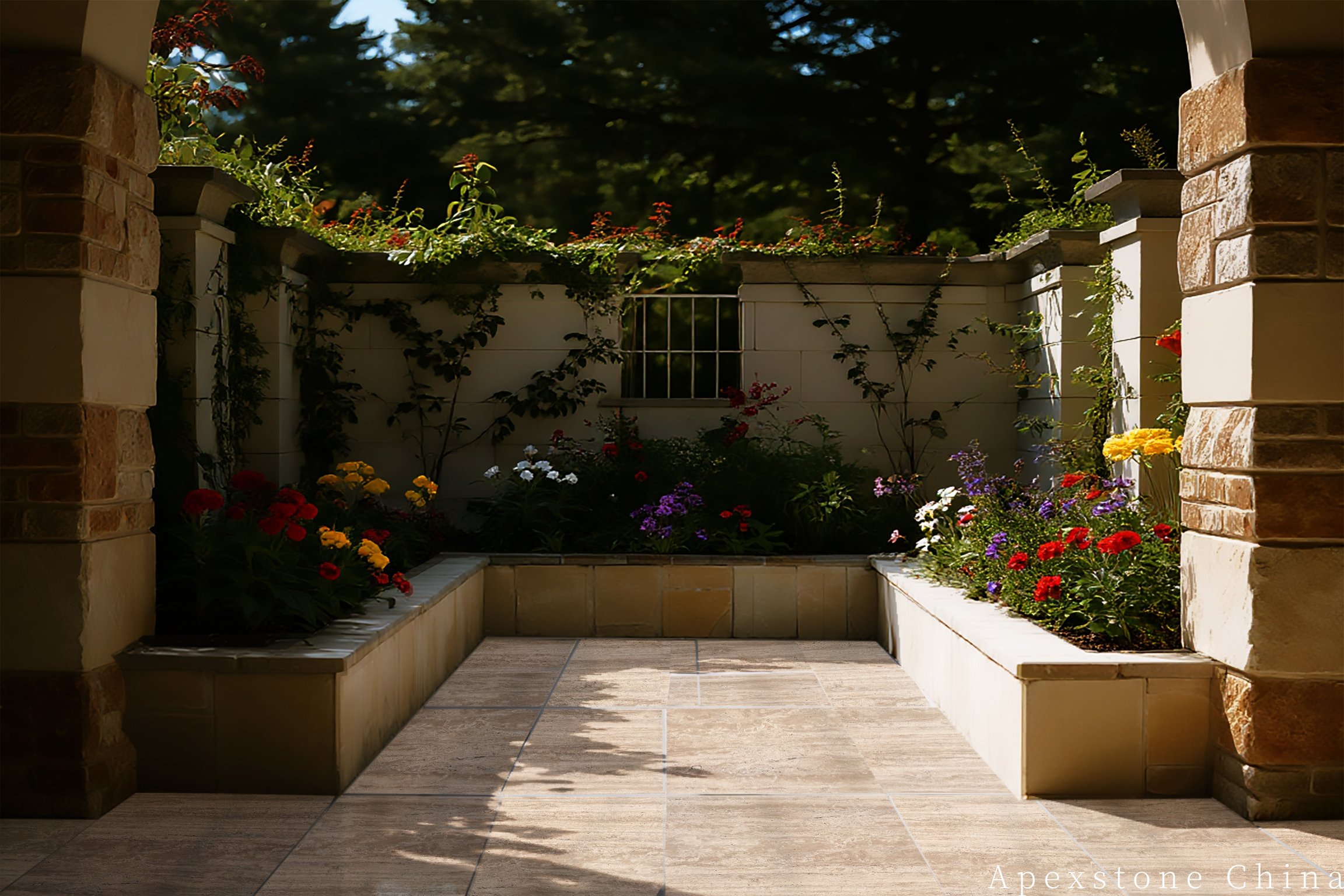
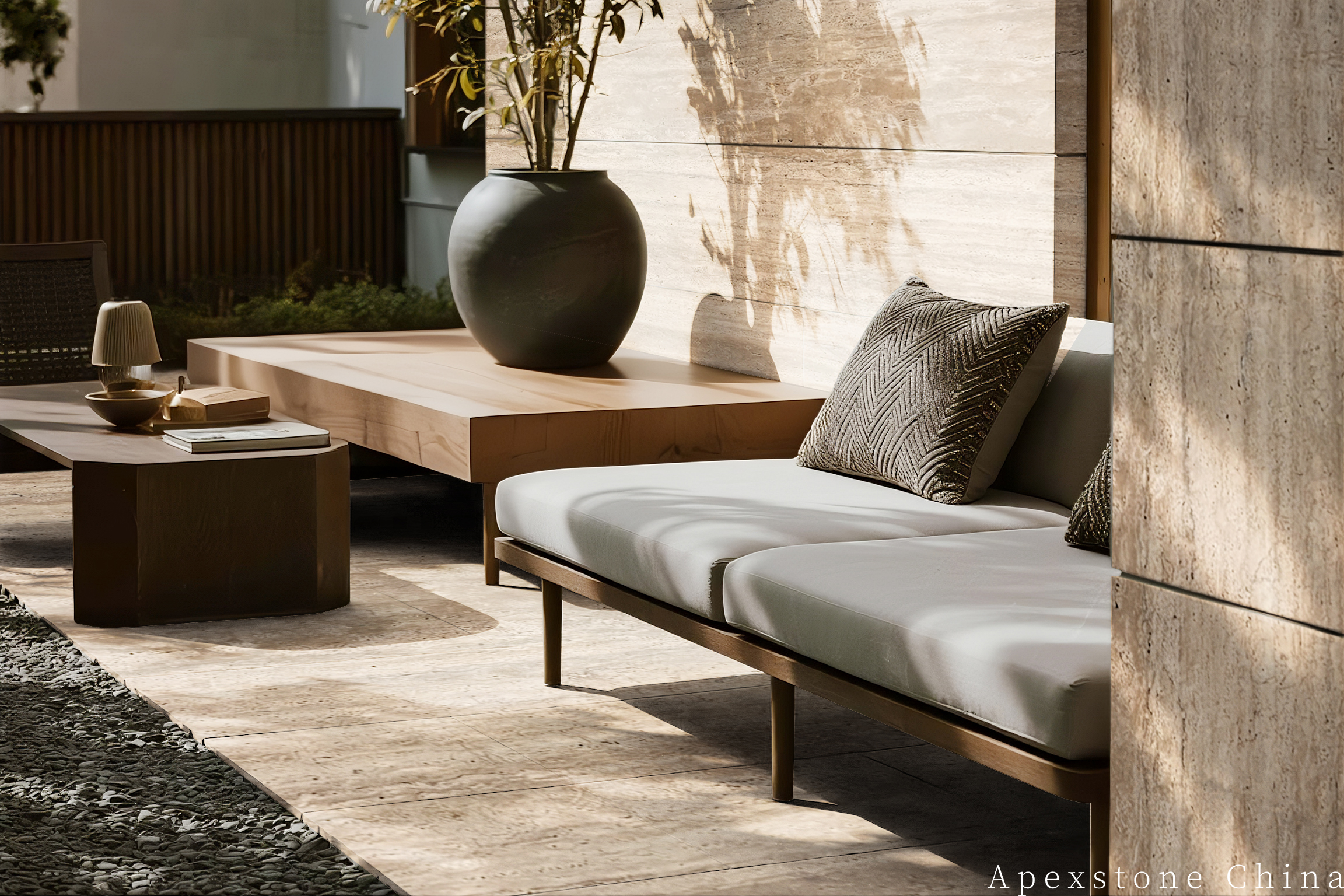
Travertine Romano gives outdoor spaces a warm beige base that sits naturally beside timber, lime render, pale concrete and drought-tolerant planting. Its pores and layered grain soften over time rather than looking artificially uniform. That character works particularly well in Mediterranean gardens, courtyards, resort terraces and contemporary landscapes that need warmth without a strong colour statement.
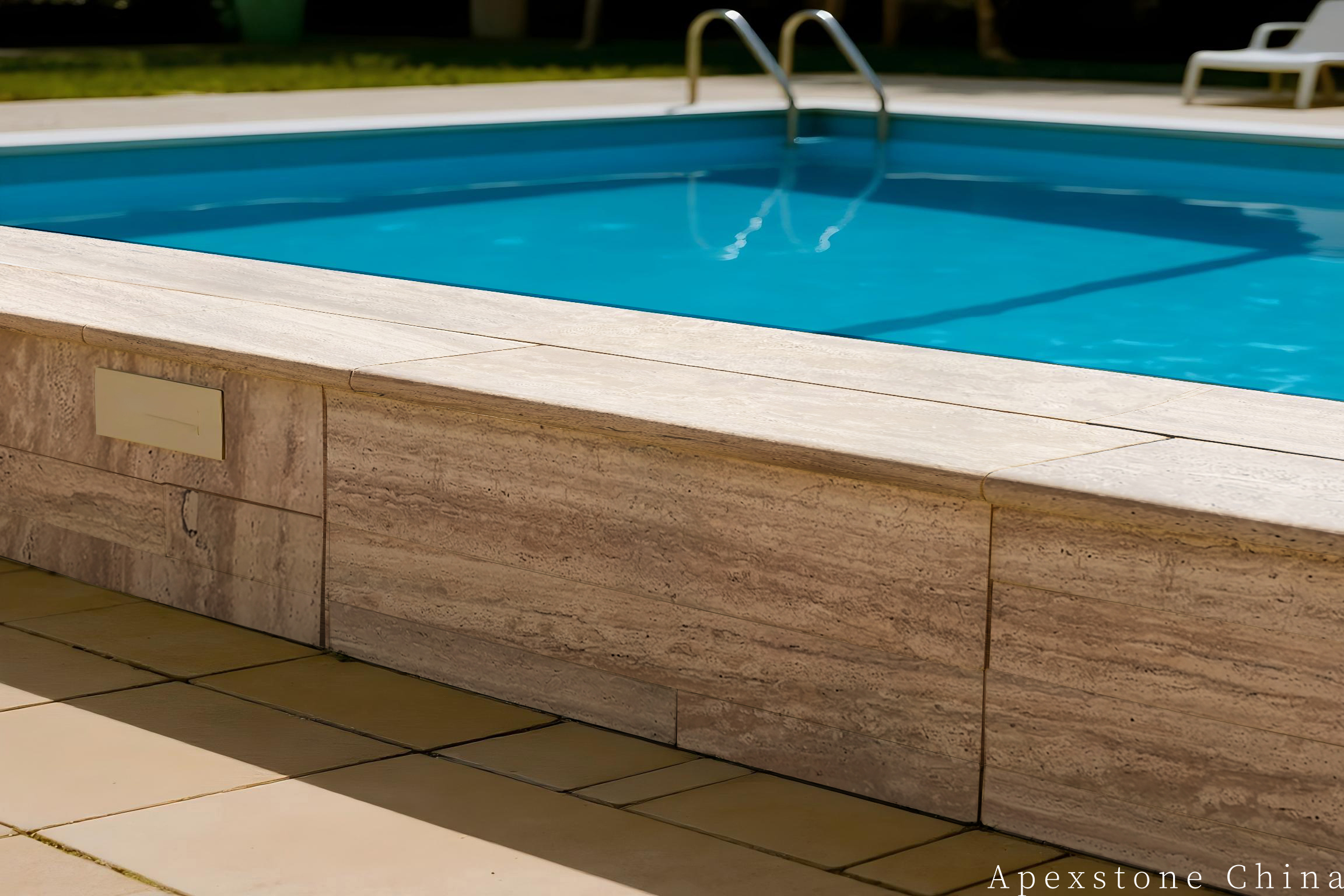
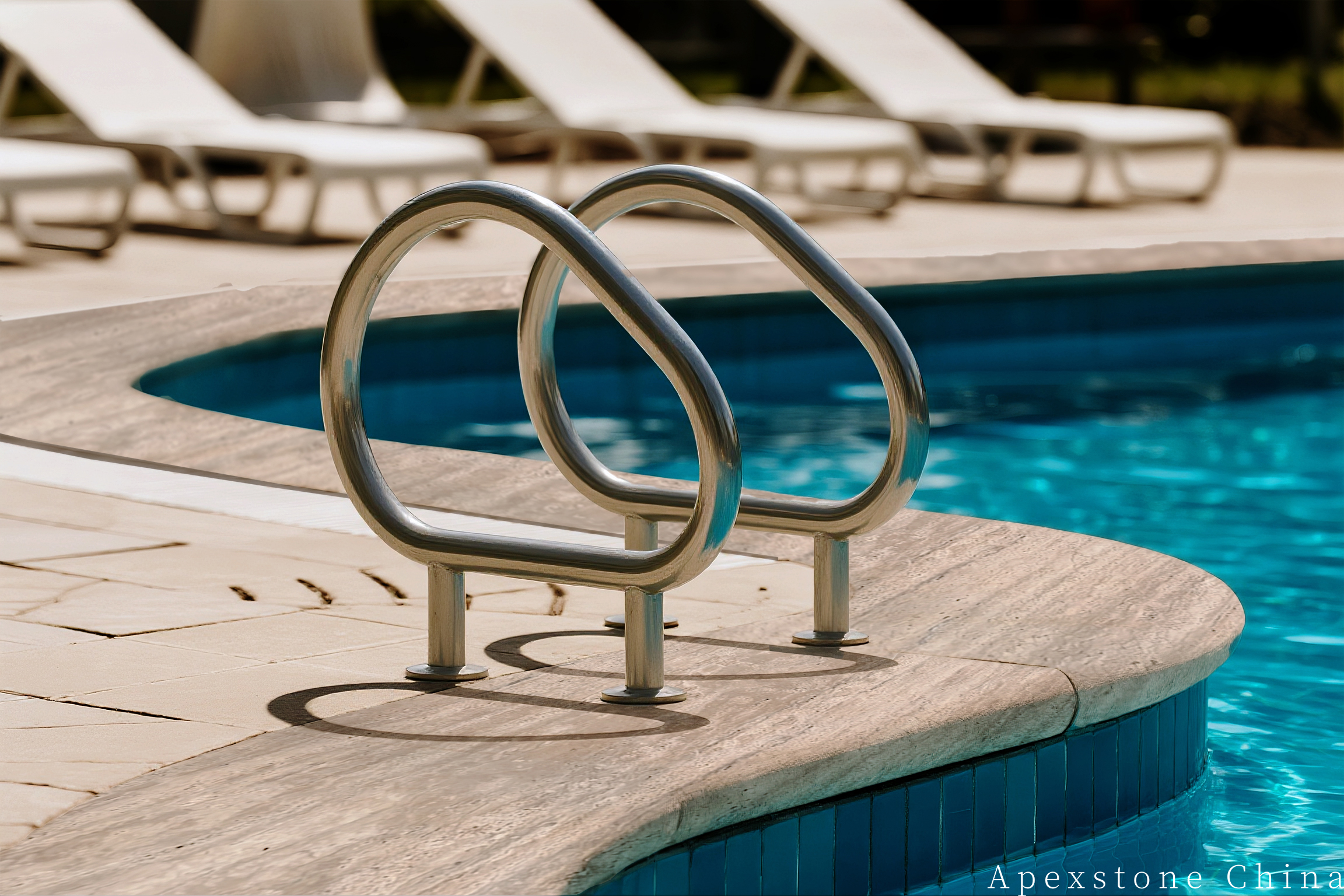
Outdoor success depends less on the stone name than on the complete assembly. Use unfilled brushed or tumbled finishes where slip resistance matters, size the base and thickness for the expected load, drain water away from buildings, and coordinate movement joints with the paving module. Pool surrounds need rounded coping edges, compatible sealers and local slip-test confirmation—not a polished interior finish carried outdoors.

Landscape Palette
Paving scales and surface character
Combine large slabs, modular fields and small-format accents while keeping colour range and joint rhythm controlled.

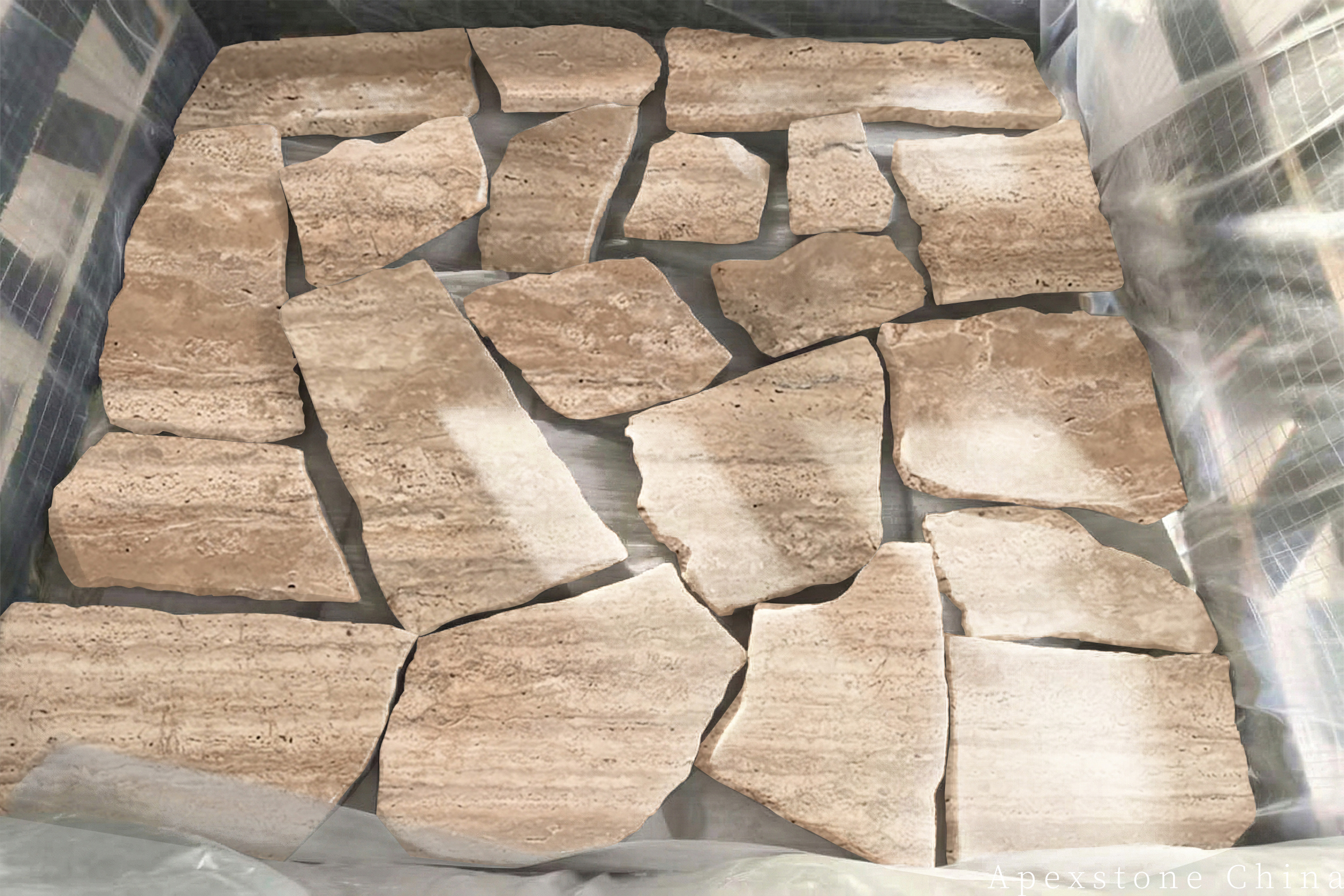
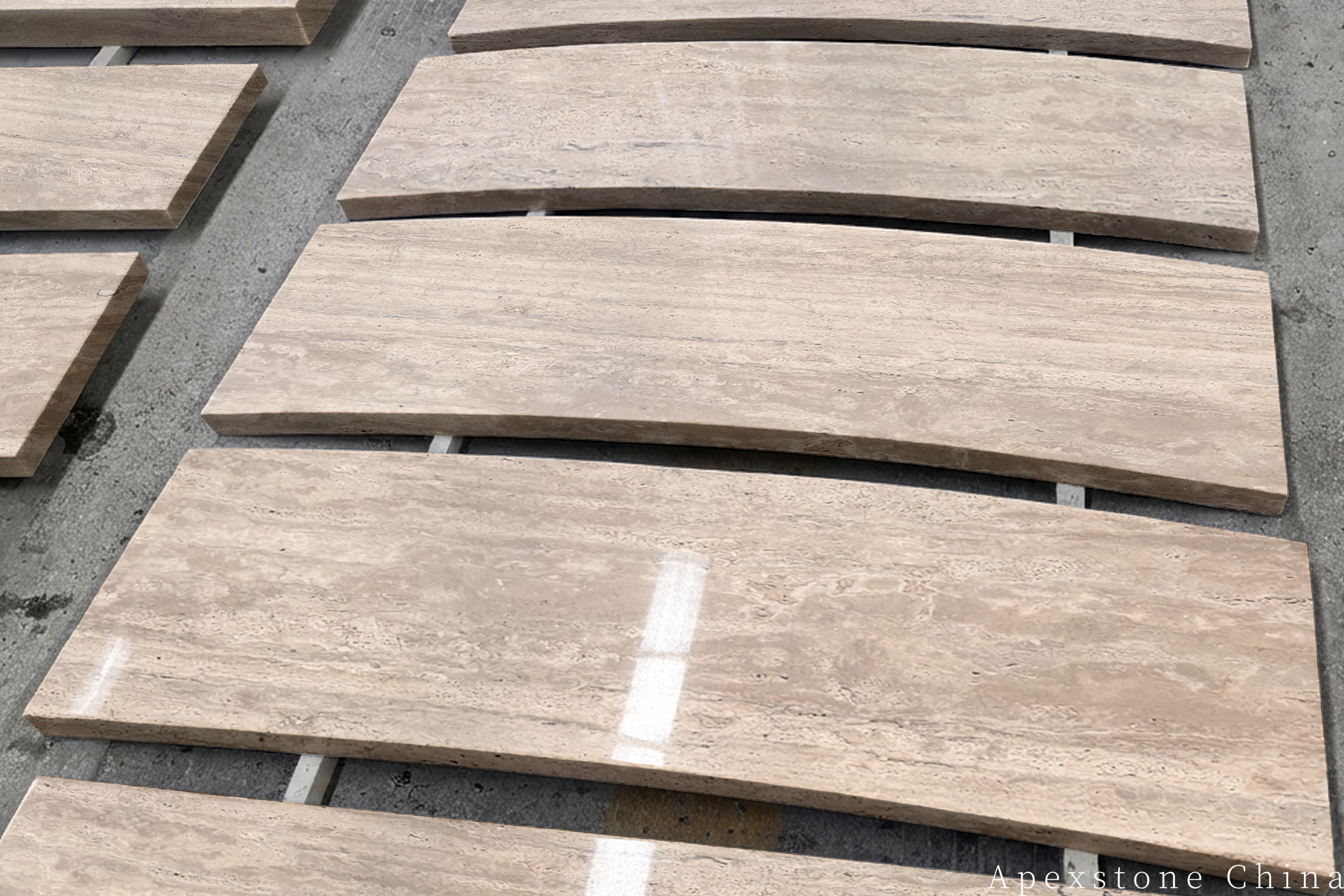
Landscape Slabs

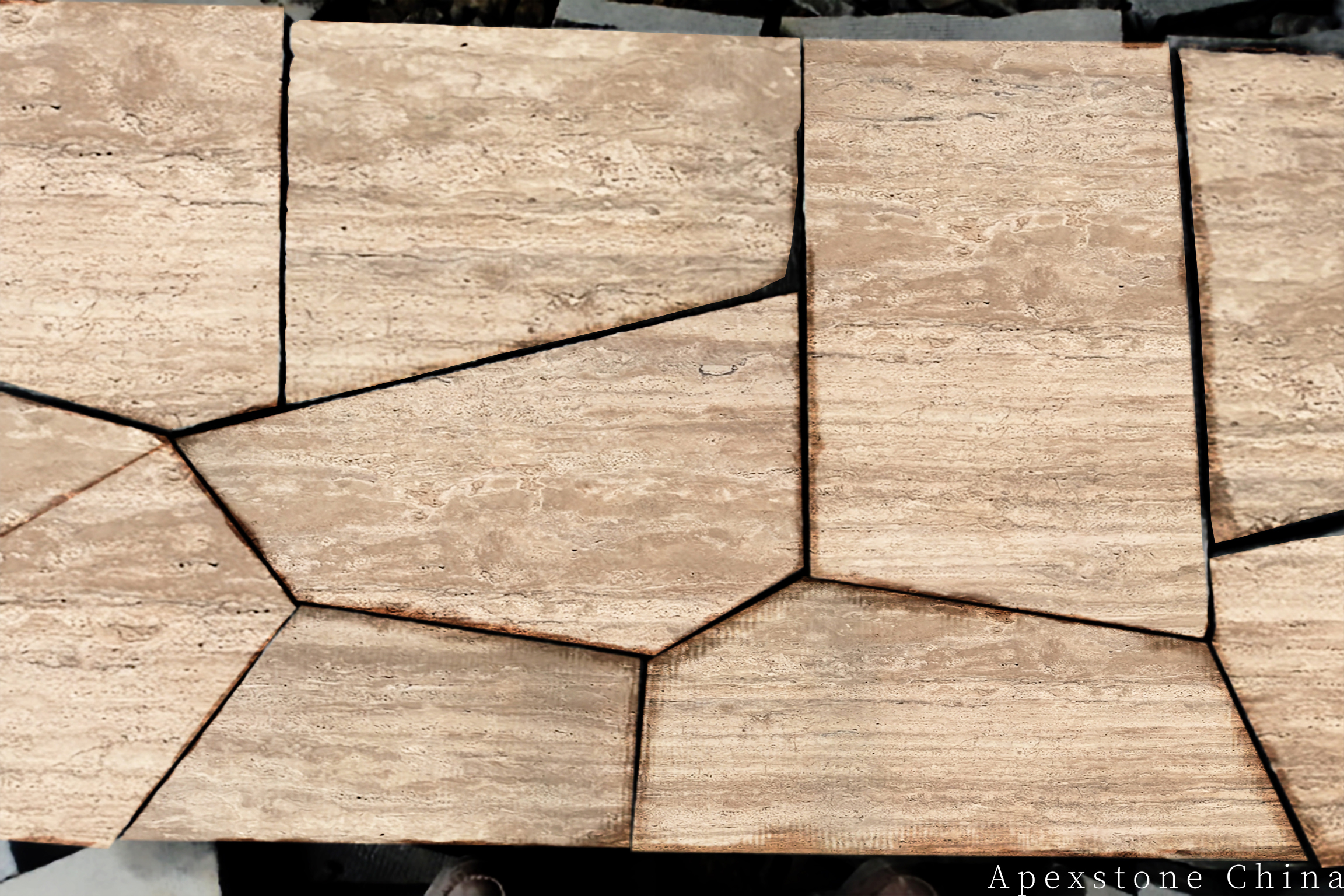
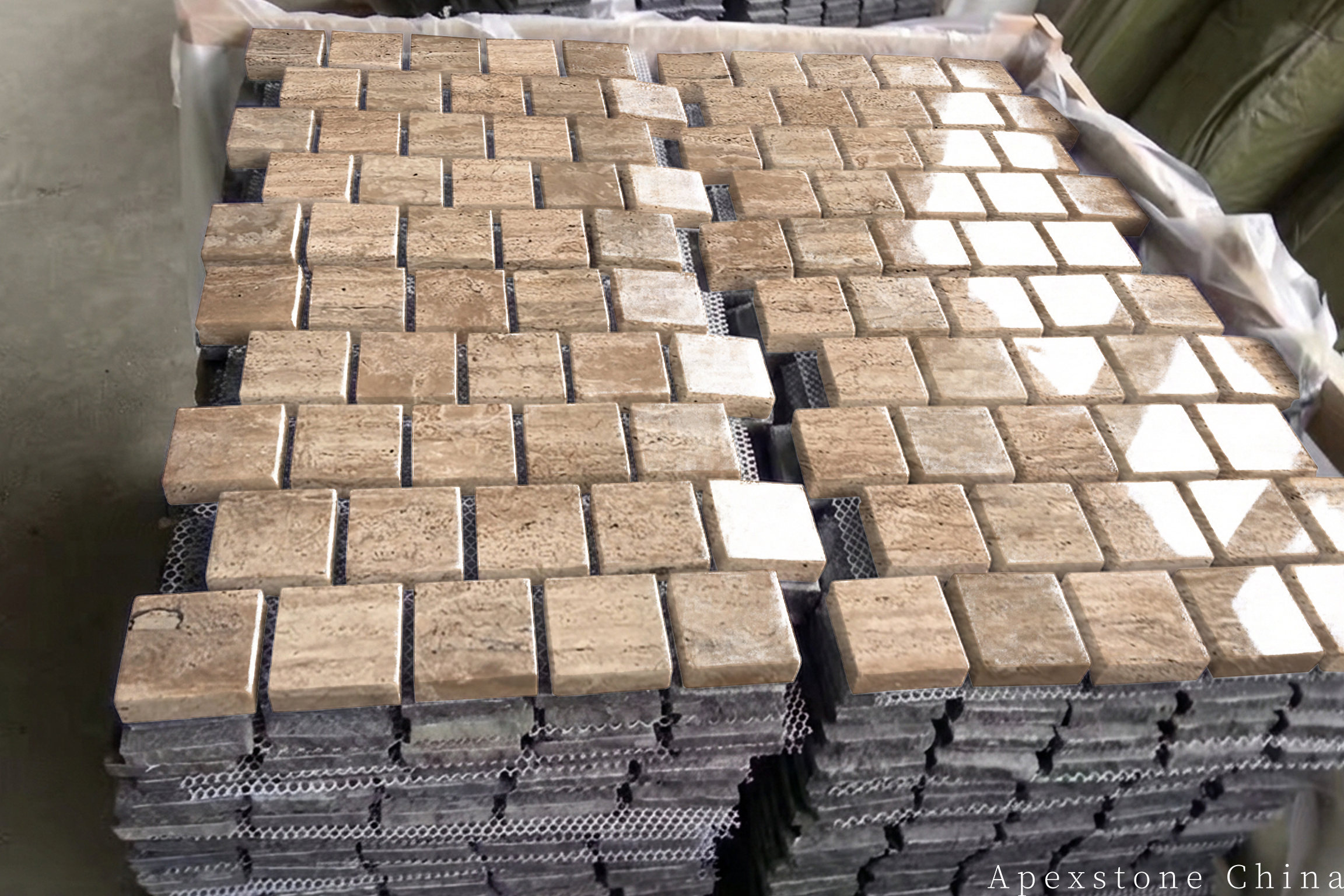
Modular Paving Field

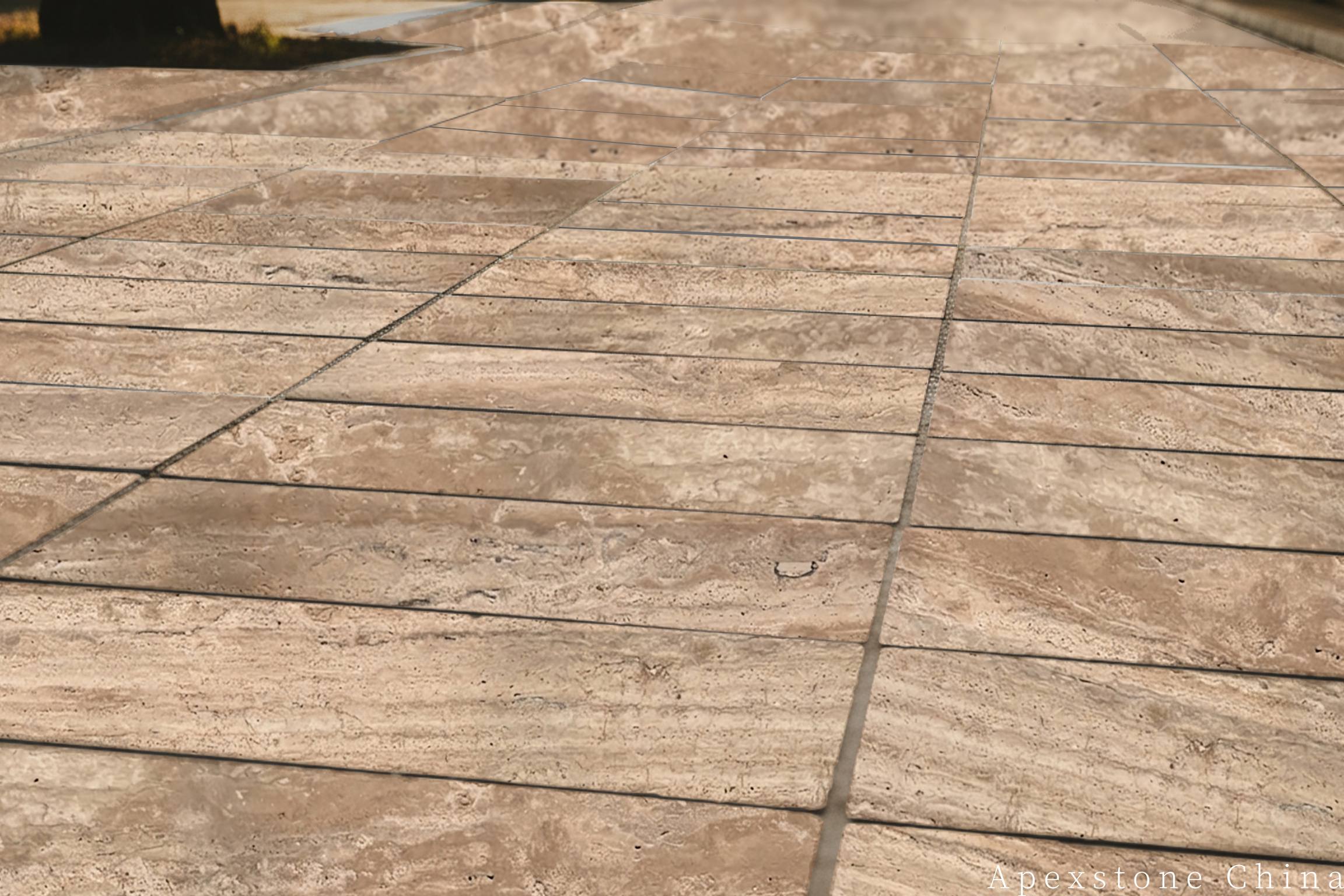
French-Pattern Rhythm

Batch & Colour Range

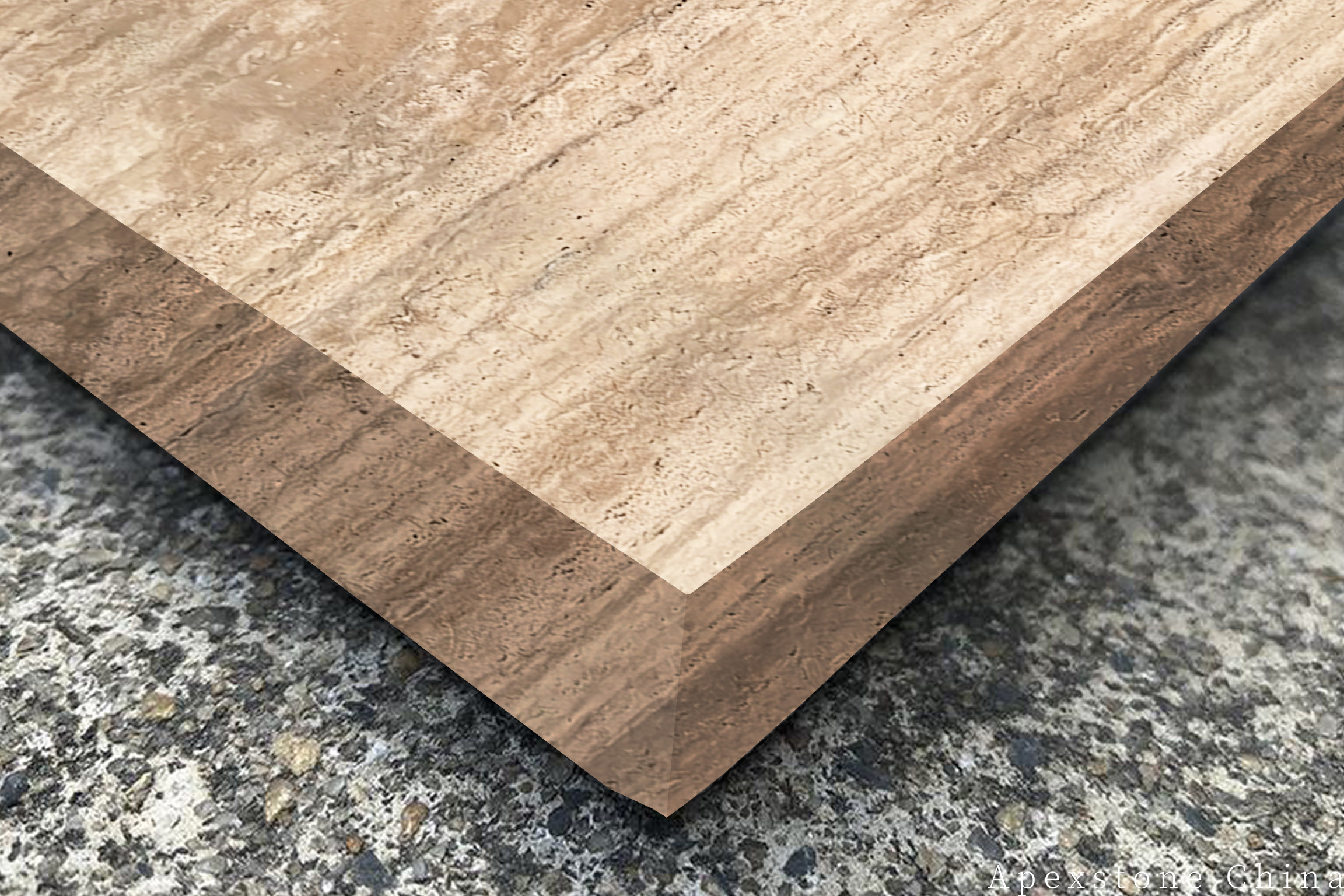
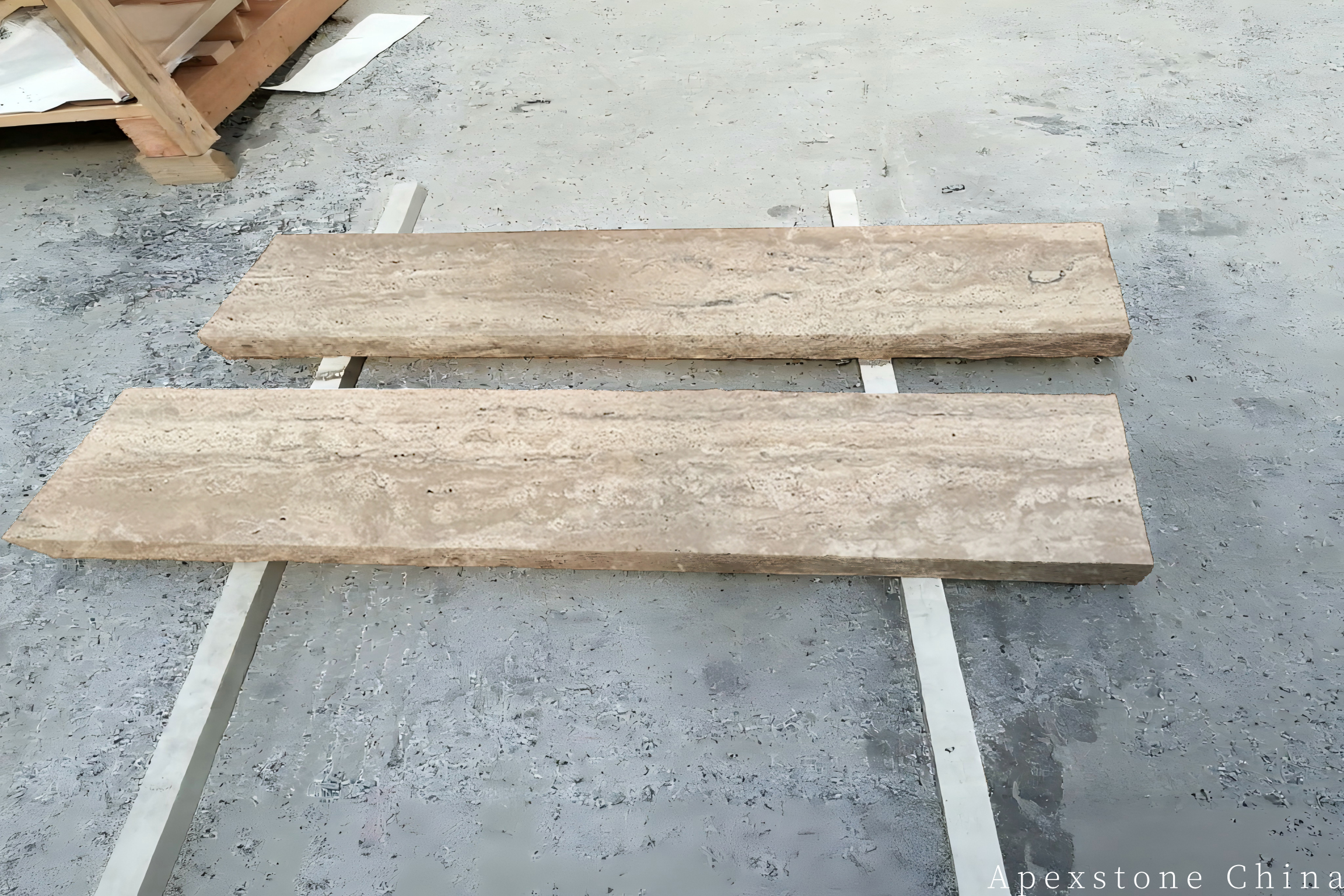
Steps & Coping Stock

Cut-to-Size Details
Design Notes
Four details that decide outdoor performance
Specify texture for the wettest condition
Use unfilled brushed or tumbled travertine for pool surrounds, exposed steps and rain-wet paths. Confirm the required wet-pendulum or local slip classification with the project consultant using the final sealer—not an unsealed sample.
Coordinate falls with the module
Set drainage falls before choosing slab sizes. Large pavers look calm but need a substrate that can carry consistent falls without lipping. Align channel drains and movement joints to the module so water management reads as part of the design.
Choose thickness from the loading
Pedestrian terraces may use 20 mm material on an engineered bonded bed; pool coping commonly uses 30 mm; driveways or pedestal systems require project-specific structural confirmation. Do not select thickness by appearance alone.
Treat open pores as part of the maintenance plan
Unfilled travertine has authentic texture but can retain soil and organic matter. Use compatible breathable sealers, keep irrigation overspray away from the paving, and allow for periodic low-pressure cleaning and resealing.
Applications
Three ways to structure the landscape

Garden Paths & Courtyards
Use a modular or French-pattern field to absorb small dimensional changes and create a relaxed rhythm. A tumbled edge reinforces the informal character; a straight edge suits more contemporary courtyards.

Pool Surrounds & Coping
Pair slip-conscious pavers with bullnose or eased coping. Coordinate coping joints with the pool shell, skimmers and cover track, and verify resistance to the pool's water-treatment chemistry.

Terraces, Steps & Thresholds
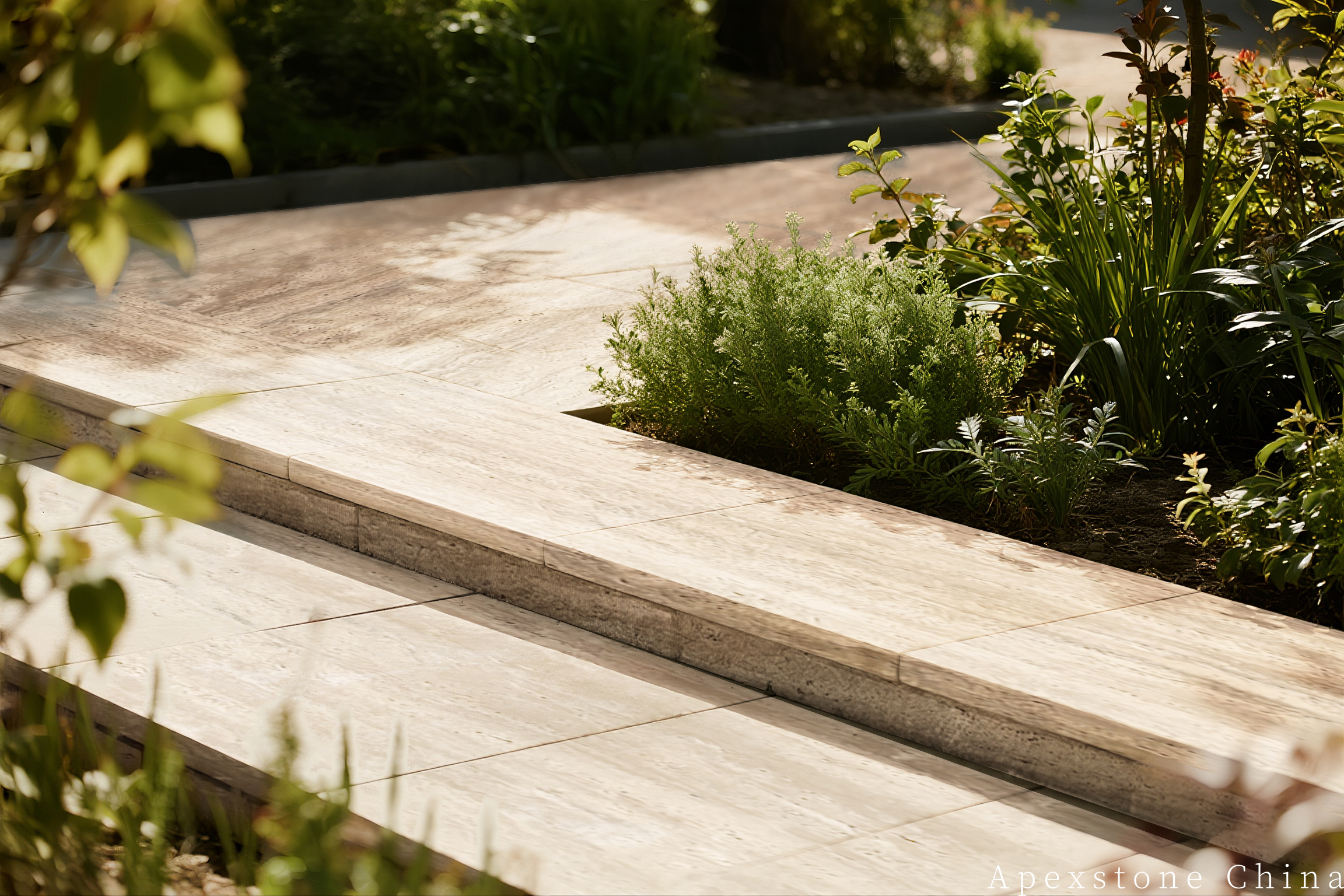
Use larger vein-cut slabs to lead the eye along a terrace. Form nosings from thicker stock, include drainage at thresholds, and keep riser and tread tones within the approved batch range.

Driveway Bands & Arrival Courts
Travertine can be used where the build-up is engineered for vehicle loads. Smaller pavers or reinforced assemblies control breakage better than thin, oversized slabs.
Outdoor Specification
Recommended starting points
| Stone | Travertine Classico Roma / Travertine Romano |
| Base Colour | Warm beige with natural pores and tonal variation |
| Preferred Outdoor Finish | Unfilled brushed or unfilled tumbled |
| Common Paver Thickness | 20 mm pedestrian paving, subject to substrate and local standard |
| Pool Coping Thickness | Typically 30 mm with eased or bullnose edge |
| Heavy-Duty Thickness | Up to 40 mm for engineered driveway or high-load applications |
| Formats | 600 × 600 mm, mixed French pattern, steps, coping and custom cut-to-size |
| Water Absorption | Typical reference range 1-3%; verify supplied batch where required |
| Frost Exposure | Use properly selected, installed and water-repellent sealed material; follow local freeze-thaw design rules |
| Slip Resistance | Test final finish and sealer to the project's local wet-area requirement |
| Sealing | Breathable penetrating sealer compatible with exterior and pool chemistry |
| Typical Lead Time | 25-35 days after pattern, thickness and edge details are approved |
Landscape Workflow
From site conditions to numbered pallets
A durable exterior is a coordinated system of stone, base, joints, drainage and maintenance. Confirm these decisions before the final quantity is ordered.
- ✓
Map exposure and loading
Identify wet zones, freeze-thaw exposure, slopes, vehicle loads, irrigation and pool-water contact.
- ✓
Set modules and edge details
Choose field sizes, French-pattern sets, coping profiles, step nosings and threshold pieces.
- ✓
Approve dry and sealed samples
Review colour range, pore character, finish and the actual proposed sealer under wet and dry conditions.
- ✓
Coordinate the installation drawing
Locate falls, drains, expansion joints, cut pieces and pallet zones before production.
- ✓
Pack by installation area
Number crates or pallets by terrace, path, pool edge and step sequence to reduce site sorting and damage.

Plan the Landscape
Match the paving specification to the site's climate and loading
Send the landscape plan, quantities, wet-area requirements and edge details. Apexstone can prepare a coordinated paver, coping and step schedule.