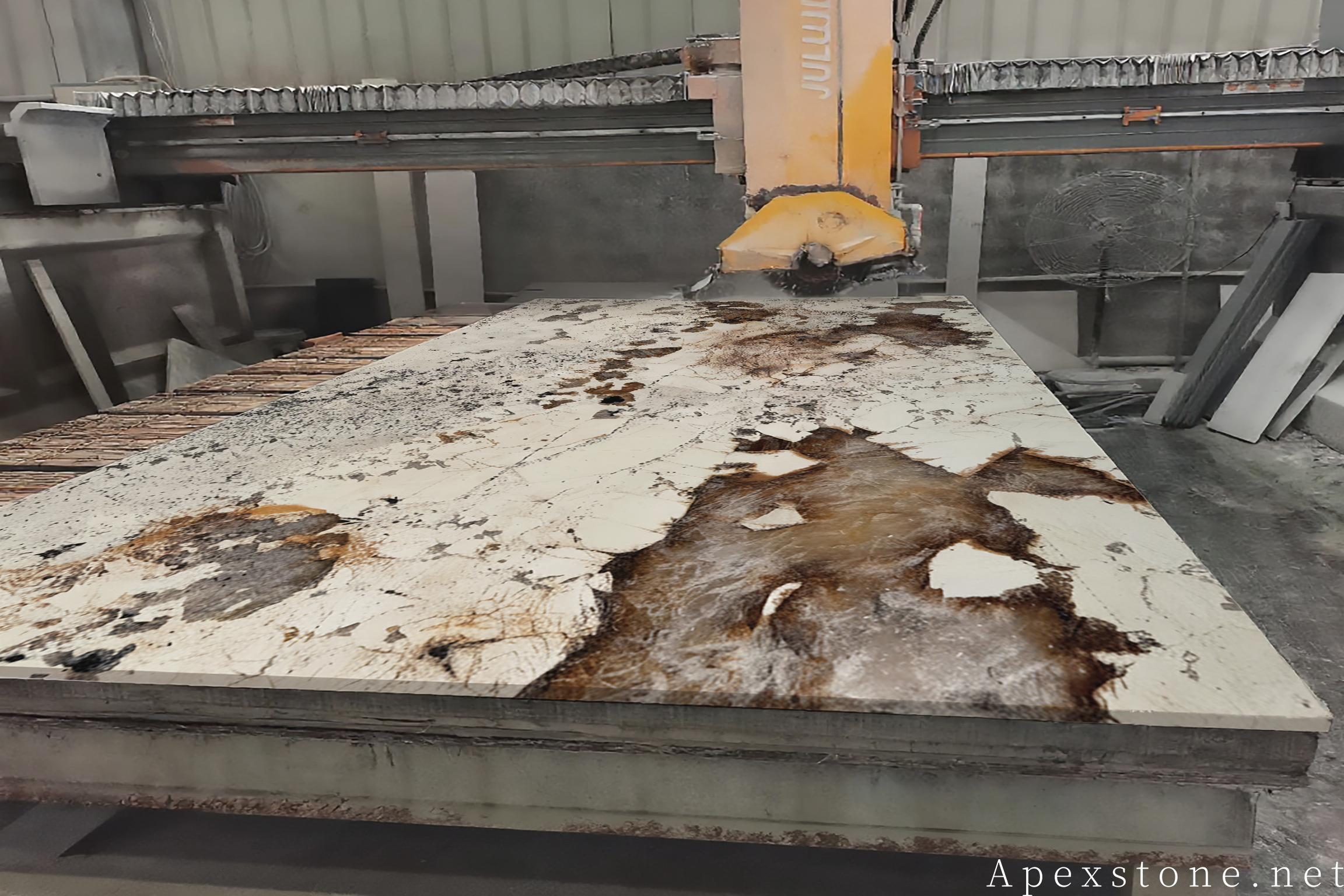
A step-by-step look at Pandora quartzite countertop fabrication: slab selection, layout approval, bridge cutting, CNC cut-outs, edge polishing, inspection and export packing - and why each step protects the pattern you approved.
Apexstone material brief
From Slab to Site: How Pandora Quartzite Countertops Are Fabricated and Packed
Most buyers judge a countertop at installation, but the decisions that determine whether it fits, reads and survives shipping are all made earlier, in the workshop. Pandora makes this especially visible: its large brown floral movement means a seam in the wrong place or a cut-out through the middle of a bloom is obvious from across the room. This guide follows a Pandora countertop set through fabrication, step by step, so buyers know what to ask for and what to check at each stage.
Step one: the layout on the actual slab
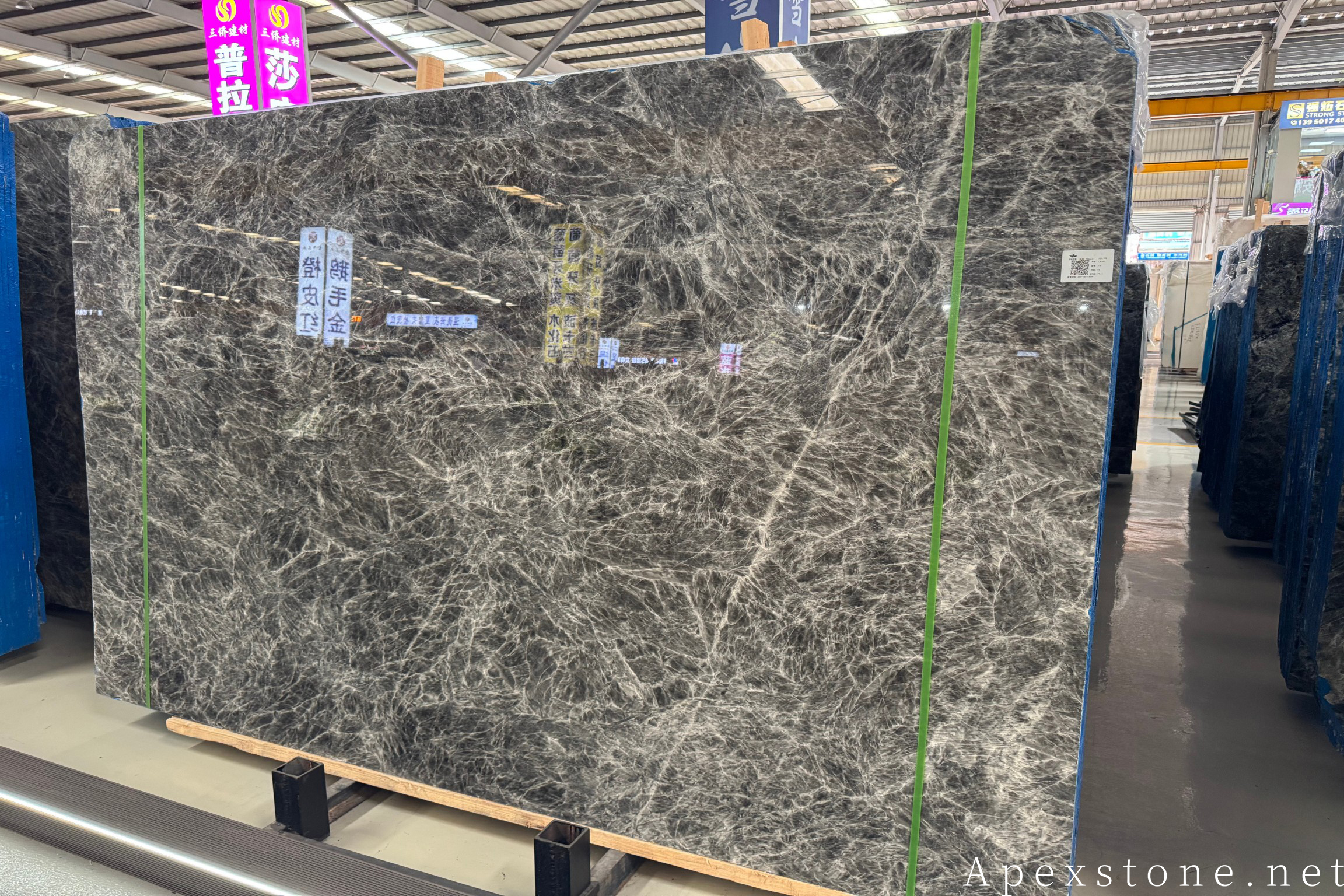
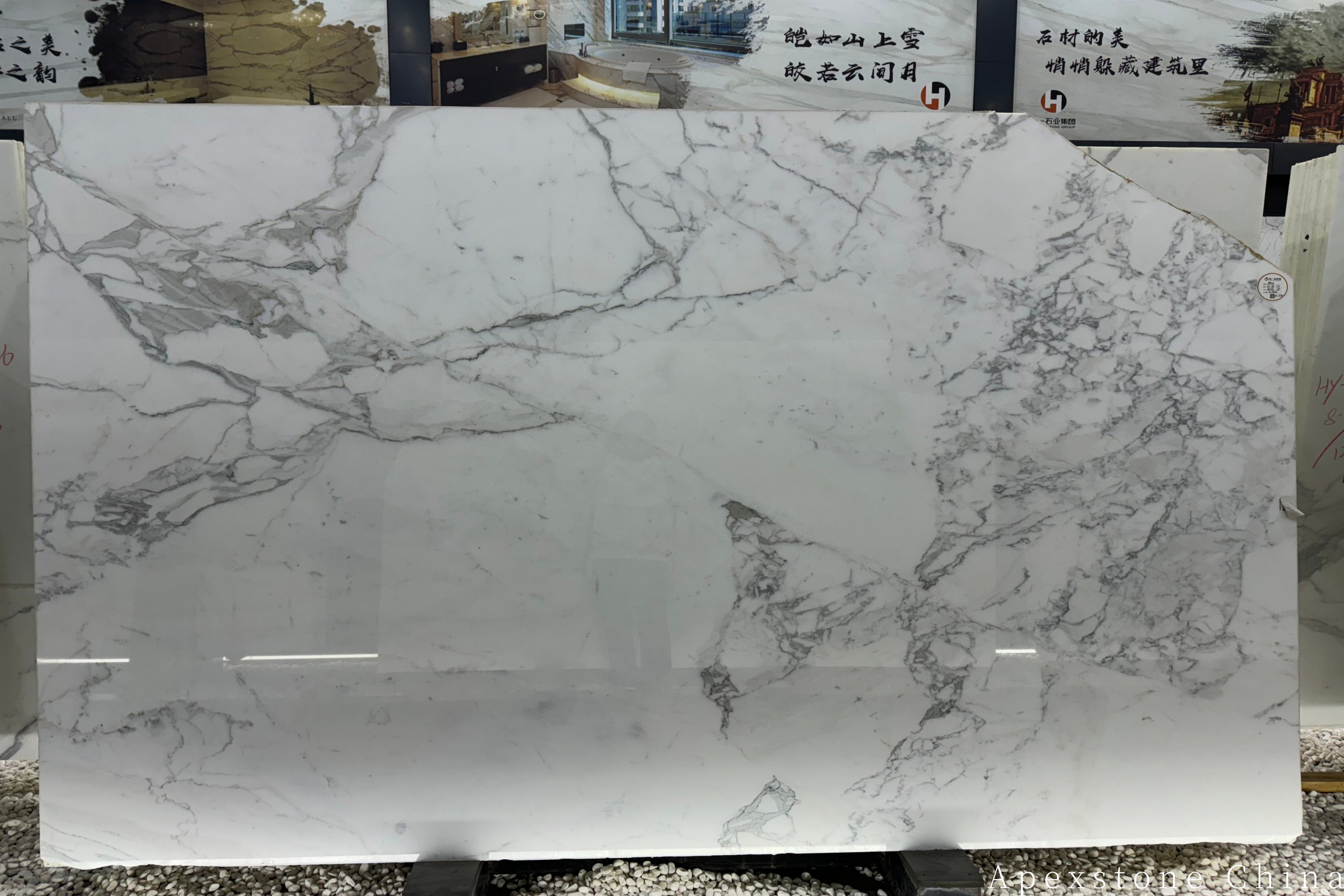
Fabrication begins with nesting — placing every piece of the set onto photographs of the actual slabs. The island goes first, then waterfall returns and splash panels, then the perimeter runs. Because Pandora's movement is large, seam placement is a design decision: seams sit where a sink or cooktop run breaks the field, or where the movement naturally thins, never through the centre of a bloom. The layout drawing is sent for approval before anything is cut, and it is the single most important document in the project — the veining you approve on it is the veining that arrives.
Step two: cutting and CNC work
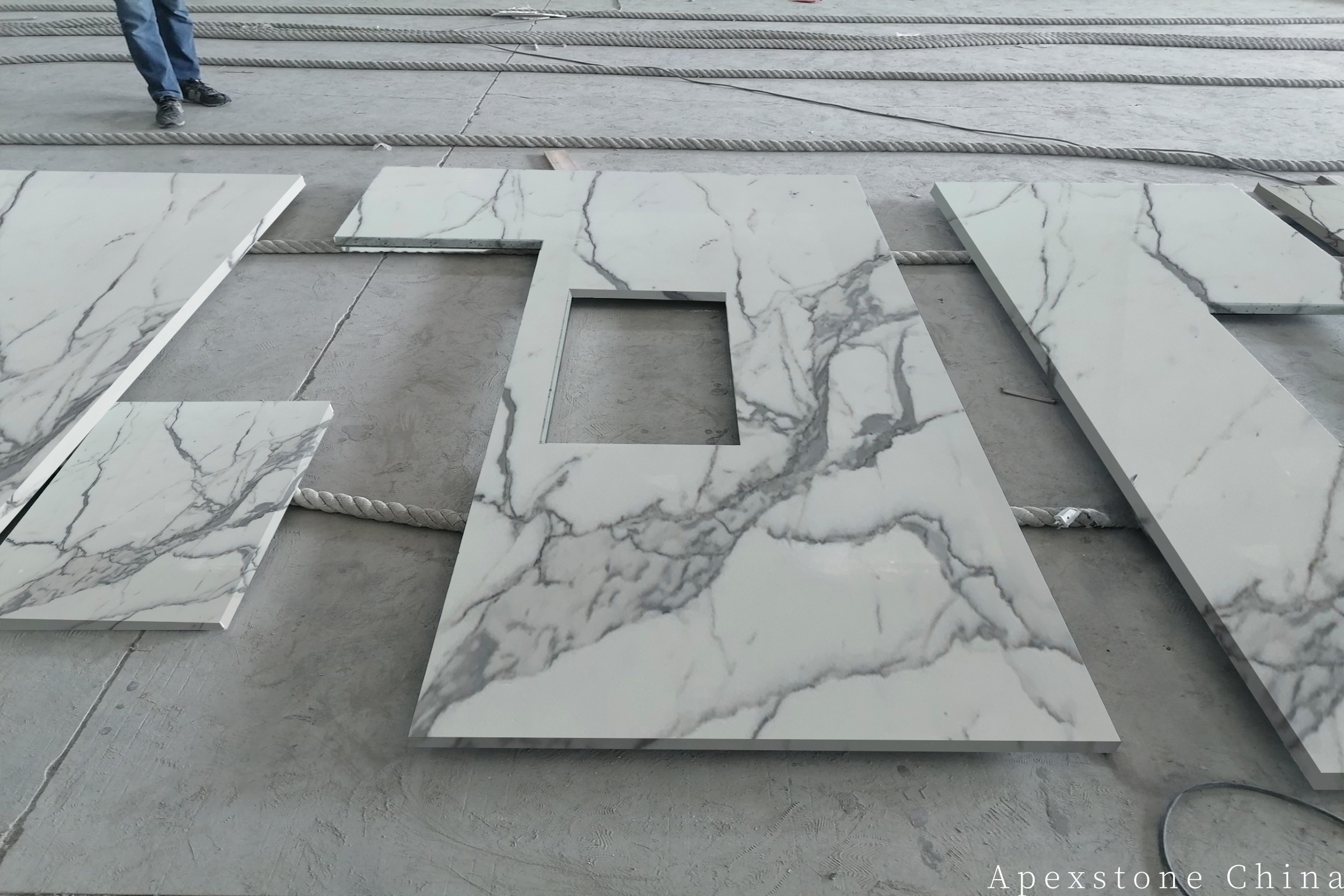
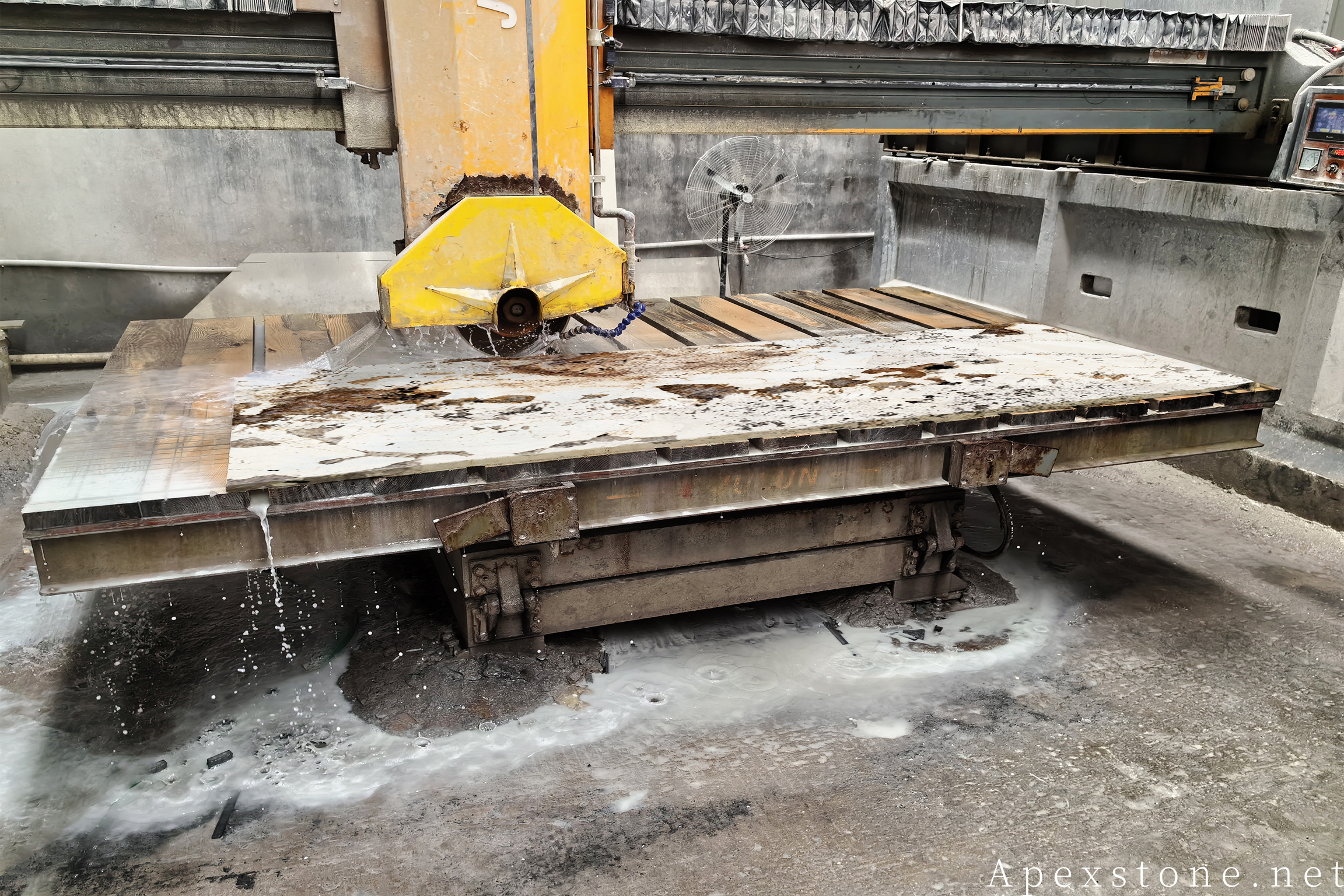
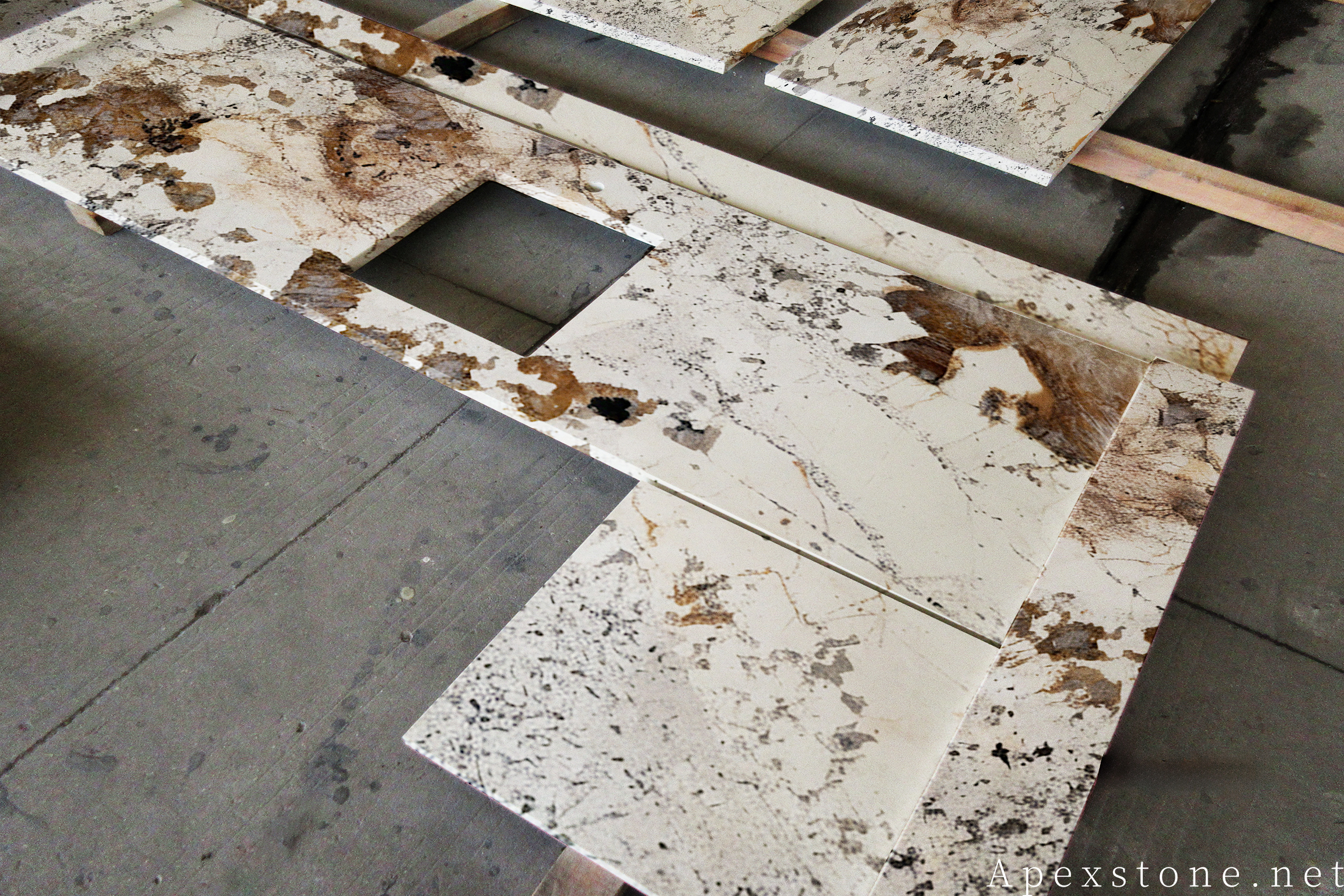
Once the layout is approved, the bridge saw cuts the field pieces, and CNC equipment machines every cut-out — sink, cooktop, tap holes, drainer grooves and corner radii — to the manufacturer's template. Quartzite is hard, which is good news for the finished top and a demand on the tooling: diamond tooling, generous water flow and patient feeds. The order matters as much as the equipment; a cut-out moved 20 mm after the field is cut cannot be undone, which is why template approval precedes every machine run.
Step three: edges and polishing
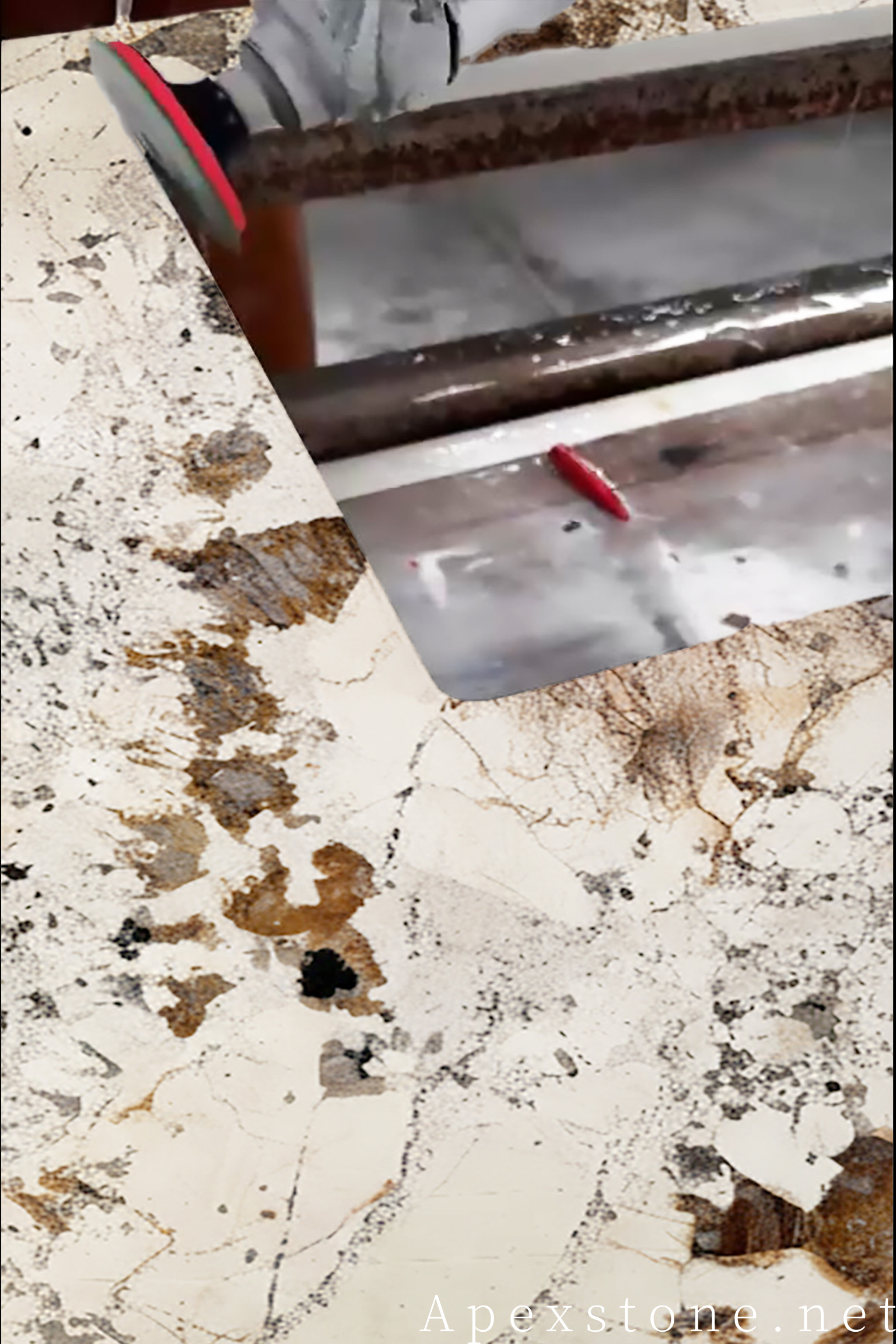
Edge profiles — eased, bevel, bullnose or a mitred build-up for a deeper 2 in read — are ground and polished after cutting. On Pandora, the polish stage is where the stone earns its premium: the natural crystal structure only reveals its sparkle under a full polish, and the brown movement deepens as the surface comes up. Mitred build-up joints are placed on the edge return where they are invisible from above, and the polish is carried continuously across the joint so the edge reads as one piece of stone.
Step four: inspection against the drawing
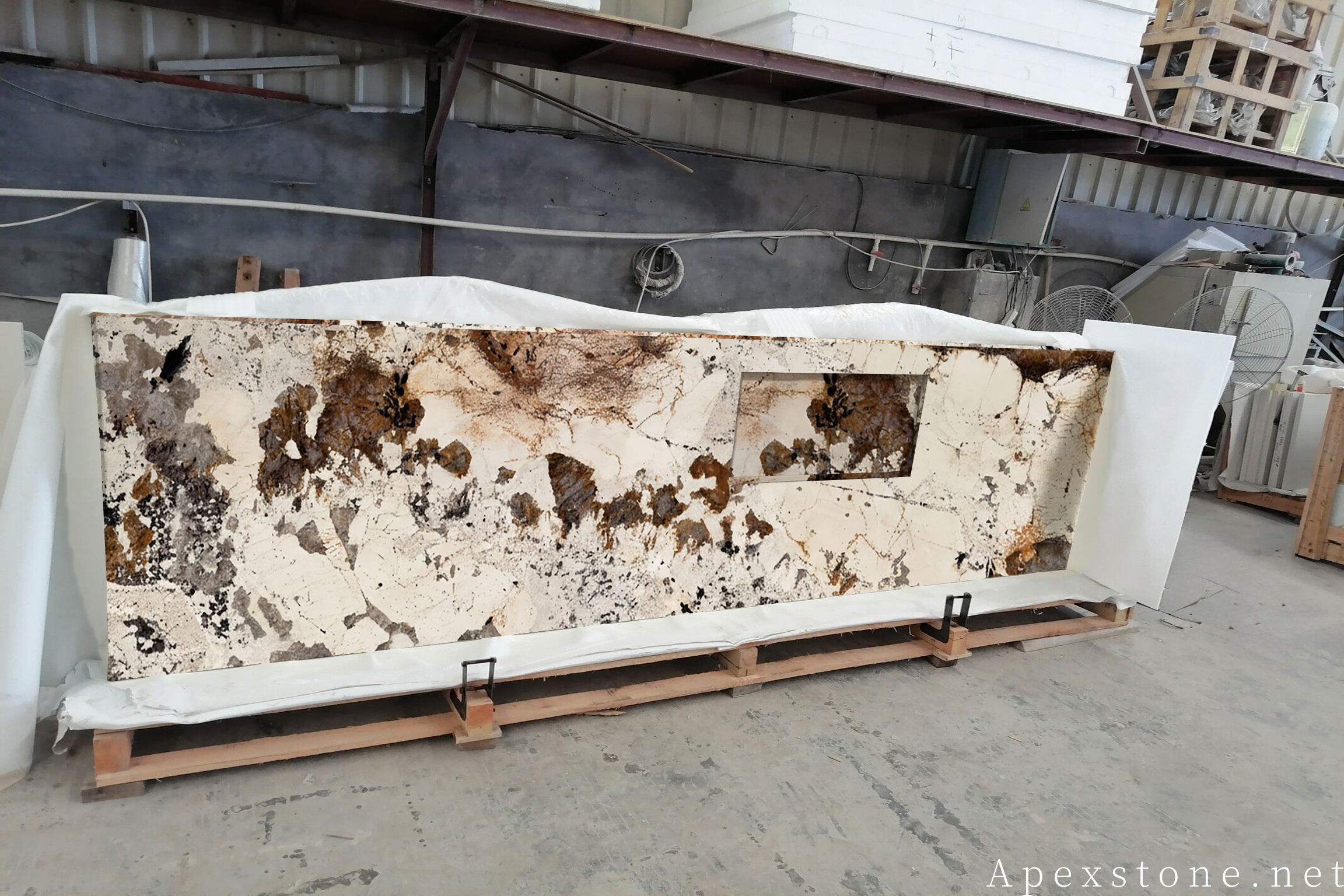
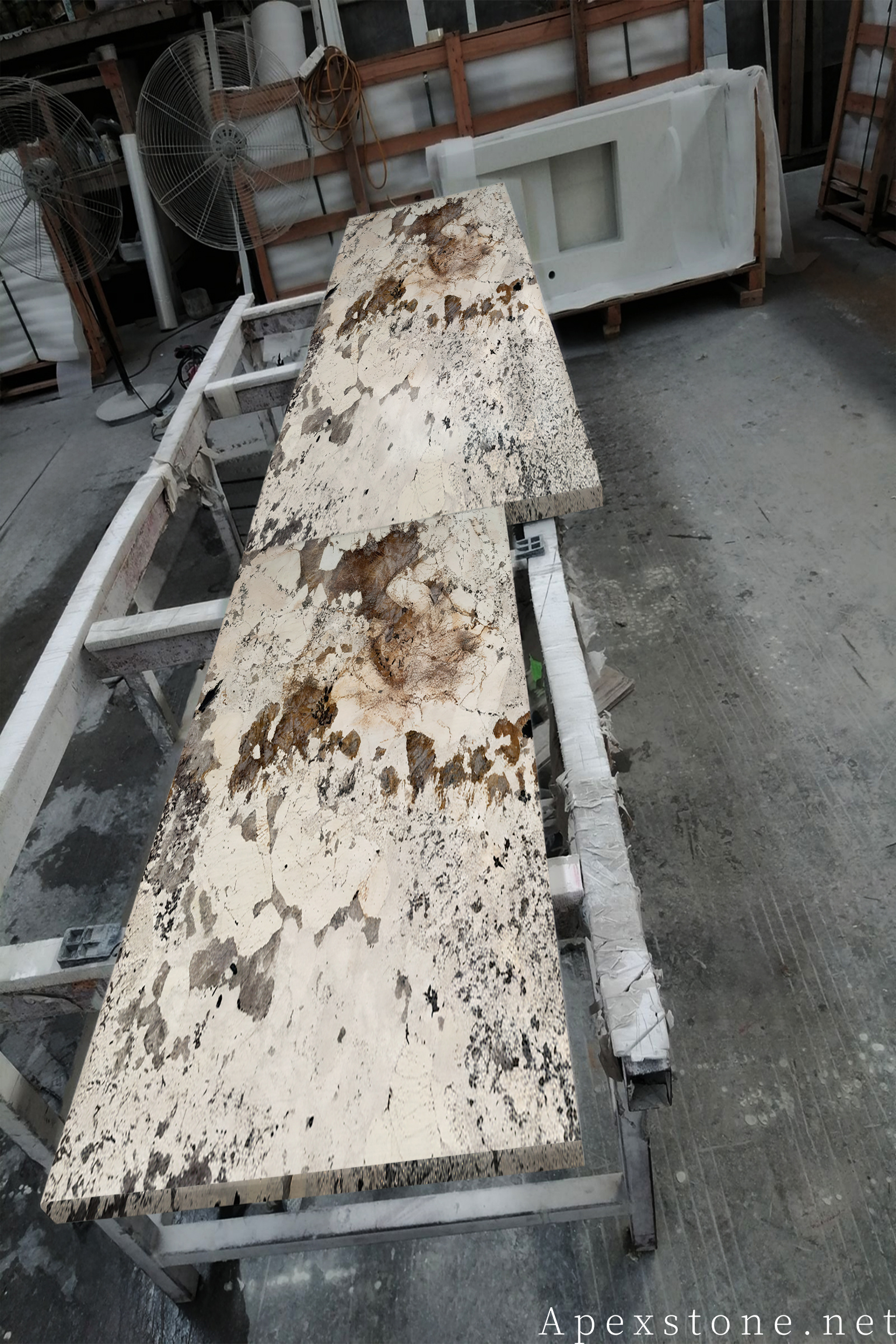
Finished pieces are laid out and compared against the approved layout — dimensions, cut-out positions, seam quality, polish and, on Pandora, the movement itself. Photographs of the finished set against the numbered drawing go to the buyer before packing. This is the stage where a mismatch is cheap to fix and, more importantly, the stage that gives the installer a document to unpack against on site.
Step five: packing for the long haul
Pieces are labelled in installation order, packed face-to-face with polished surfaces protected, corners padded and crates banded for container transport. A quartzite top is dense and heavy, and most transit damage happens at corners and at the fragile front rail in front of an undermount sink — both get explicit protection. Mixed containers of countertops, vanity tops and splash panels are sorted per order so a fit-out team unpacks one crate per room.
What the finished set looks like
The set that arrives should match the layout drawing exactly: same seams, same cut-out centres, same movement placement. That is the whole point of the process — a Pandora kitchen is judged on pattern continuity, and only a workshop that controls cutting, finishing, inspection and packing under one roof can promise the kitchen that arrives is the kitchen that was drawn.
What to ask your fabricator
Four questions cover most of the risk: Will I see a layout on the actual slabs before cutting? Are cut-outs machined to the sink manufacturer's template? Will I receive inspection photos against the approved drawing? Who controls packing — the same workshop or a third party? If the answers are yes, yes, yes and the same workshop, the remaining risk is the kind no process can remove, and you can price it accordingly.