
Ein enzyklopädischer B2B-Leitfaden zu Travertin Romano, der Geologie, Auswahl von Adernschnitt und Kreuzschnitt, Sorten, Füllungen, Oberflächen, Anwendungsdesign, Prüfdaten, Wartung, Spezifikation, Qualitätskontrolle und internationale Beschaffung abdeckt.
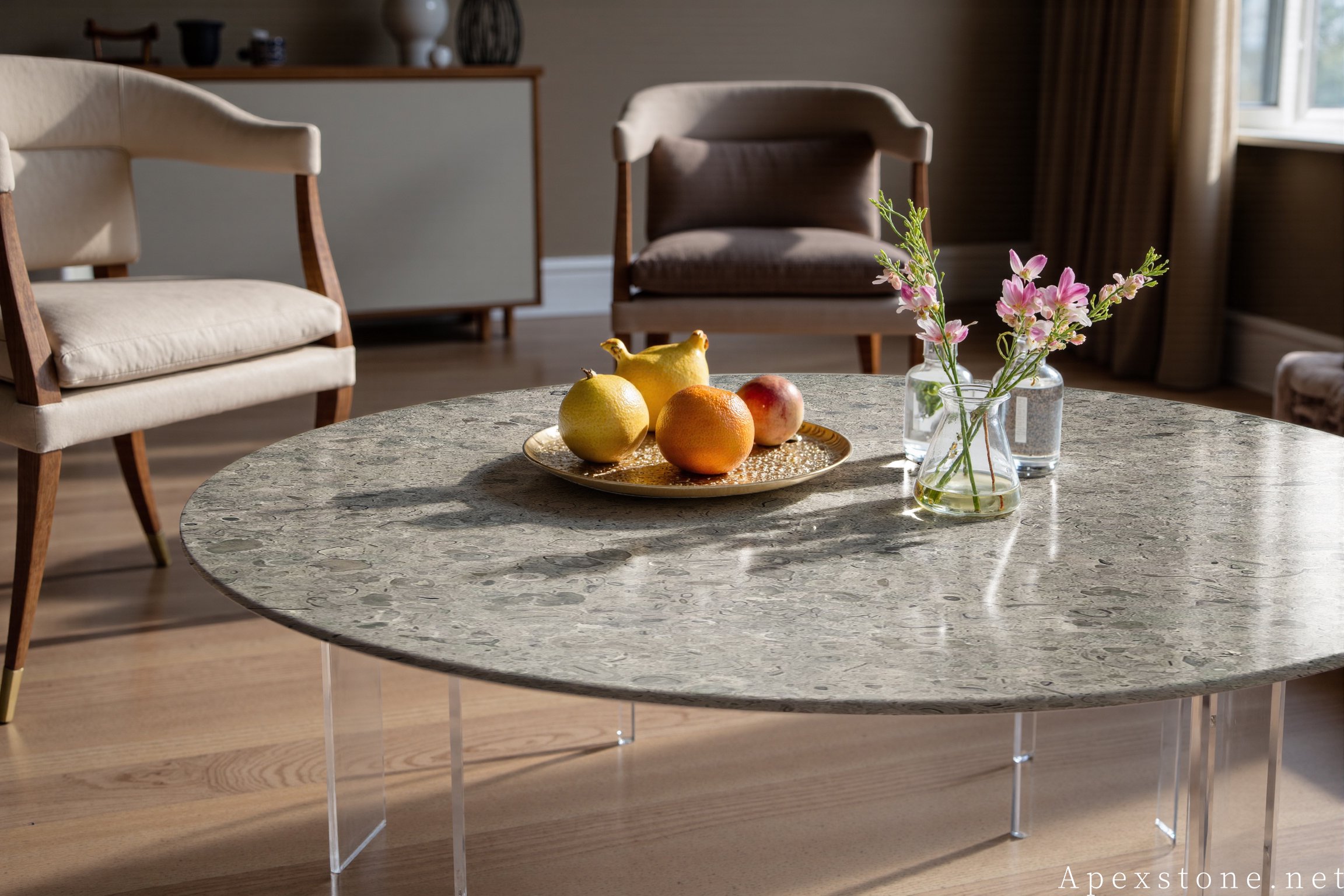
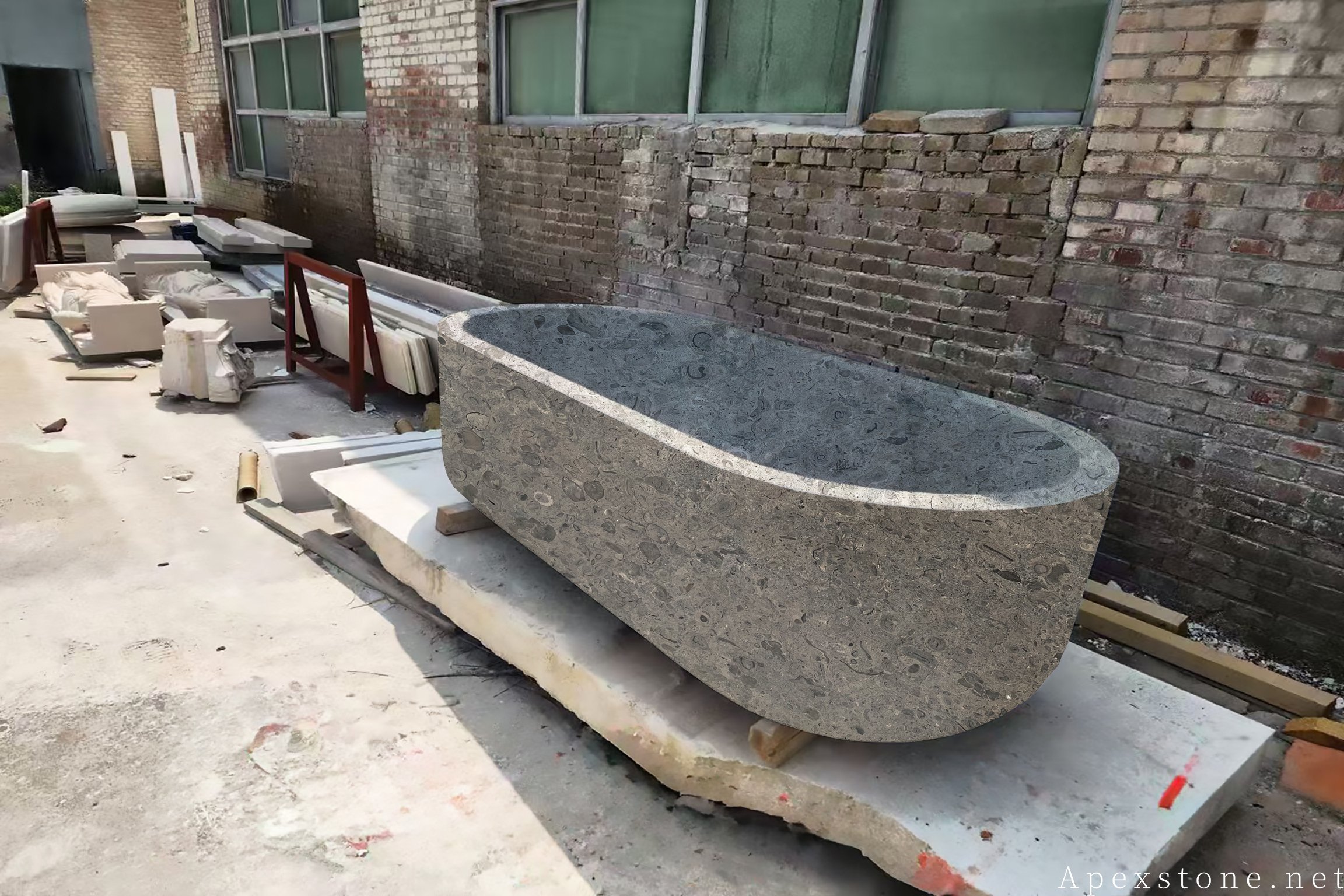
Travertin Romano – auch als Travertin Classico Roma oder Roman Classic Travertin verkauft – ist ein warmbeiger Kalkstein, der durch mineralreiches Quellwasser in der italienischen Region Latium entstanden ist. Seine lineare Schichtung, tonale Bewegung und natürlich vorkommenden Poren haben ihn seit Jahrhunderten zu einem architektonischen Material gemacht. In aktuellen Projekten erscheint er als Großformatplatten, Wandverkleidungen, Bodenfliesen, Gartenpflaster, Poolabdeckungen, Kaminumrandungen, Arbeitsplatten, Waschtischplatten, Mosaike und maßgefertigte Möbel.
Dieser Leitfaden richtet sich an Architekten, Innenarchitekten, Bauunternehmer, Händler und Steinkäufer, die über eine Farbmusterprobe hinausgehen müssen. Er erklärt, wie der Stein entsteht, wie sich Ader- und Kreuzschnitt unterscheiden, wie Füllung und Oberflächenbehandlung die Leistung beeinflussen, was für jede Anwendung spezifiziert werden sollte, wie ein kommerzielles Angebot zu bewerten ist und welche Qualitätskontrollnachweise vor dem Versand anzufordern sind.
1. Was ist Travertin Romano?
Travertin ist ein sedimentärer Karbonatstein. Im Gegensatz zu dichtem Marmor, der unter Hitze und Druck entsteht, bildet sich Travertin, wenn karbonatreiches Wasser um Quellen und geothermische Systeme herum aufeinanderfolgende Schichten ablagert. Kleine Hohlräume bleiben dort zurück, wo Gase, Vegetation oder Wasserbewegungen die Ablagerung unterbrachen. Diese Poren sind ein prägendes geologisches Merkmal und kein automatischer Fehler.
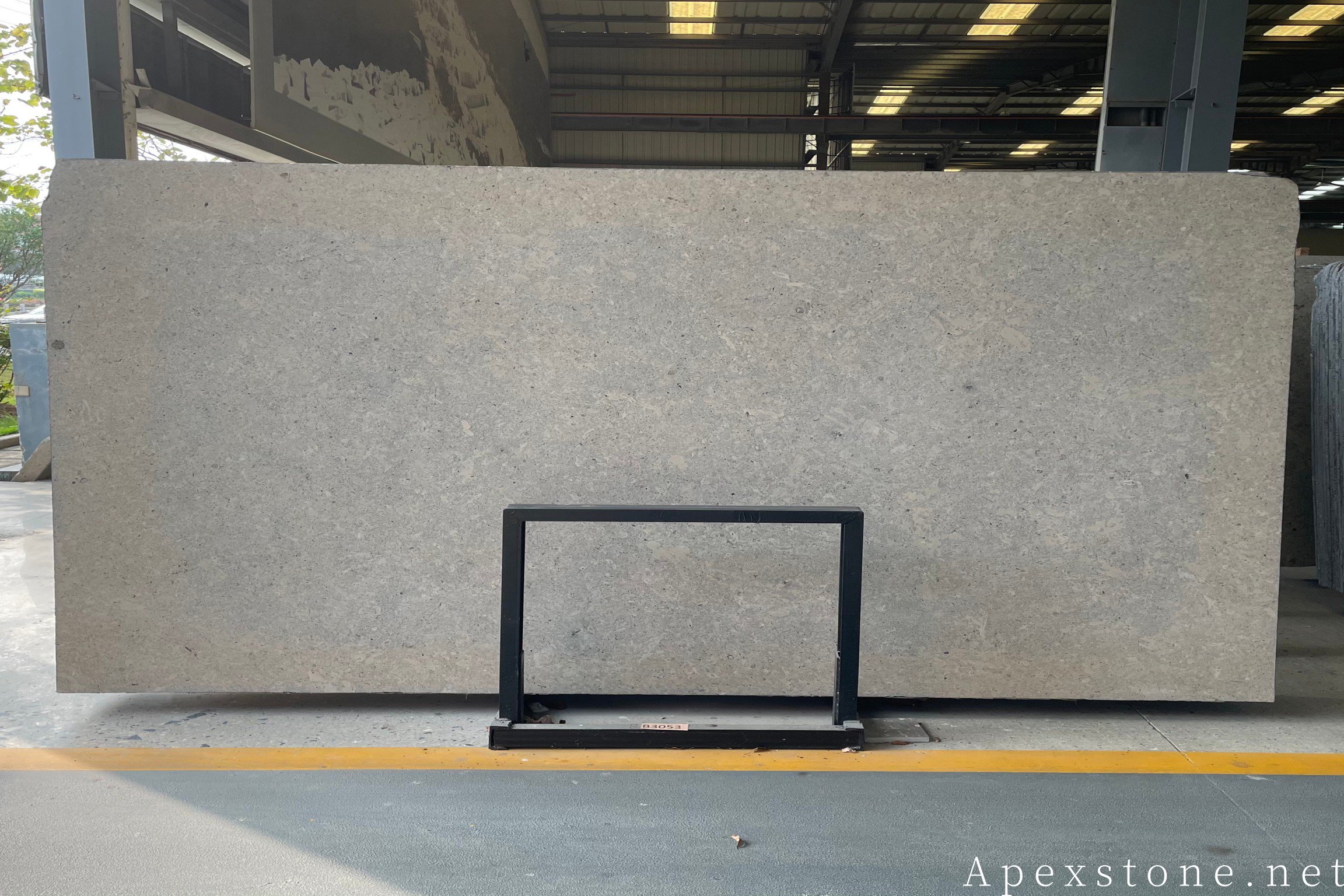
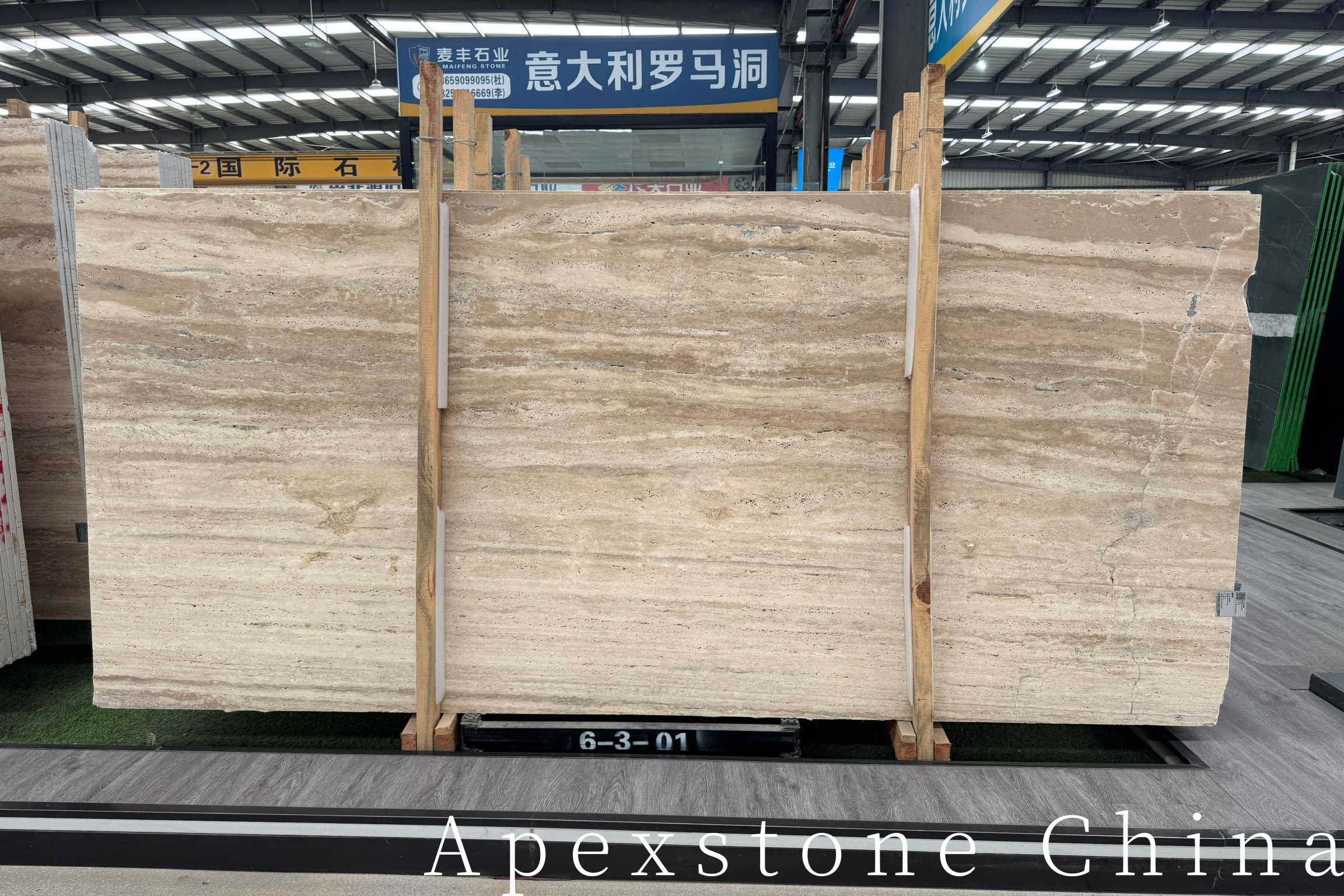
Travertin Romano präsentiert sich in der Regel mit einem cremefarbenen bis warmbeigen Hintergrund mit Stroh-, Sand- und Taupetönen. Die Bandbreite variiert je nach Steinbruchschicht und Block. Eine Charge kann ruhig und blass sein; eine andere kann stärkere Bänderung und größere Poren aufweisen. Für ein Projekt mit mehreren Oberflächen genehmigen Sie den akzeptablen Tonbereich und die Porendichte anhand von ganzen Platten und reservieren Sie dann Material aus derselben Produktionscharge.
2. Ader- versus Kreuzschnitt
Der Block kann in zwei Hauptrichtungen gesägt werden, und die Wahl verändert die visuelle Sprache des Materials.
- Aderschnitt: Die Säge folgt der sedimentären Schichtung. Fertige Stücke zeigen lange, gerichtete Bänder. Dieser Schnitt eignet sich gut für Akzentwände, lange Flure, Treppenstufen und zeitgenössische Böden, wo ein kontrollierter linearer Rhythmus erwünscht ist.
- Kreuzschnitt: Die Säge verläuft quer zur Schichtung. Die Oberfläche wird wolkenartiger, mit runden Porenmustern und weniger offensichtlicher Richtung. Er passt zu modularen Fliesen, entspannten mediterranen Layouts und Räumen, in denen die visuelle Bewegung weicher sein soll.
Behandeln Sie die beiden Schnitte nicht als austauschbar. Ausschreibungsunterlagen sollten die Schnittrichtung angeben, und Genehmigungsbilder sollten die vorgeschlagenen Platten oder Fliesen in dieser Ausrichtung zeigen. Das Mischen von Schnitten auf einer durchgehenden Ebene erzeugt in der Regel eine sichtbare Diskontinuität.
3. Qualitätsstufen und kommerzielle Auswahl verstehen
Begriffe wie „Premium“, „Klasse A“ und „kommerziell“ sind keine universellen internationalen Standards. Jeder Lieferant kann sie unterschiedlich definieren. Eine nützliche Kaufspezifikation übersetzt das Etikett in sichtbare Akzeptanzkriterien.
| Auswahlpunkt | Premium-Architekturbereich | Kommerzieller Bereich |
|---|---|---|
| Farbe | Engerer Beigebereich über genehmigte Platten | Breitere Variation in Creme, Beige und Taupe |
| Porencharakter | Kontrolliertere Größe und Verteilung | Mäßige oder größere natürliche Hohlräume akzeptiert |
| Bänderung | Konsistente gerichtete Bewegung, wo erforderlich | Mehr Variation zwischen den Stücken |
| Reparaturen und Füllung | Farbabgestimmt, kontrolliert und dokumentiert | Sichtbarere Füllung oder natürliche offene Bereiche akzeptiert |
| Beste Verwendung | Akzentwände, Lobbys, Buchmuster oder stark sichtbare Oberflächen | Große Böden, Landschaftspflaster, Nebenbereiche und preisbewusste Projekte |
Für eine objektive Genehmigung definieren Sie ein Referenzmuster oder einen Plattenreferenzsatz, den zulässigen Farbbereich, die maximale inakzeptable Poren- oder Reparaturgröße, Kantentoleranz, Oberflächenniveau und Austauschpolitik. Das teuerste Etikett ist nicht immer notwendig: Eine durchdacht ausgewählte kommerzielle Auswahl kann ideal für ein bewusst rustikales Außenkonzept sein.
4. Gefüllt oder ungefüllt?
Gefüllter Travertin hat Oberflächenhohlräume, die vor der Endbearbeitung mit zementärem Füllstoff oder Harz geschlossen werden. Er ist leichter abwischbar und wird häufig für Innenböden, Wandpaneele, Waschtischplatten und Arbeitsplatten spezifiziert. Die Füllstofffarbe sollte zusammen mit dem Stein genehmigt werden; ein zu blasser oder zu dunkler Füllstoff erzeugt ein gepunktetes Erscheinungsbild auf großen Flächen.
Ungefüllter Travertin behält offene Poren. Gebürstetes oder getrommeltes ungefülltes Material hat eine stärkere Textur und einen gealterten Charakter, der gut für Gartenpflaster, Poolumrandungen, rustikale Wände und ausgewählte Gastronomiebereiche geeignet ist. Offene Poren können Schmutz oder organisches Material aufnehmen, daher muss der Wartungsplan realistisch sein.
Bei einigen Installationen wird nach dem Verlegen Fugenmörtel verwendet, um die Poren zu füllen. Das kann Fugen und Oberflächenhohlräume optisch verbinden, aber die Zusammensetzung, Farbe, Schrumpfung und Versiegelungsreihenfolge des Fugenmörtels müssen zuerst getestet werden. Gehen Sie niemals davon aus, dass der Fugenmörtel vor Ort mit der Werksfüllung übereinstimmt, ohne ein Mock-up.
5. Oberflächenoptionen und ihre Verwendung
| Oberfläche | Erscheinungsbild | Typische Anwendungen | Wichtiger Hinweis |
|---|---|---|---|
| Gefüllt, geschliffen | Glatt, matt, ruhige Farbe | Innenböden, Wände, Waschtischplatten, Kaminumrandungen | Kompatiblen Reiniger verwenden und Versiegelung pflegen |
| Gefüllt, poliert | Höhere Reflexion und stärkere Farbtiefe | Formelle Wände, ausgewählte Theken und dekorative Oberflächen | Nicht die Standardwahl für nasse Gehflächen |
| Ungefüllt, gebürstet | Texturierte Oberfläche mit sichtbaren Poren | Außenpflaster, Poolumrandungen, taktile Akzentwände | Nassrutschverhalten mit endgültiger Versiegelung bestätigen |
| Ungefüllt, getrommelt | Weichere Kanten und gealterte Oberfläche | Französische Musterböden, Innenhöfe, Gartenwege | Maßabweichungen sind Teil der Ästhetik und der Verlegemethode |
| Spaltrau | Starkes natürliches Relief | Mosaike, Akzentbänder und vertikale Wände | Nicht für Arbeitsplatten oder Gehflächen geeignet |
6. Anwendungsleitfaden
Innenböden und -wände
Für Wohnböden ist 18 mm Material eine übliche Referenz, während die endgültige Dicke und der Aufbau von Untergrund, Format und lokaler Norm abhängen. Gefüllte, geschliffene Fliesen bieten eine raffinierte Oberfläche mit überschaubarem Wartungsaufwand. Großformate reduzieren Fugenlinien, erfordern aber einen ebeneren Untergrund und eine strengere Verlegekontrolle. An Wänden können 10 mm leichte Paneele oder 18-20 mm Paneele verwendet werden, abhängig vom Befestigungssystem und der Statik.
Akzentwände und Kamine
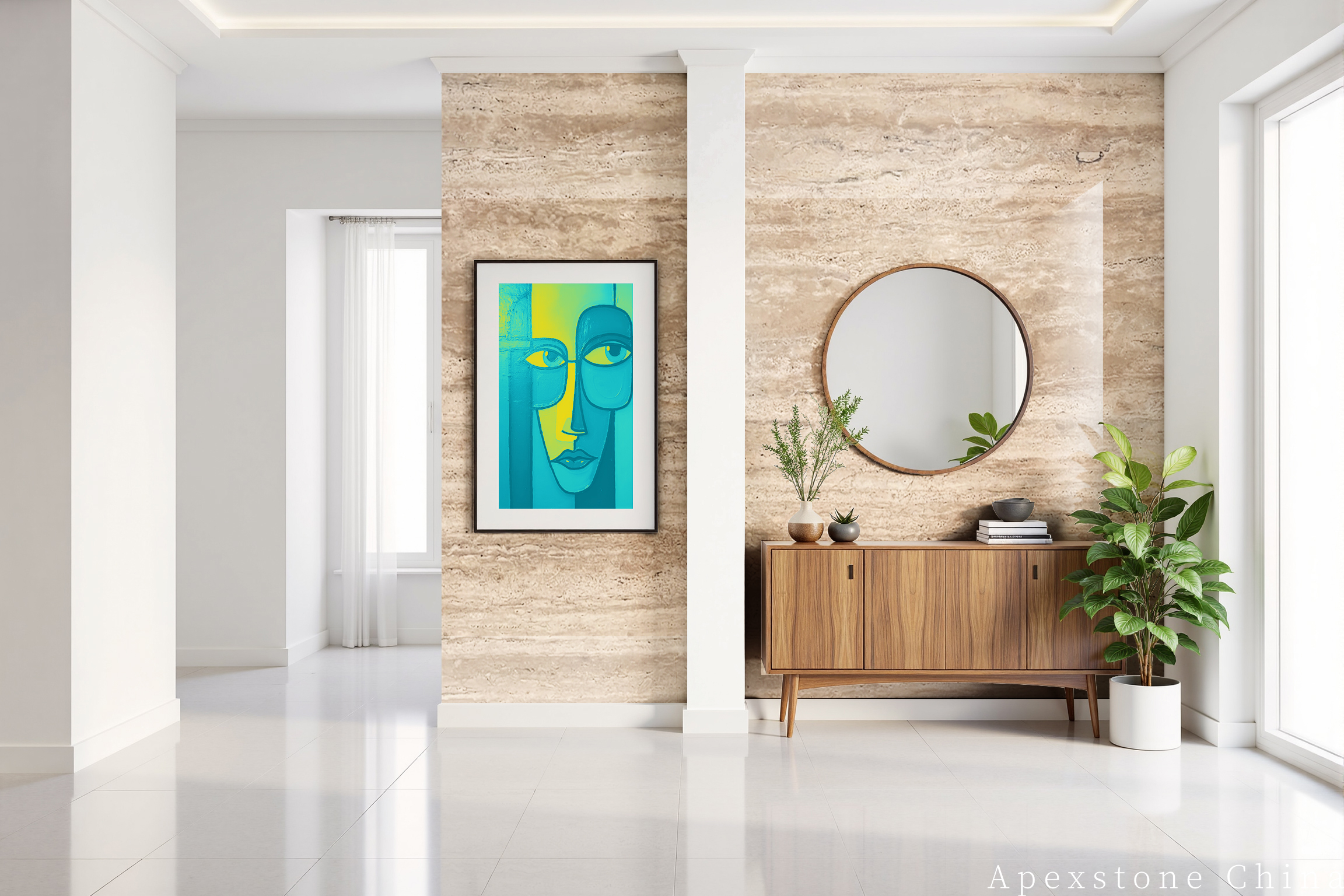
Akzentwände profitieren von einer nummerierten Plattenansicht. Richten Sie Fugen an architektonischen Bezugslinien aus und zeigen Sie jede Aussparung, Nische und Befestigung für Bildschirme. Travertin Romano ist kein transluzenter Onyx; verwenden Sie Wandflutung, verdecktes Licht oder Streiflicht, um seine Poren und Schichtung zu zeigen, anstatt eine Durchleuchtung zu behaupten. Bei Kaminen bestätigen Sie die erforderlichen Abstände, Kleber, Untergrund und Wärmeklasse mit dem Kaminhersteller und der örtlichen Vorschrift.
Arbeitsplatten, Inseln und Waschtischplatten
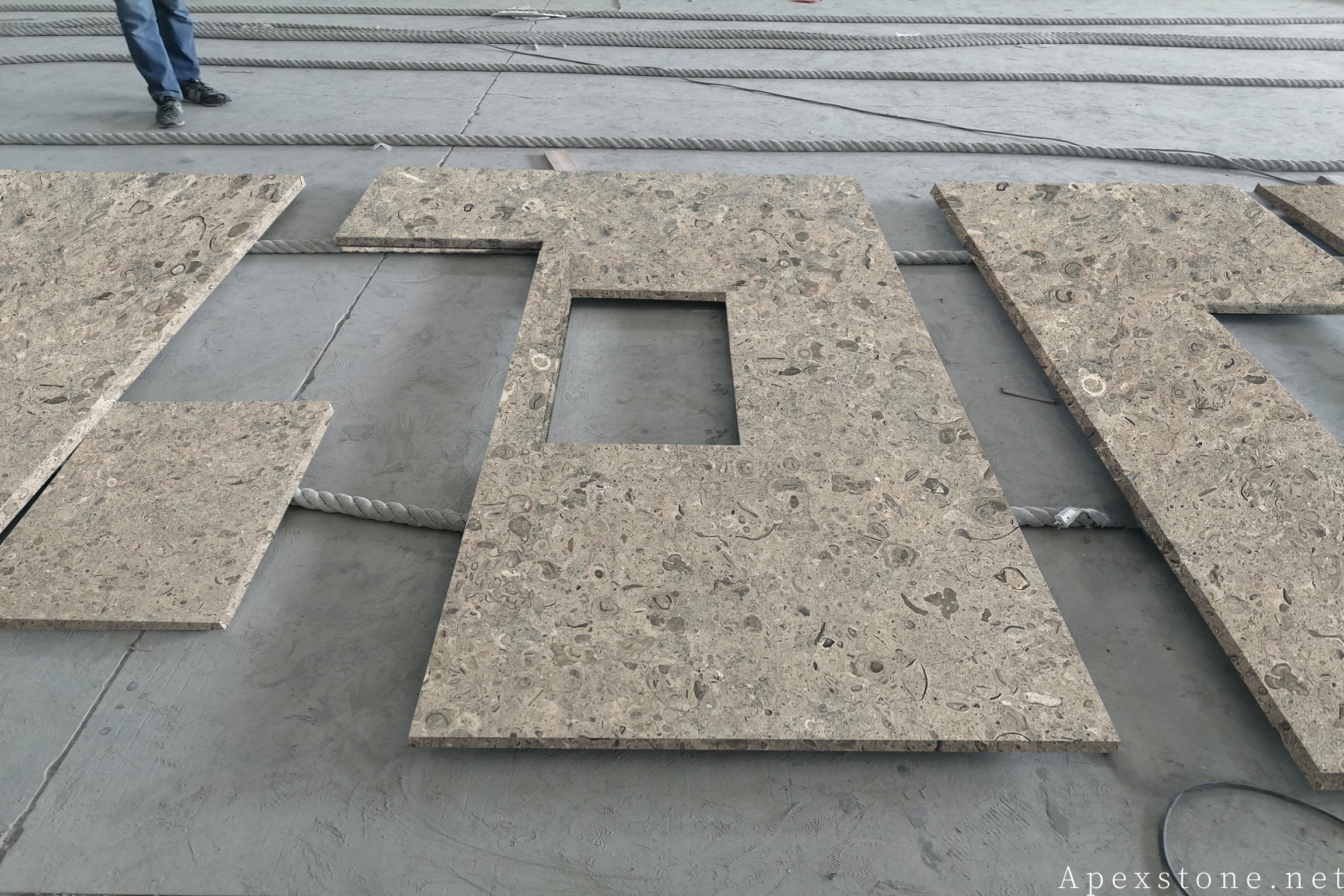
Travertin kann zu Arbeitsplatten und Waschtischplatten verarbeitet werden, ist aber poröser und säureempfindlicher als Quarzwerkstoff oder viele Granite. Eine gefüllte, geschliffene Oberfläche und eine hochwertige imprägnierende Versiegelung sind übliche Optionen. Spezifizieren Sie Ausschnitte für Spüle und Kochfeld, Kantenprofile, Verstärkung, Fugenpositionen und Unterstützung in der Werkstattzeichnung. Benutzer müssen verstehen, dass Zitrone, Essig, Wein und aggressive Reiniger Karbonatstein sogar versiegelt ätzen können. Versiegelung hilft gegen Flecken; sie macht die Oberfläche nicht säurefest.
Badezimmer und Duschbereiche
Verwenden Sie einen für Naturstein ausgelegten Nassbereichsaufbau, einschließlich Abdichtung, Entwässerung, kompatiblem Kleber, kontrastarmem Fugenmörtel und imprägnierender Versiegelung. Geschliffene oder texturierte Oberflächen sind sicherere Ausgangspunkte für Böden als poliertes Material. Duschwandpaneele reduzieren Fugen, aber ihr Gewicht, Transportweg und die Ebenheit des Untergrunds müssen vor der Fertigung koordiniert werden.
Außenpflaster, Terrassen und Poolabdeckungen
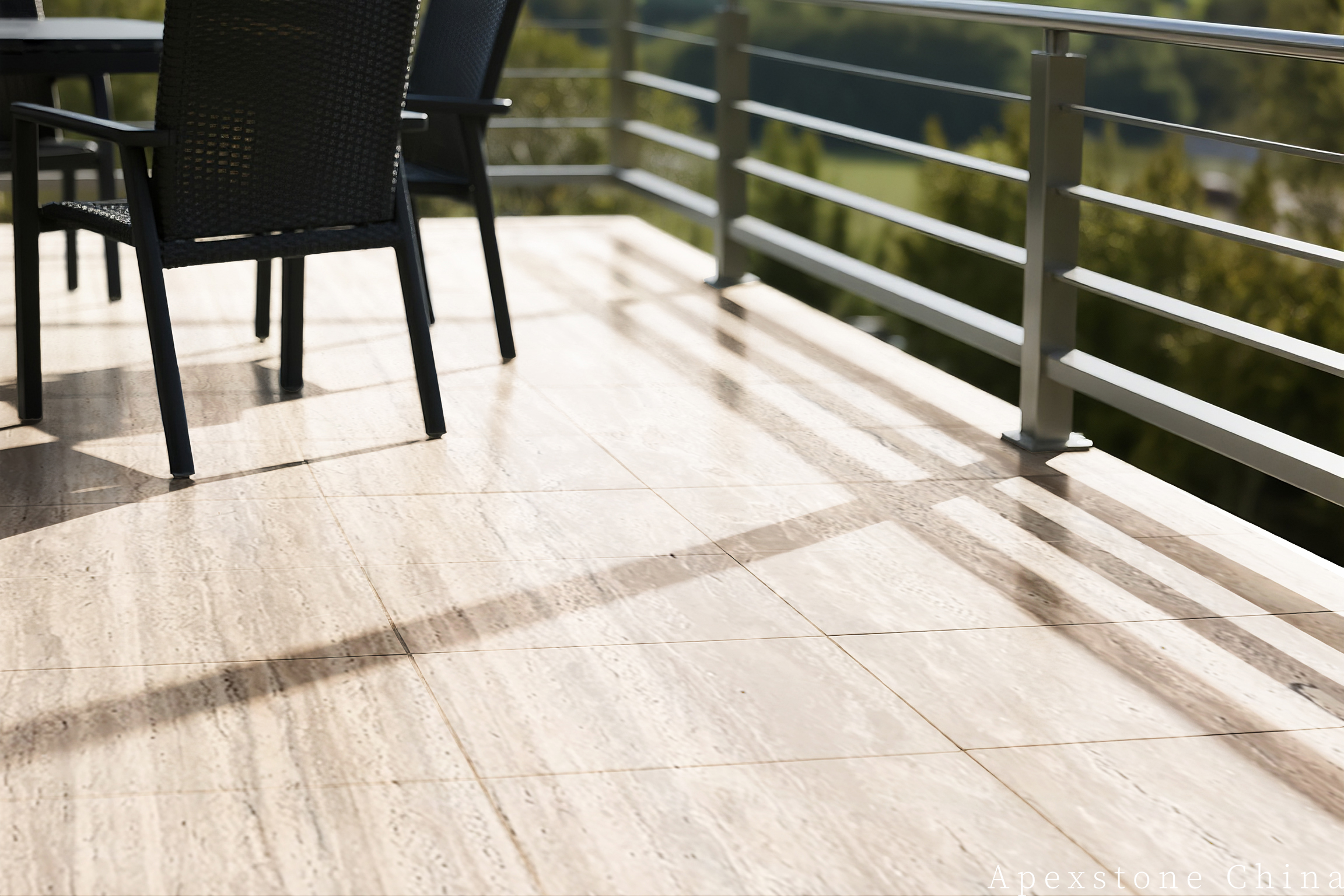
Ungefüllte, gebürstete und getrommelte Oberflächen werden häufig für Außenbereiche wegen Griffigkeit und Charakter gewählt. Typische Referenzdicken sind 20 mm für technisches Fußgängerpflaster, 30 mm für Poolabdeckungen und bis zu 40 mm für schwerere Anwendungen, aber Untergrund und statische Konstruktion bestimmen die endgültige Wahl. Entwässerungsgefälle, Bewegungsfugen, Frost-Tau-Exposition, Salz- oder Poolchemie und die gewählte Versiegelung erfordern eine projektspezifische Prüfung.
Mosaike und dekorative Formate
Spaltrau, getrommelt, Fischgrät, Korbmuster und französische Musterformate bringen Textur in kleinerem Maßstab. Netzmontierte Bahnen sollten auf Bahnlinien, Kleberkompatibilität und gleichmäßige Fugenabstände geprüft werden. Das Versiegeln vor dem Verfugen kann Fugennebel bei offenporigen oder texturierten Oberflächen reduzieren.
7. Physikalische Leistung und technische Daten
Indikative Werte, die oft für Travertin Romano genannt werden, umfassen Dichte etwa 2,3-2,7 g/cm³, Wasseraufnahme etwa 1-3 %, Mohshärte etwa 4-5 und Druckfestigkeit etwa 60-120 MPa. Diese Bereiche sind für die frühe Planung nützlich, ersetzen aber keinen Laborbericht, der der gelieferten Steinbruchcharge und der vom Projekt geforderten Prüfmethode zugeordnet ist.
Wo Spezifikationen EN, ASTM oder eine andere lokale Norm verlangen, listen Sie die tatsächlichen Tests und Akzeptanzschwellen auf. Häufig relevante Eigenschaften umfassen Wasseraufnahme, Rohdichte, Druckfestigkeit, Biegefestigkeit, Abriebfestigkeit, Rutschfestigkeit und Frost-Tau-Beständigkeit. Fragen Sie den Lieferanten, welches Steinbruchmaterial und welche Probe jeder Bericht repräsentiert.
8. Versiegelung, Reinigung und langfristige Wartung
- Verwenden Sie eine atmungsaktive, imprägnierende Versiegelung, die mit natürlichem Karbonatstein und dem gewählten Füllstoff oder Fugenmörtel kompatibel ist.
- Genehmigen Sie die Versiegelung an einem Muster, da sie Beigetöne und Porenkontrast vertiefen kann.
- Reinigen Sie mit einem pH-neutralen Steinreiniger; vermeiden Sie saure Entkalker, Essig und Scheuerpulver.
- Tupfen Sie verschüttete Flüssigkeiten auf Arbeitsplatten und Waschtischplatten sofort ab.
- Überprüfen Sie stark genutzte Nassbereiche häufiger als leicht genutzte vertikale Wände. Die Häufigkeit der Neuversiegelung hängt von Produkt, Exposition und Reinigung ab – nicht von einer universellen Kalenderangabe.
- Für Außenbereiche kontrollieren Sie stehendes Wasser, Bewässerungsspritzwasser, Blattflecken und biologisches Wachstum durch Gestaltung und routinemäßige Wartung.
9. So erstellen Sie eine Kaufspezifikation
Eine vollständige Anfrage sollte mehr als Quadratmeter enthalten. Geben Sie an:
- Anwendung und Projektstandort.
- Anforderung an Ader- oder Kreuzschnitt.
- Gefüllte oder ungefüllte Oberfläche und Füllstofffarbe.
- Oberfläche, Dicke, Abmessungen und Menge pro Artikel.
- Kantenprofile, Ausschnitte, Nuten, Tropfkanten und Verstärkung.
- Akzeptabler Farb-, Poren- und Reparaturbereich mit Referenzbildern.
- Erforderliche Normen, Tests und Dokumentation.
- Werkstattzeichnungs-, Trockenlayout- und Genehmigungsprozess.
- Verkisten, Palettensequenzierung, Versandbedingungen und Zielort.
- Empfohlene Ersatzmenge für die Installation und spätere Reparaturen.
Diese Informationen ermöglichen es Lieferanten, denselben Leistungsumfang anzubieten. Ohne diese Angaben kann ein niedriger Preis einfach Kantenbearbeitung, Trockenverlegung, Prüfungen, Schutzbehandlung, Exportverpackung oder eine engere Auswahl ausschließen.
10. Checkliste zur Qualitätskontrolle ab Werk
Fordern Sie vor der Produktion eine Platten- oder Chargenfreigabe an. Kontrollieren Sie während der Fertigung Maße, Dicke, Rechtwinkligkeit, Ebenheit, Oberflächenkonsistenz, Kantenqualität, Füllerton und sichtbare Reparaturen. Bei aderempfindlichen Wänden oder Inseln fordern Sie eine fotografierte Trockenverlegung mit nummerierten Stücken an. Prüfen Sie vor dem Versand Packlisten, Kistenmarkierungen und Verladefotos.
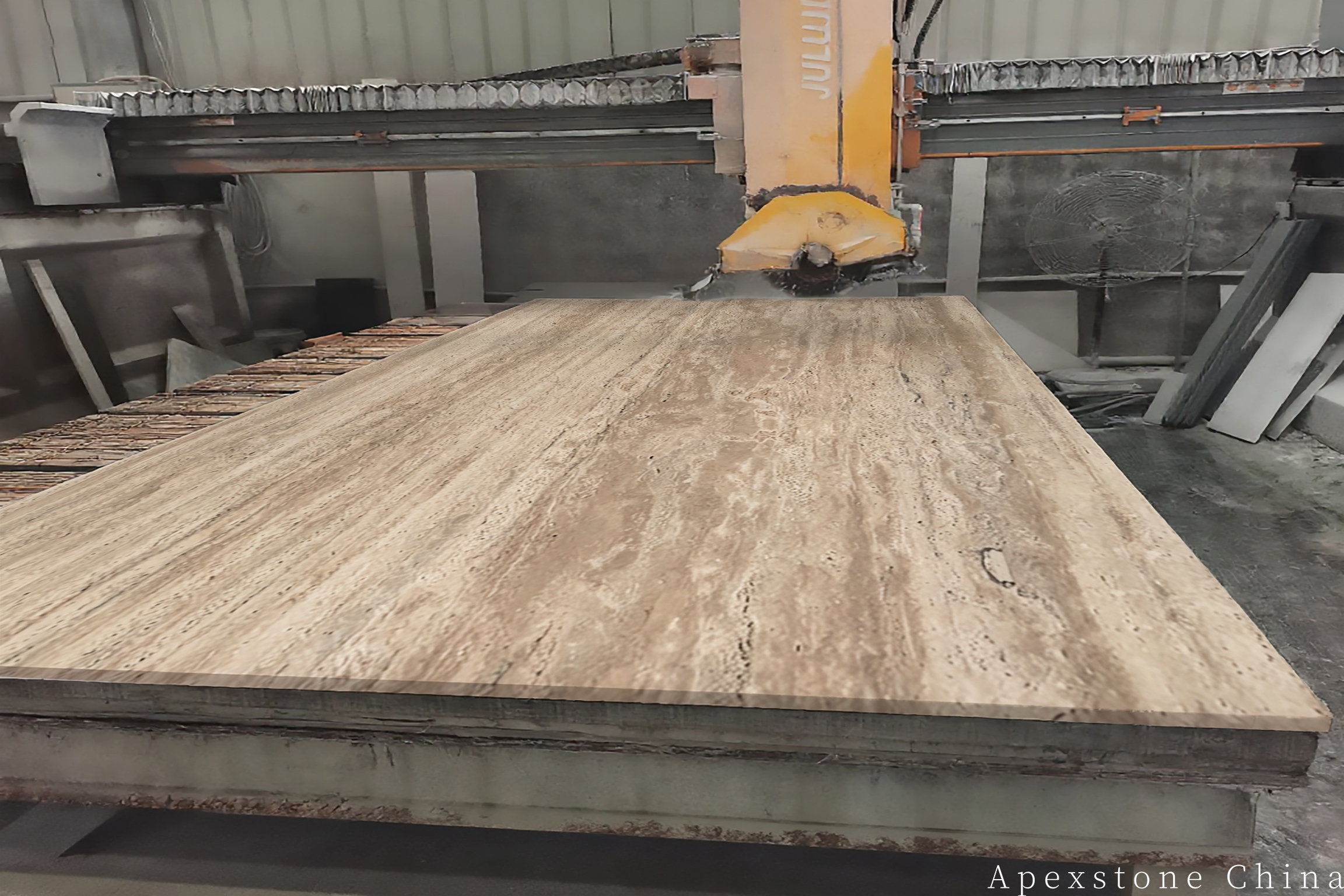
Ein nützlicher Vorversand-Nachweis umfasst:
- Repräsentative Fotos der fertigen Stücke bei neutralem Licht.
- Maß- und Dickenprüfungen gemäß der freigegebenen Zeichnung.
- Übersicht der Trockenverlegung für sequenzierte Platten.
- Nahaufnahmen von Kanten, Ausschnitten, Reparaturen und Füllungen.
- Kistenweise Packliste und Außenetiketten.
- Nachweise für Feuchtigkeitsschutz, Kantenschutz und Innenverstrebungen.
11. Häufige Spezifikationsfehler
- Nur ein kleines Muster freigeben: Es kann nicht den gesamten Farbtonbereich, die Porendichte oder die Aderrichtung zeigen.
- Jede Pore als Fehler bezeichnen: Poren sind Travertin eigen; definieren Sie stattdessen unzulässige Extreme.
- Poliertes Material in nassen Gehbereichen ohne Prüfung verwenden: Geben Sie die endgültige Oberfläche und Versiegelung gemäß der örtlichen Rutschfestigkeitsanforderung frei.
- Annehmen, dass Versiegelung Ätzungen verhindert: Sie hilft gegen Flecken, stoppt aber nicht die Reaktion von Säuren mit karbonatischem Gestein.
- Füll- und Fugenfarbe ignorieren: Beide können das Erscheinungsbild einer hellen Steinfläche dominieren.
- Wände ohne Fugenplan bestellen: Dann entscheiden die Baustellenteams unter Druck über Aderfolge und schmale Schnittstellen.
- Angebote mit unterschiedlichen Leistungen vergleichen: Vereinheitlichen Sie Sortenkriterien, Fertigung, Prüfungen, Trockenverlegung, Verpackung und Versandbedingungen.
12. Wann Travertin Romano die richtige Wahl ist
Wählen Sie Travertin Romano, wenn das Projekt eine warme mineralische Oberfläche, sichtbaren geologischen Charakter und Formate benötigt, die Architektur, Innenräume und Landschaft verbinden können. Er ist besonders effektiv in ruhigen modernen Wohnhäusern, mediterraner Gastlichkeit, taktilen Einzelhandelsflächen, Innenhöfen, Poolterrassen und Projekten, bei denen eine Steinfamilie von Wandpaneelen bis zu Bodenbelägen und individuellen Details reichen muss.
Er ist weniger geeignet, wenn der Kunde null Abweichung, eine säurefeste Küchenoberfläche, keine regelmäßige Wartung oder einen polierten nassen Boden ohne Leistungsprüfung erwartet. Eine gute Spezifikation setzt diese Erwartungen vor dem Kauf.
13. Fragen an einen Travertin-Romano-Lieferanten
- Ist die angebotene Charge adergeschnitten, kreuzgeschnitten oder gemischt?
- Welchen Farb- und Porenbereich umfasst das Angebot?
- Ist das Material werksgefüllt, baustellengefüllt oder ungefüllt?
- Welche Füllung, Oberfläche und Versiegelung werden vorgeschlagen?
- Kann der Lieferant eine Charge für alle zusammenhängenden Oberflächen reservieren?
- Welche Prüfberichte entsprechen dem angebotenen Material?
- Kann das Werk Werkstattzeichnungen und nummerierte Trockenverlegungen liefern?
- Wie werden Ersatzstücke und spätere Nachbestellungen gehandhabt?
- Was ist im Preis und Incoterm enthalten?
- Wie werden die Kisten für das Zielland sequenziert und geschützt?
Apexstone liefert Travertin-Romano-Platten, Fliesen, Wandpaneele, Arbeitsplatten, Waschtischplatten, Mosaike, Kamine, Landschaftspflaster und Poolabdeckungen mit maßgefertigter Fertigung. Für ein genaues Angebot senden Sie Zeichnungen, Anwendung, Oberfläche, Dicke, Menge, Lieferziel und den erwarteten visuellen Bereich für das Projekt.