Apexstone material brief
Pandora Quartzite Dining Tables
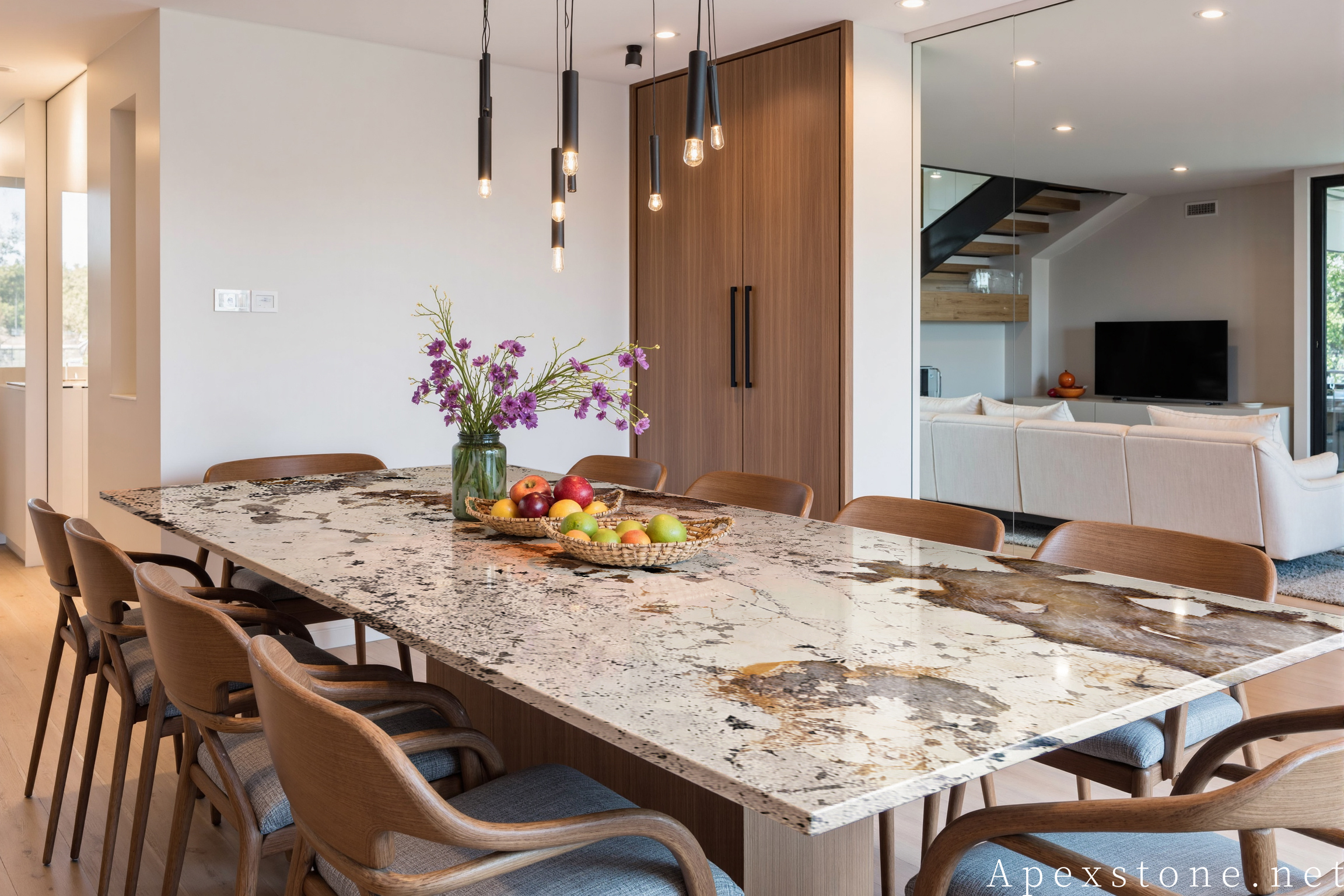
A stone dining table is bought once and used daily for decades, which is why the material choice matters more than the shape. Pandora makes a strong case: a natural quartzite from Brazil with a cream ground and large brown floral movement, a surface that glitters faintly under evening light, and hardness well above the marbles usually offered at this look. Around a Pandora table, the pattern becomes the conversation — every top is cut from a different slab, so no two tables in the world match.
Formats that fit real dining rooms
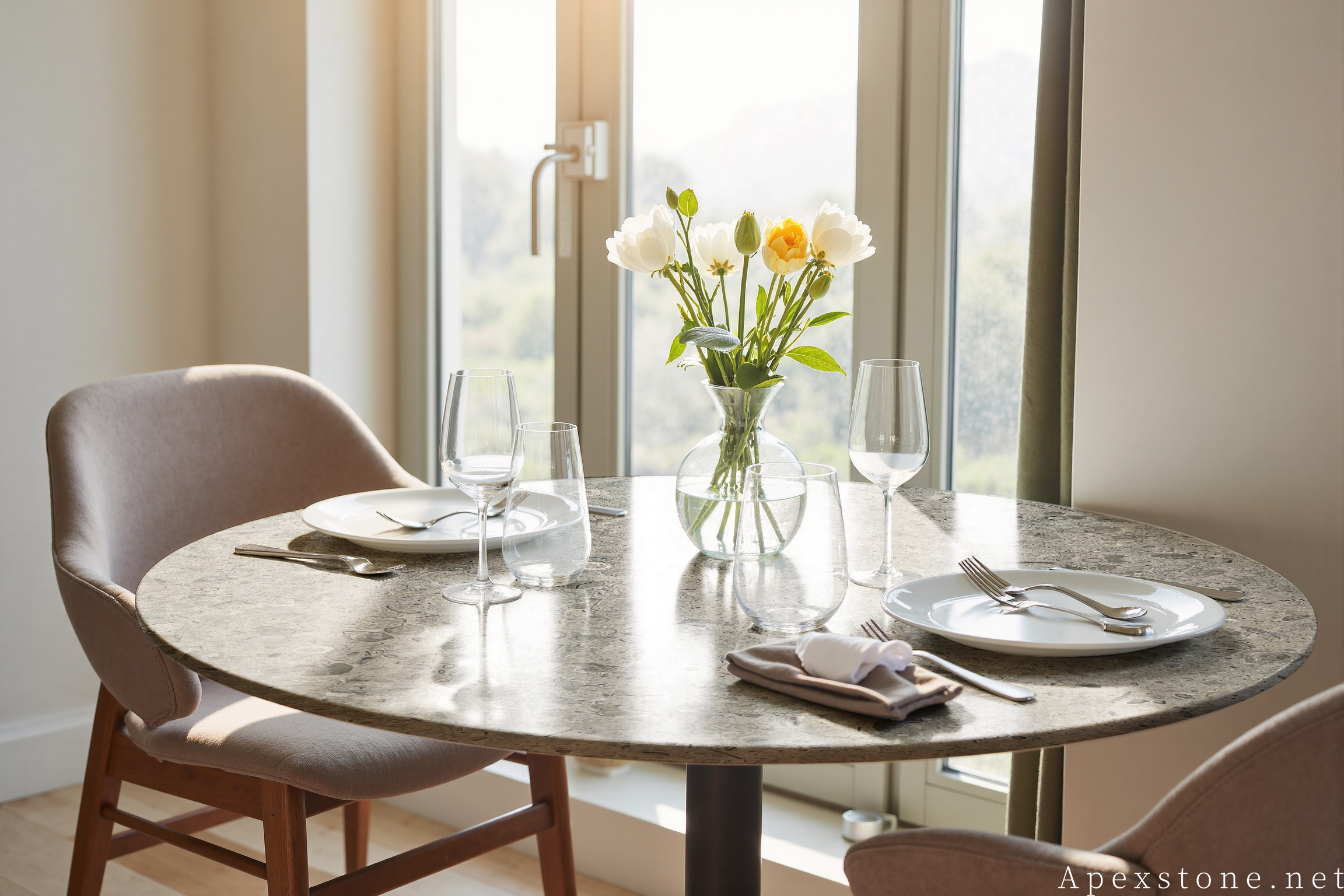
Dining tables live on a short list of sizes, and we cut Pandora to all of them. Round tops in 36 in and 48 in seat four to six; a 60 in round or rectangular top seats six comfortably; 72 in rectangular tops seat eight. Square tops in 36 in and 48 in suit compact rooms and breakfast areas. Top thickness runs 2 cm (3/4 in) as standard, with a mitred build-up to a 1-1/2 in or 2 in visual edge when the design wants a heavier read — the build-up joint sits on the edge return, invisible from above.
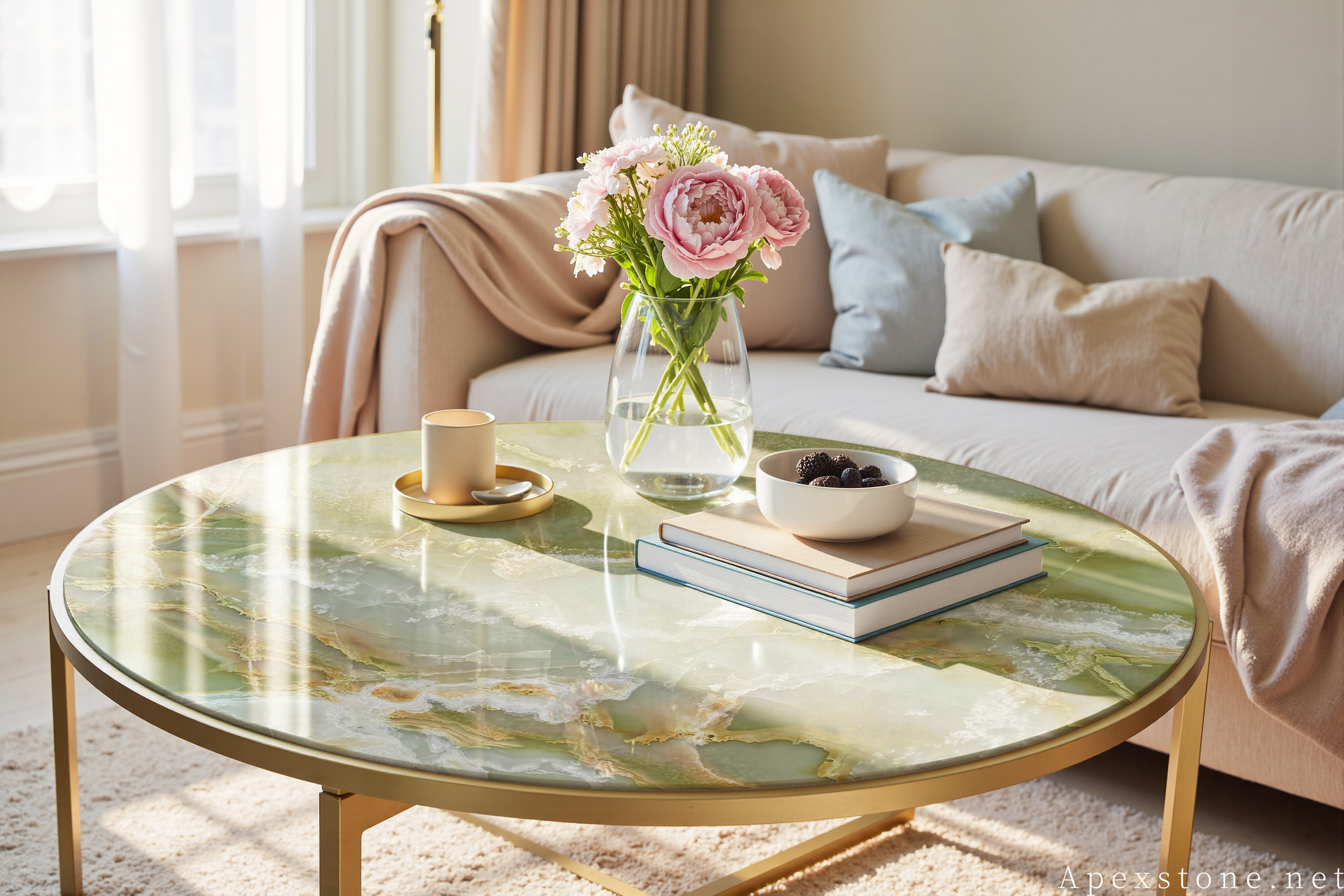
Bases are chosen per project: a central pedestal keeps legroom open on round and square tops; brass and gold-finished bases warm the cream-and-brown palette; solid wood bases suit French country and farmhouse rooms; slim iron frames give a modern, architectural stance. Because the top is the visual event, the base stays quiet — a rule we apply when advising on pairings, and one that keeps Pandora tables looking designed rather than assembled.
Choosing the slab, cutting the top
Pattern placement decides whether a dining table looks composed or accidental. Every Pandora top is planned on the image of the actual slab before cutting: on a round top, the largest bloom is centred or deliberately offset; on a rectangular 72 in top, the movement is run lengthwise so the table reads longer. Tops are cut on CNC equipment, edges finished to the specified profile — eased, bullnose or a small ogee for traditional rooms — and polished until the crystal structure catches light. The result is a stone top with the presence of fine marble and the day-to-day toughness quartzite is chosen for.
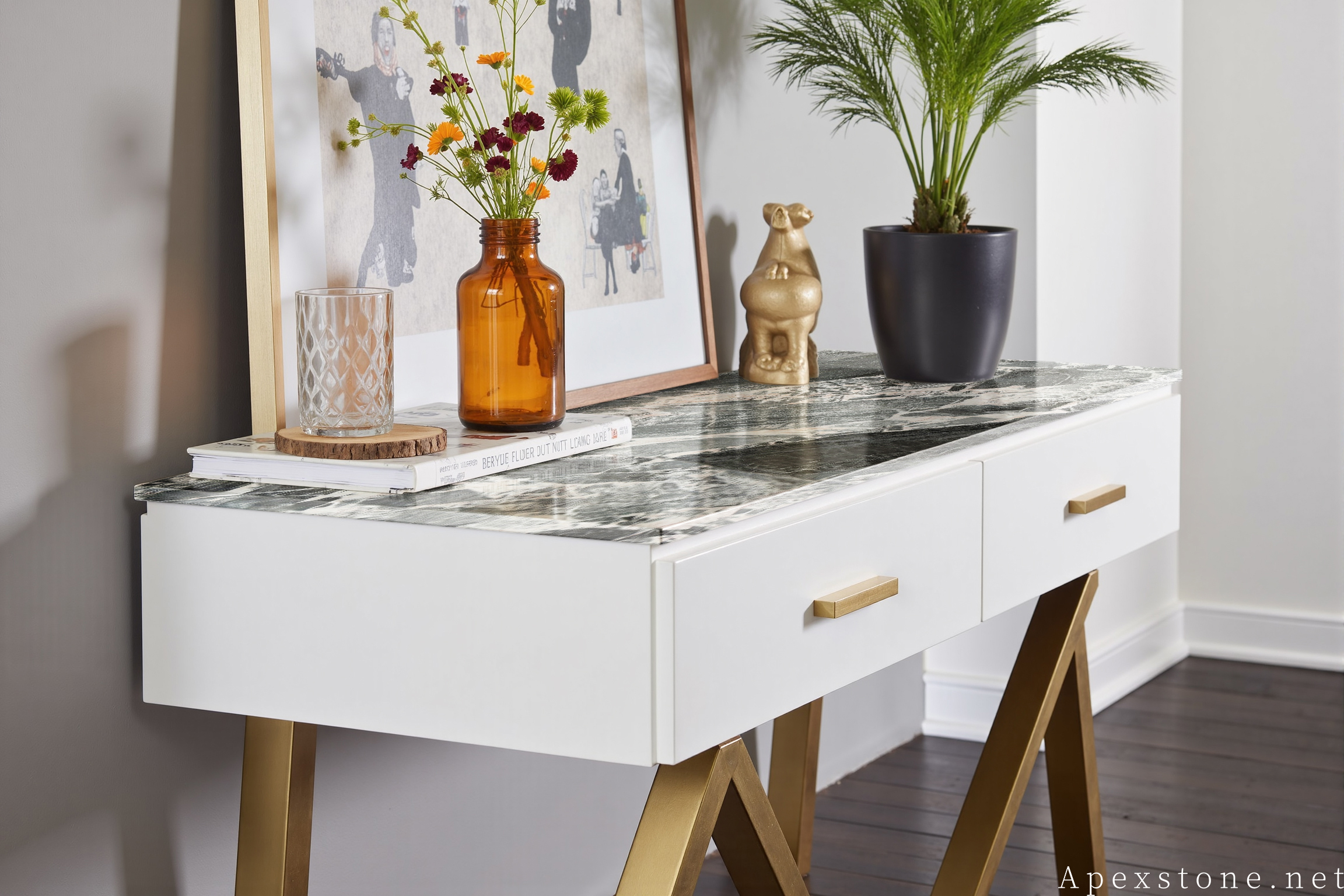
Console and side tables in matching Pandora are cut from the same slabs when a set is ordered together, keeping the movement consistent across a dining room — a detail furniture brands use to justify premium pricing on the whole set rather than one piece.
Quartzite at the table
Dining surfaces take real abuse: hot dishes, dropped cutlery, citrus, wine, and the occasional science experiment a child leaves overnight. Quartzite handles this better than marble — it will not etch from an overnight lemon slice, and it shrugs off knife tips that would scar a calcite surface. It is still natural stone: trivets for long simmers, boards for chopping, and prompt wiping of wine and oil keep the top flawless. Sealed at installation and resealed occasionally, a Pandora dining top needs nothing more than a pH-neutral cleaner and a soft cloth.
Ordering from Apexstone
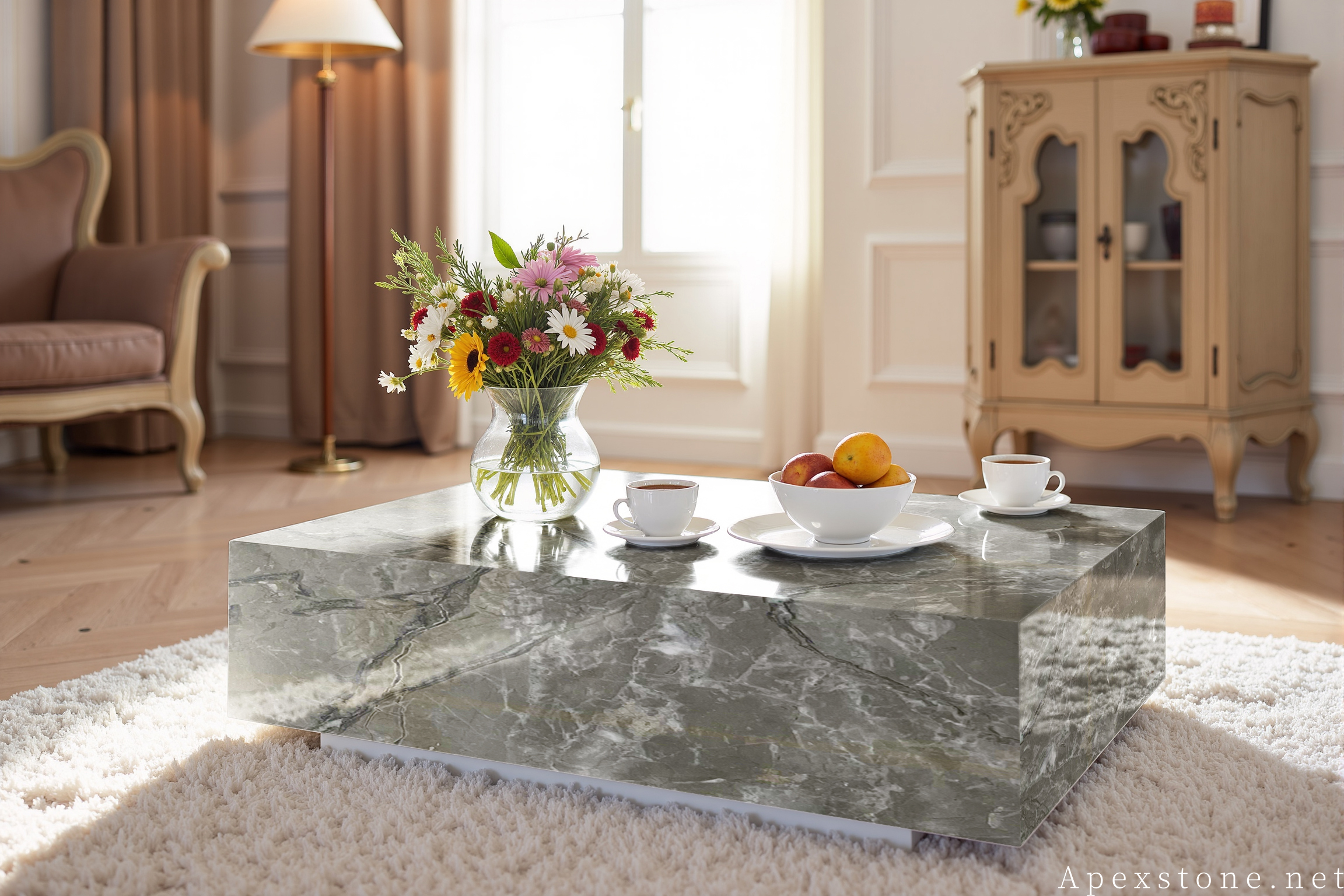
Send the top size and shape, base preference, edge profile and destination port. The order comes back with slab images and a placement drawing showing exactly where the movement falls on your top — approved before the first cut. Single-piece orders are accepted for showrooms and replacements, and mixed containers of dining and coffee tables are packed with tops face-protected and bases crated separately. Every piece is inspected against the approved drawing before the container closes, so the table that arrives is the table that was drawn.