A contractor's checklist for specifying light grey granite outdoors: thickness by traffic, format and finish selection, one-lot matching for steps and coping, and what to include in the enquiry.
Choosing a Light Grey Granite for Outdoor Hardscape: A Buyer's Checklist
Light grey granite has become the default answer for outdoor hardscape work, and for good reason: it stays cool underfoot, hides dust and rain spotting, and sits quietly beside almost any architecture. But "light grey granite" covers a wide range of materials at very different price points and performance levels. This guide walks contractors, landscape architects, and distributors through the decisions that actually determine whether a paving project succeeds, using Bianco Crystal granite (Hubei 603) as the reference material throughout.
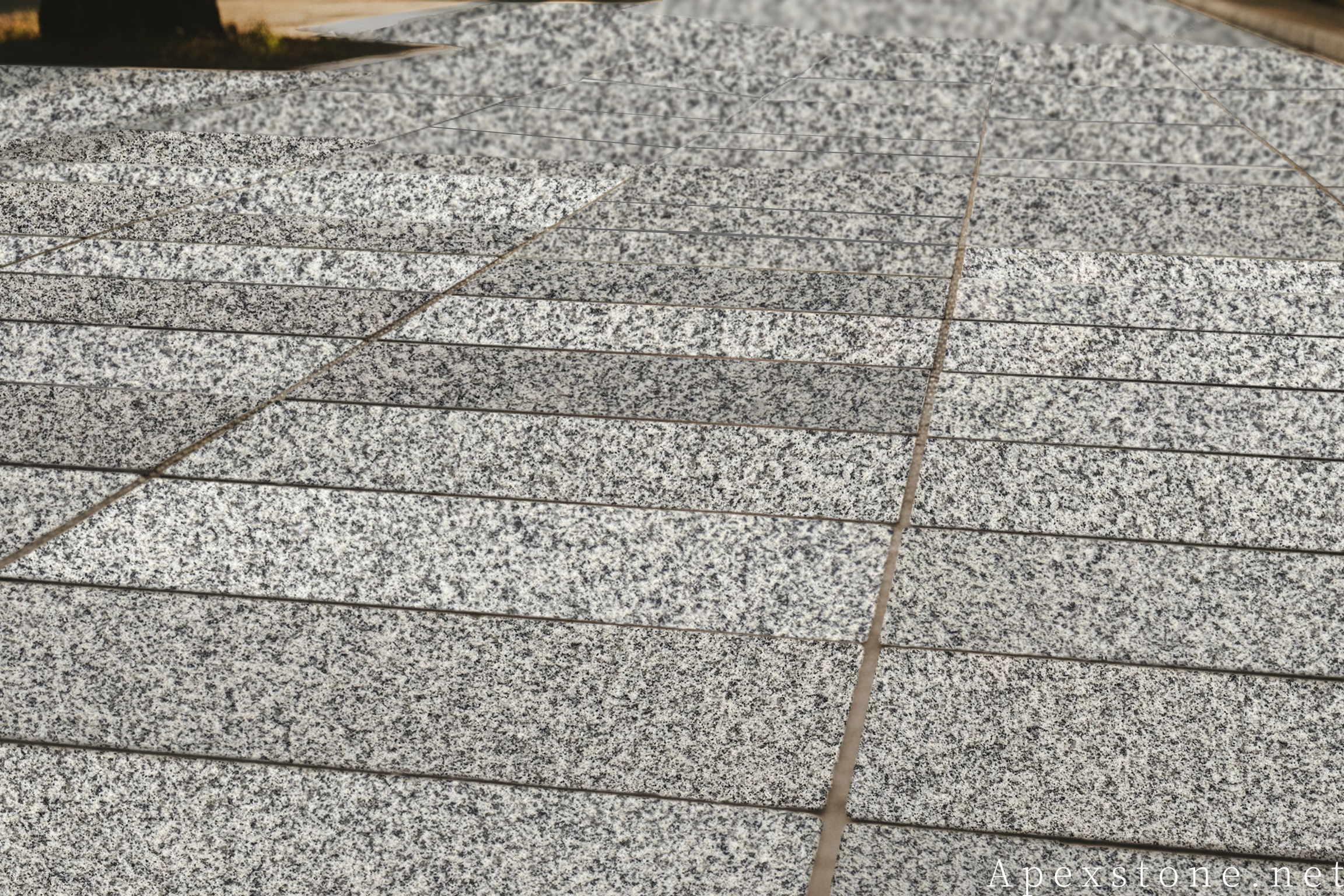
1. Start With Traffic, Not Color
The first specification decision is thickness, and it follows traffic. Pedestrian patios and garden paths perform well on 20mm to 30mm pavers laid on a compacted bed. Residential driveways need 40mm to 50mm material, and any paving that crosses a vehicle route should move to 2 inch thick pavers without debate. Ordering one thickness for the whole site to simplify logistics is a false economy; the driveway section will telegraph its weakness within two winters.
2. Format Drives the Look
Format choice sets the character of the space before a single joint is struck. Large-format 600x600 (24x24) pavers in a stacked bond read as calm and contemporary, which is why they dominate modern patio design. 600x300 (12x24) in a running bond suits long, narrow spaces and side returns. Smaller 12x12 and 16x16 squares slow the pace along garden walkways, and 6x9 or 4x9 setts bring texture to borders, aprons, and driveway transitions. Mixing two formats from the same stone lot - say 24x24 field paving with a 6x9 sett border - adds definition without introducing a second material.
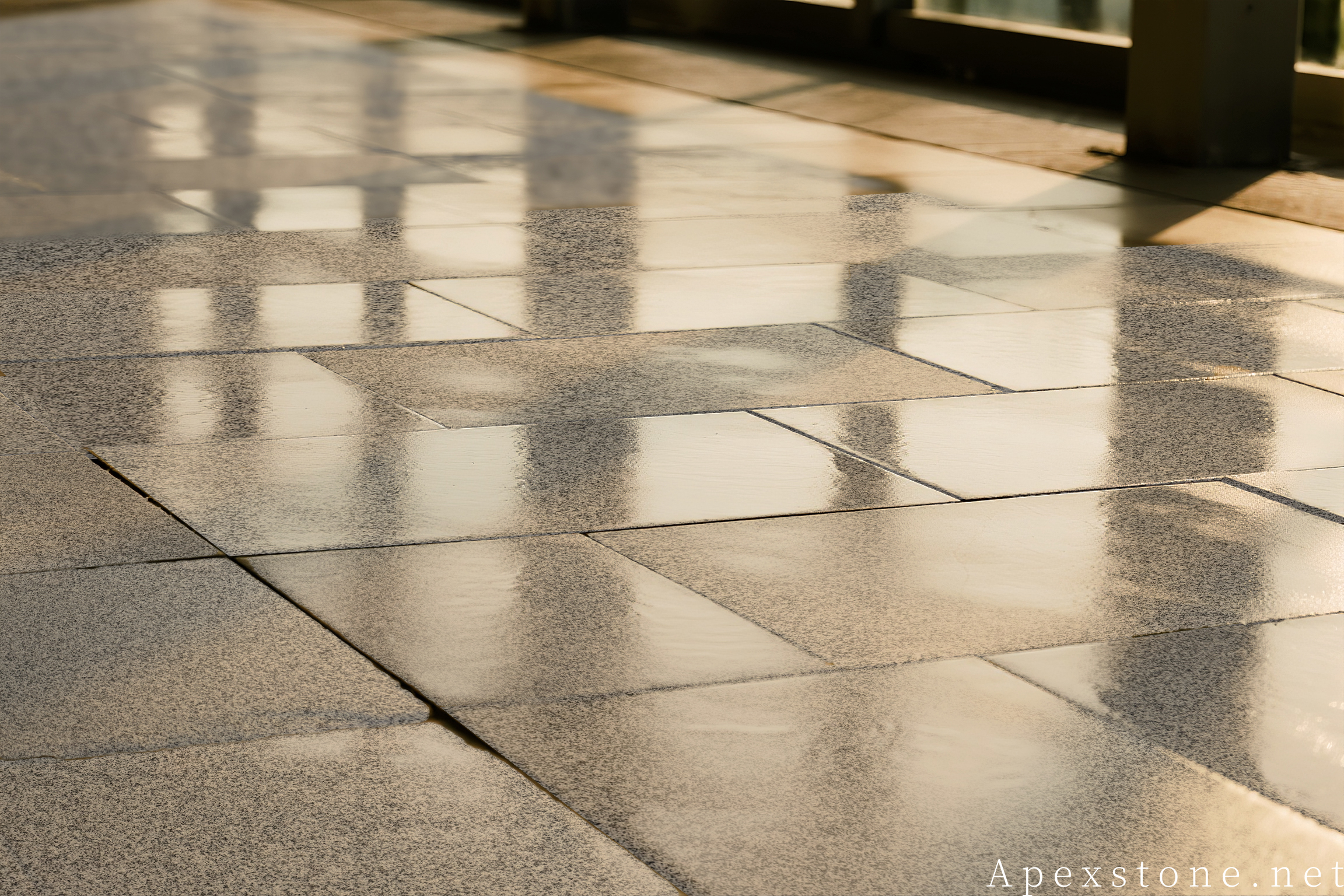
3. Finish Is a Safety Specification
On any walking surface, the finish is not a style decision - it is a safety specification. Flamed finish is the standard for outdoor paving: the thermal treatment roughens the surface for a non slip grip that holds in rain, and it slightly softens the color toward a natural grey. Sandblasted surfaces offer similar grip with a finer texture. Tumbled setts suit cottage and heritage schemes. Polished material belongs indoors; specifying it on an exterior walkway is the single most common mistake in granite paving tenders.
4. Edges, Steps, and Coping From One Lot
A hardscape project rarely stops at field paving. Steps, pool coping, curbs, and wall caps all need to match. Sourcing every element from one production lot of the same stone eliminates the shade drift that appears when a contractor buys paving from one supplier and coping from another. Bullnose and double bullnose profiles on step treads and pool edges also protect the most vulnerable arris from chipping, which is where most visible damage starts.
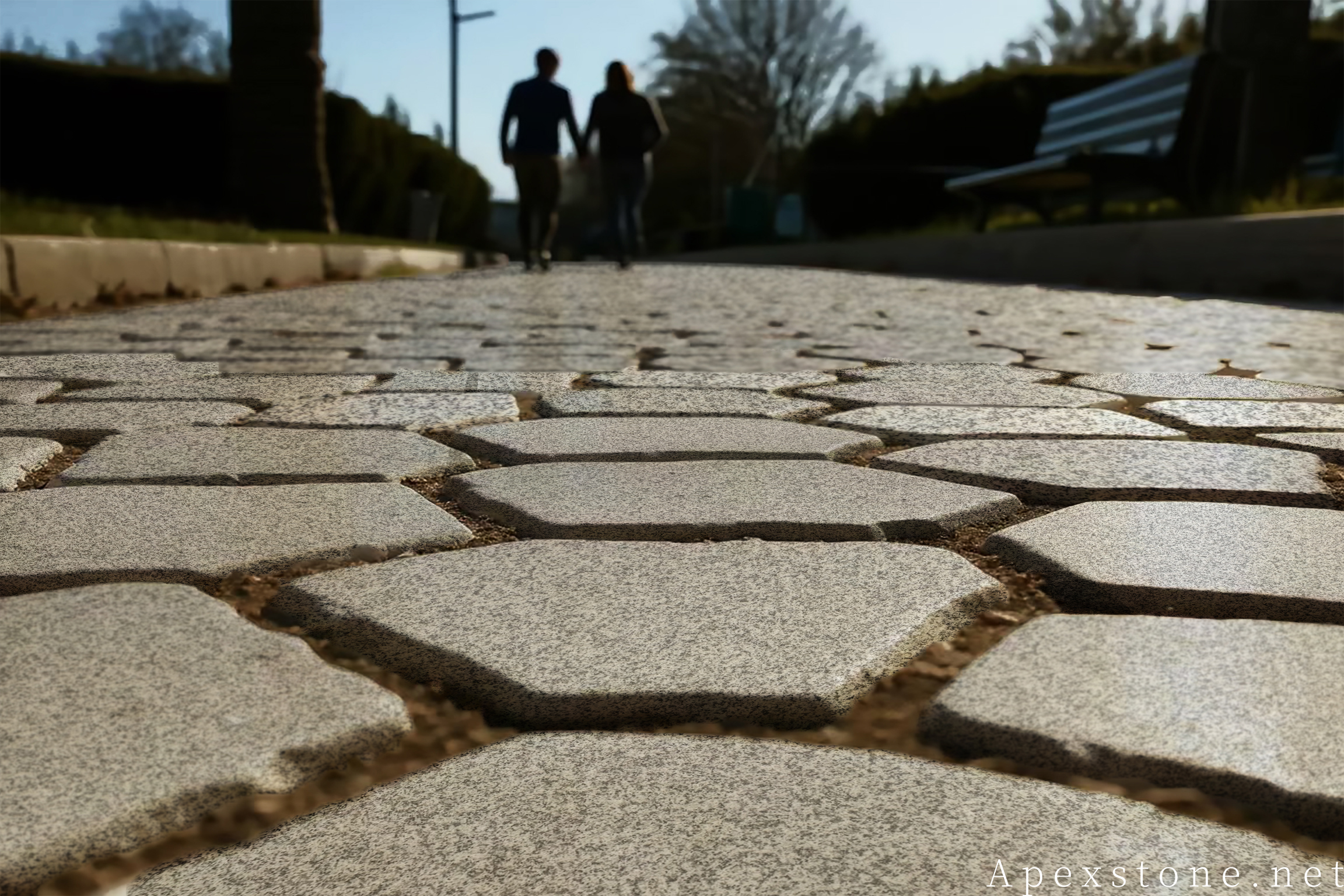
5. Installation Systems: Interlocking or Mortar
Granite pavers install in two mainstream systems. Sand-set interlocking paving on a compacted aggregate base is faster and cheaper, drains well, and suits driveways and large paved areas; permeable jointing aggregates can be added where stormwater regulations require it. Mortar-set installation on a concrete slab gives a rigid, grout-jointed floor for terraces and entry steps, at a higher cost. Both work with the same stone; the choice should follow the substrate, the drainage design, and the maintenance budget, not the other way round.
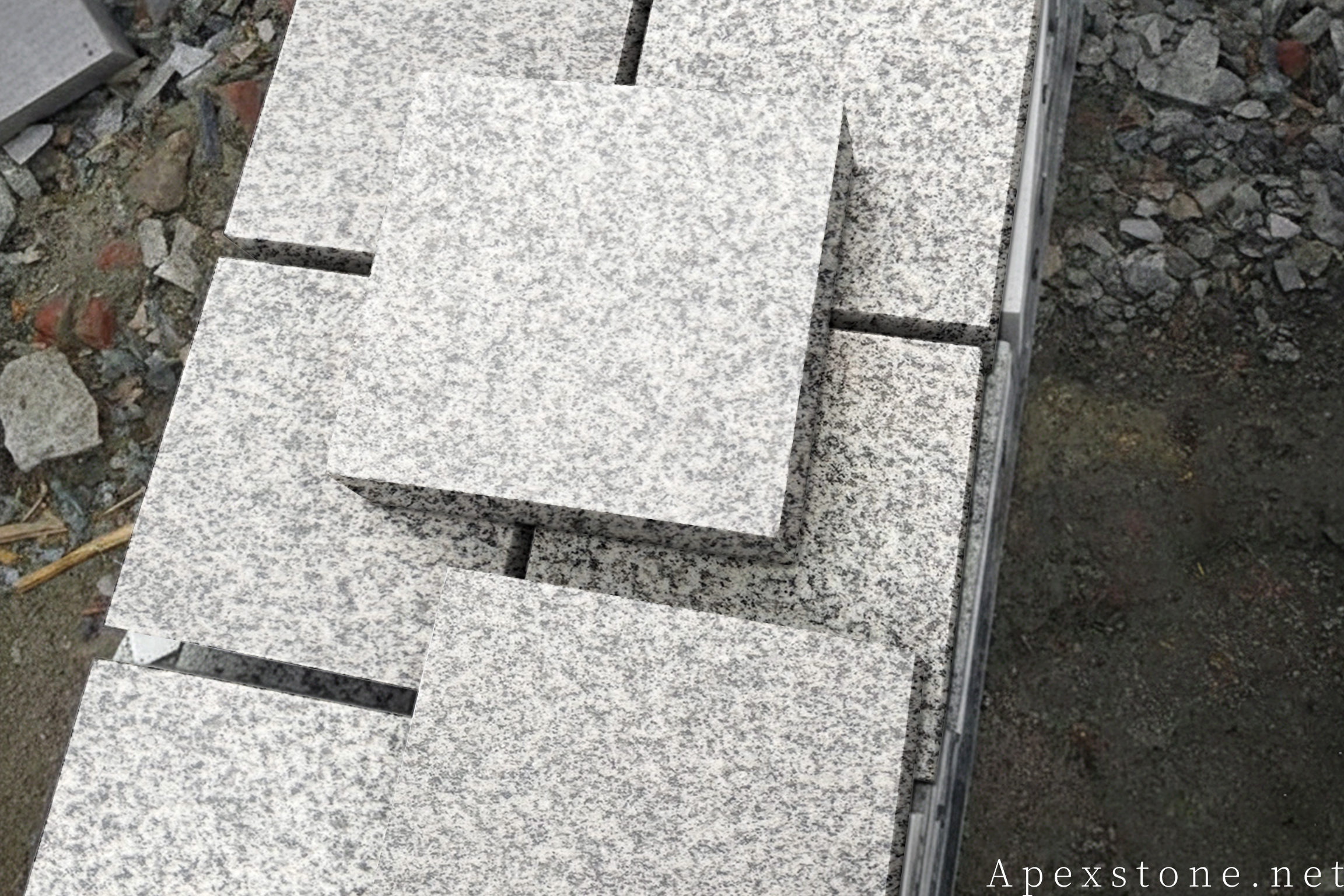
6. What to Put in the Enquiry
A quotation is only as accurate as the enquiry behind it. Include: application and project location; format, thickness, and quantity by item; finish per surface; edge profiles for steps and coping; the acceptable color range with reference photos; jointing and installation system; packing and shipping terms; and a spare quantity for future repairs. Suppliers who respond with a per-item breakdown, batch photos, and a clear Incoterm are the ones who will still be answering questions in month six of the project.
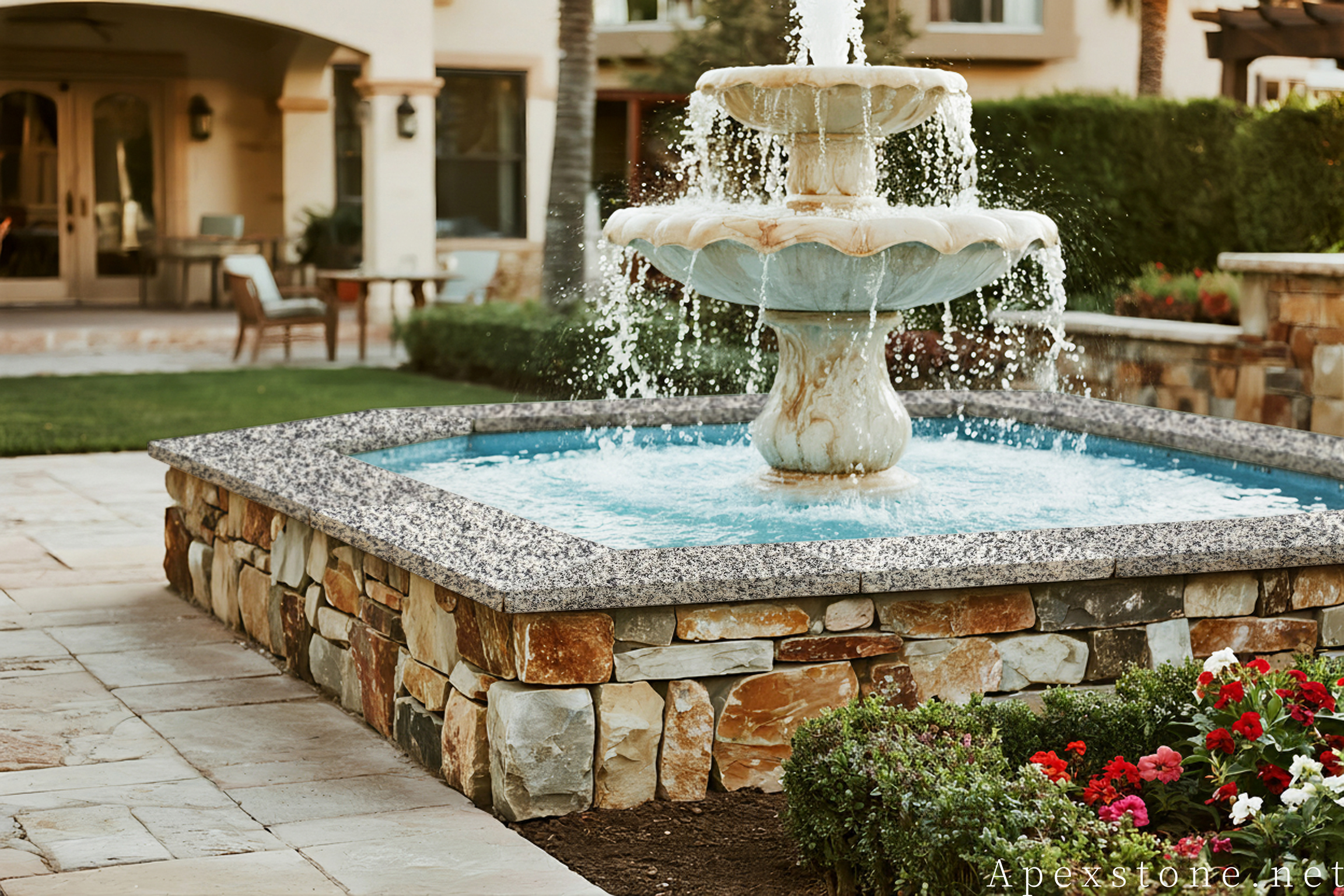
7. Why Bianco Crystal Holds Up Outdoors
Bianco Crystal granite earns its place in outdoor specification on three practical counts. Its low water absorption and freeze-thaw resistance suit northern climates where softer stones spall. Its narrow quarry color range means pallet-to-pallet shade variation stays minimal across bulk orders, which protects the look of large driveways and plazas. And its fine, even grain disguises the small chips and weathering that every outdoor surface eventually collects. For contractors pricing hardscape work, that combination translates directly into fewer site complaints and fewer replacement pieces.
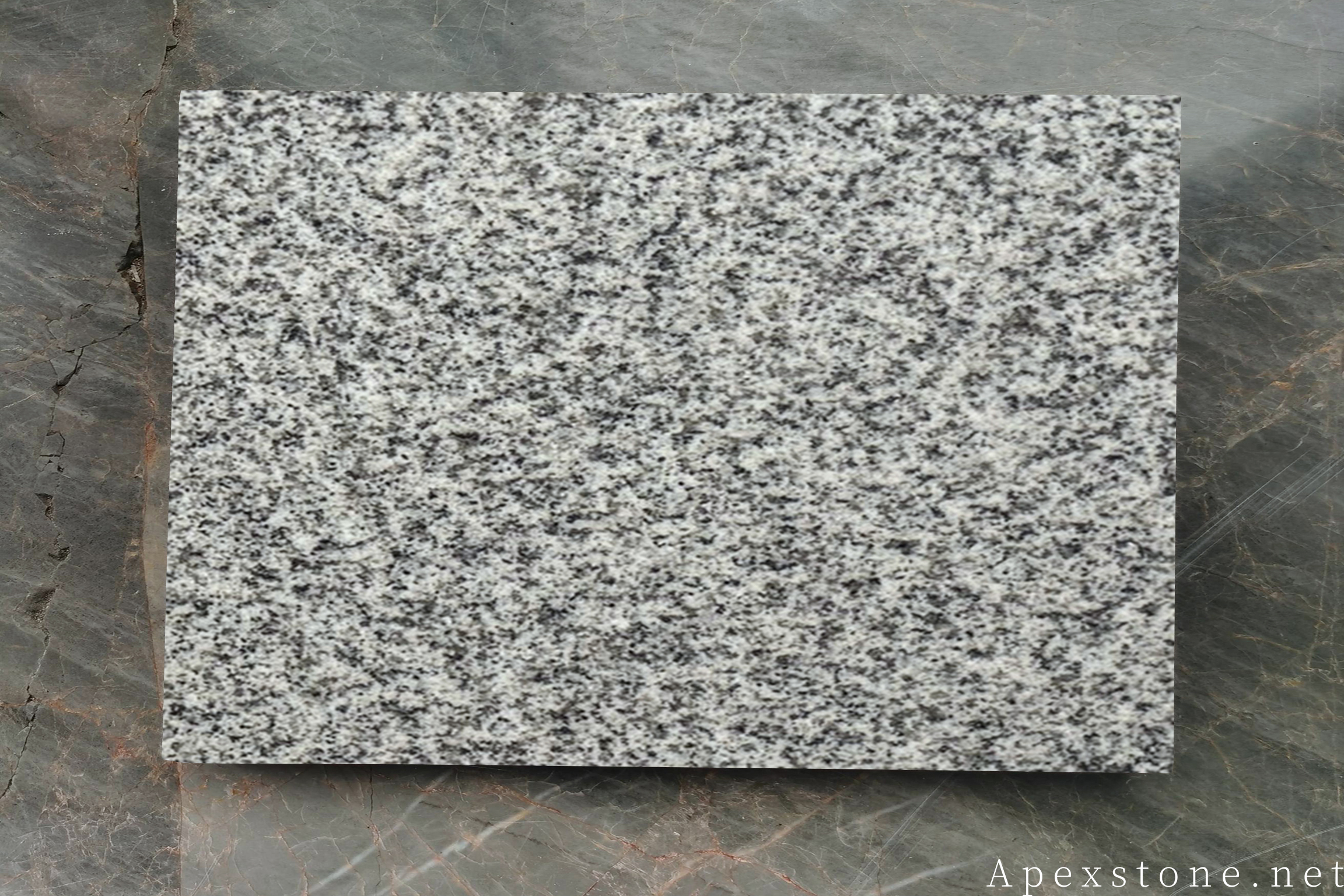
Apexstone supplies Bianco Crystal granite pavers, pool coping, curbstones, outdoor steps, and cut-to-size pieces from one production lot, with custom formats quoted from drawings. Send the layout, formats, thicknesses, and destination for a per-item proposal.