A complete sourcing guide for Blue Emerald (蓝翡翠) labradorite - covering geology, grades, finishes, applications, test data, maintenance, specification, quality control, and international sourcing. Dazzling blue iridescence on a deep black base from Madagascar. Labradorite supplier Apexstone - 42+ countries since 2002.
Blue Emerald Labradorite: A Complete Sourcing Guide for Dazzling Blue Stone
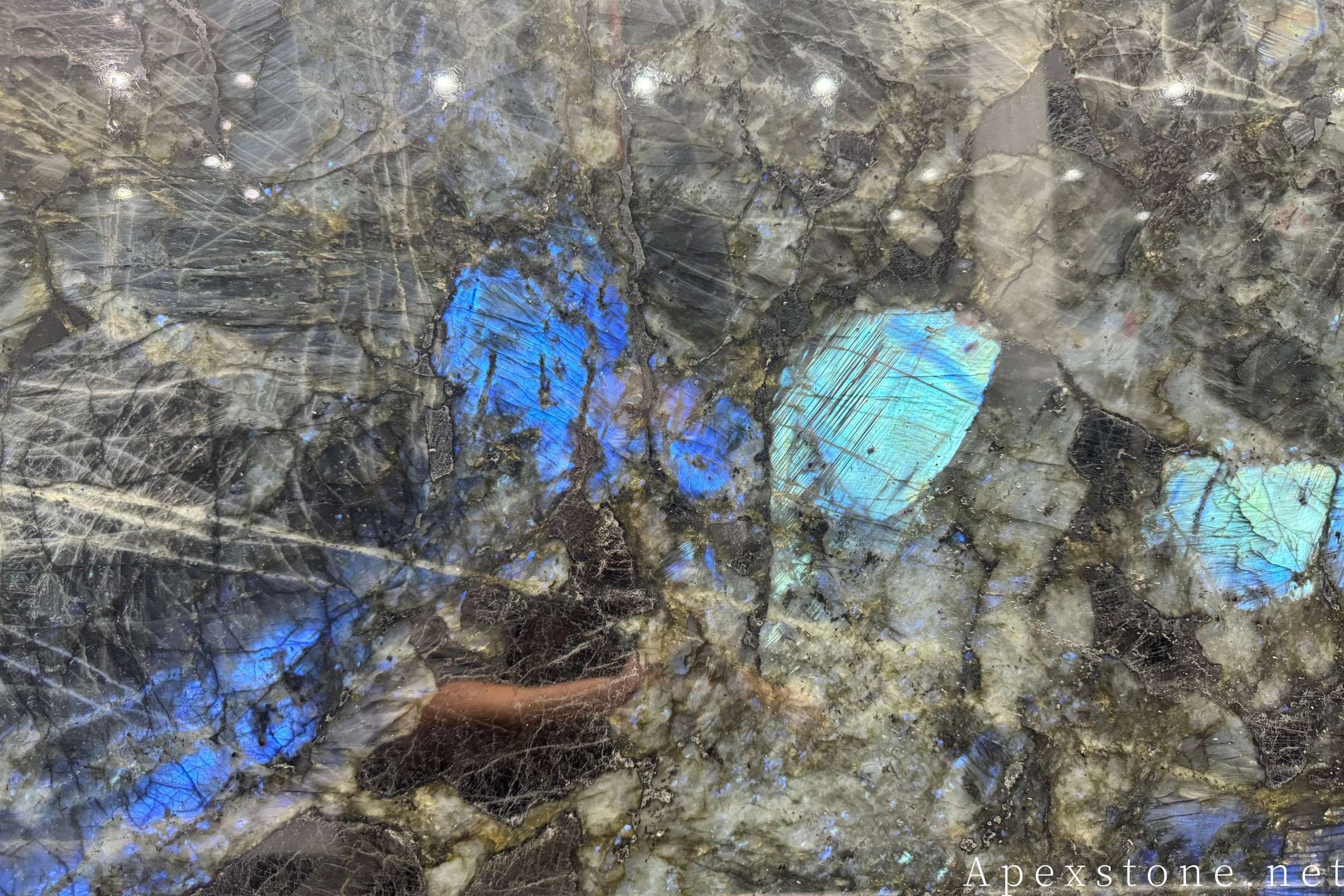
Blue Emerald (蓝翡翠) is a premium labradorite quarried in Madagascar, prized for its deep interlaced black base and the dazzling blue iridescence that shifts across the polished surface. Although the source workbook lists it under granite, Blue Emerald is in fact a labradorite - a plagioclase feldspar mineral whose signature labradorescence flashes blue, green, and gold as light strikes the crystal planes. This guide is written for architects, interior designers, contractors, distributors, and stone buyers who need to move beyond a colour sample and understand how to source, specify, and procure this statement stone.
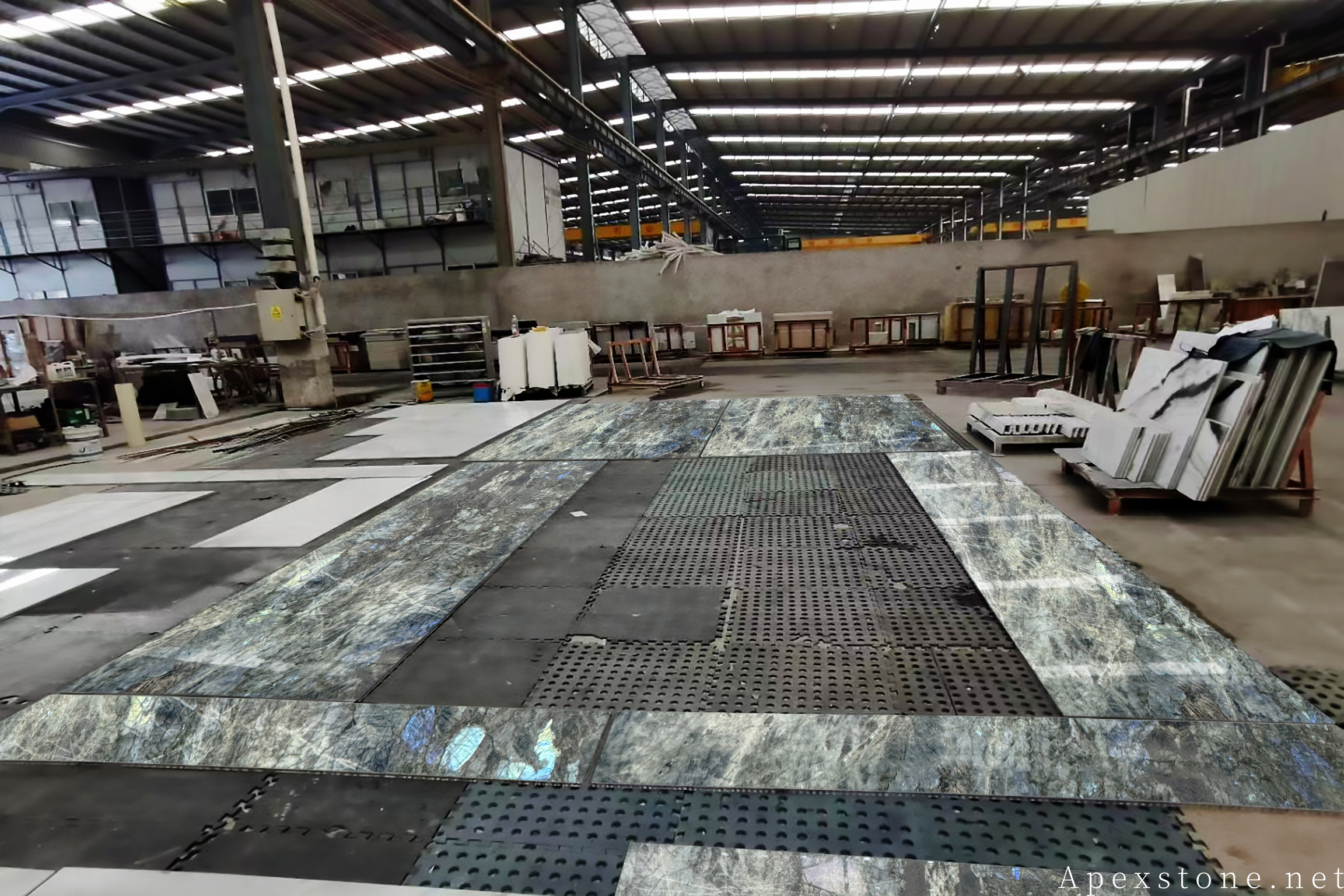
1. What is Blue Emerald Labradorite?
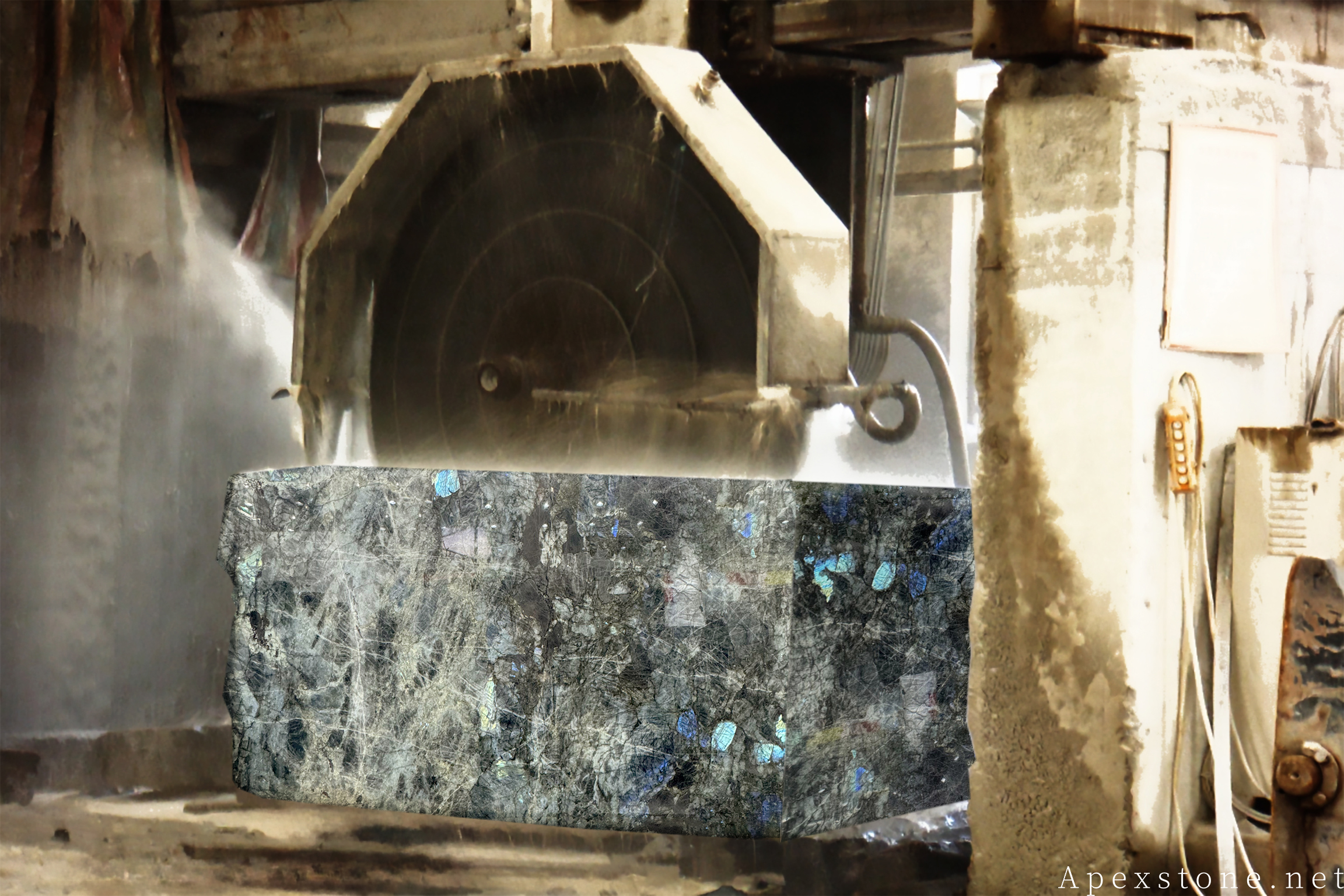
Labradorite is a plagioclase feldspar mineral, not a carbonate (marble) or silicate (granite) rock. Its defining feature is labradorescence - an optical phenomenon where light refracts through internal crystal lamellae to produce flashes of blue, green, and gold. Blue Emerald exhibits a particularly intense blue flash against a deep black base, creating a surface that appears to glow from within as the viewing angle changes. Unlike marble's veining or granite's speckle, labradorite's iridescence is a play of colour that shifts with light and movement.
Blue Emerald Labradorite typically has a density of 2.7-2.8 g/cm³, water absorption below 0.5%, Mohs hardness of 6-6.5, and compressive strength of 150-200 MPa. These values place it among the harder, more durable natural stones - harder than marble and comparable to granite - making it suitable for polished feature walls, statement tabletops, and countertops when properly sealed.
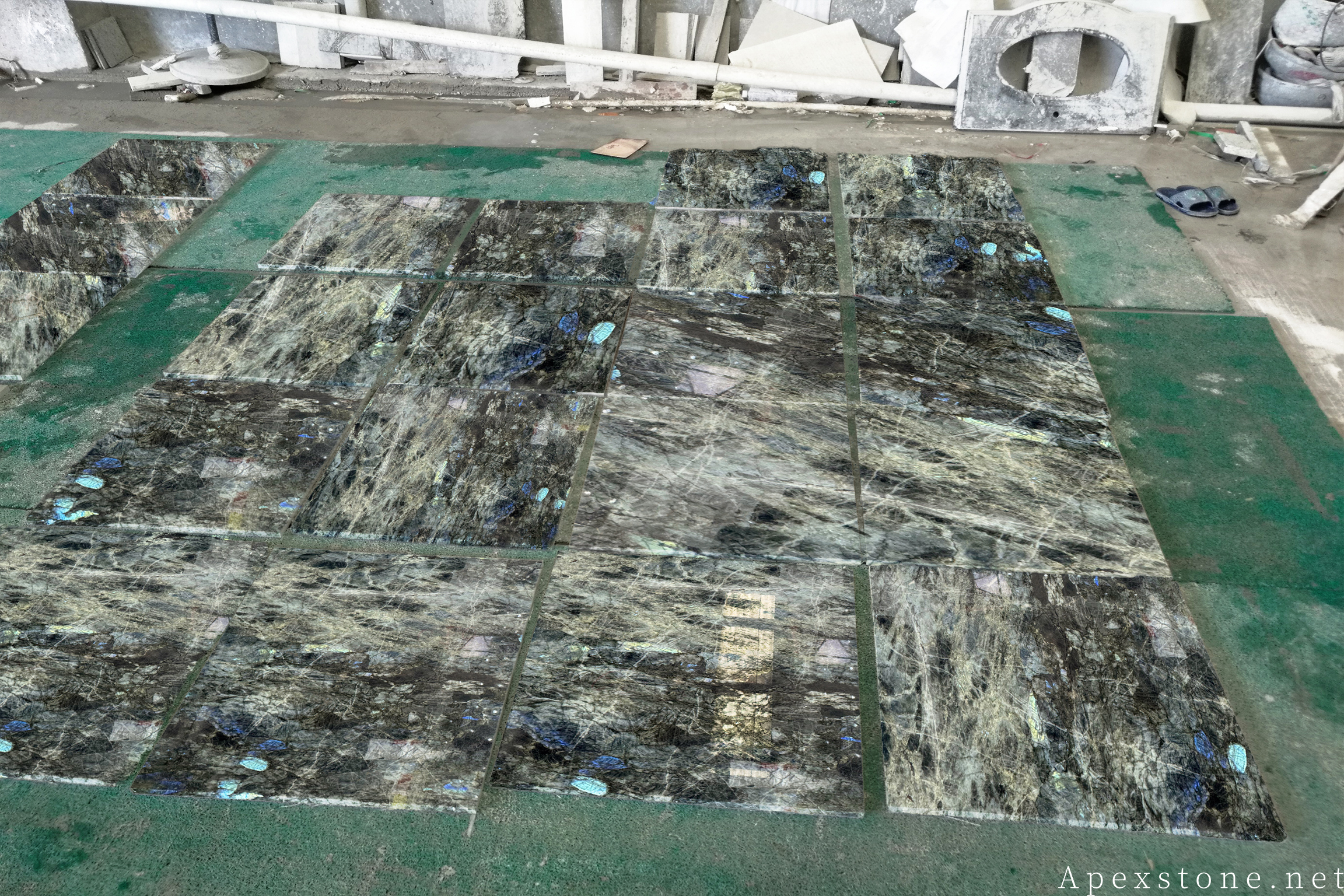
2. Understanding Grades and Commercial Selection
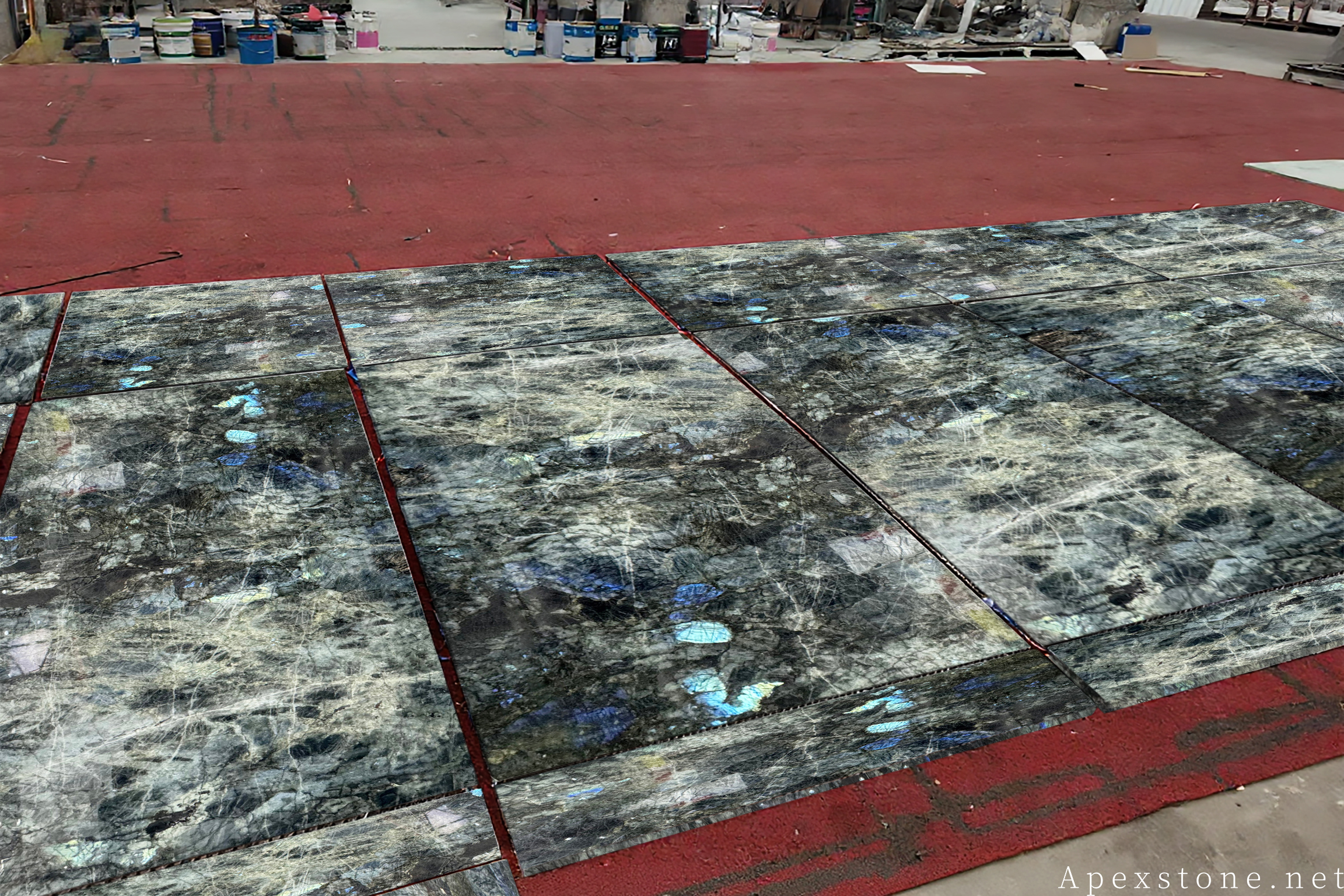
Terms such as premium, Grade A, and commercial are not universal international standards. Every supplier can define them differently. A useful purchase specification translates the label into visible acceptance criteria. Apexstone grades each Blue Emerald block at the quarry using two criteria: iridescence intensity (how strong and how blue the labradorescence flash is) and base consistency (how uniform the deep black tone is across the slab). Grade A Premium slabs have intense, evenly distributed blue flashes and a consistent black base, ideal for feature walls, statement tabletops, and book-matched installations. Grade B Commercial slabs have moderate iridescence and slight base variation, suitable for countertops and vanity tops where the stone is one of many surfaces.
3. Surface Finishes and Where to Use Them
Polished: The standard finish for Blue Emerald. High-gloss polishing maximises the labradorescence, deepening the blue flash and creating a reflective surface that amplifies the stone's optical effect. Ideal for feature walls, tabletops, and statement countertops.
Honed: A smooth, matte finish that softens the iridescence to a subtle sheen. Suitable for floor tiles and bathroom surfaces where slip resistance matters.
Brushed: A textured finish that adds tactile interest while retaining a muted blue flash. Suitable for outdoor paving and feature walls where a natural, unrefined look is desired.
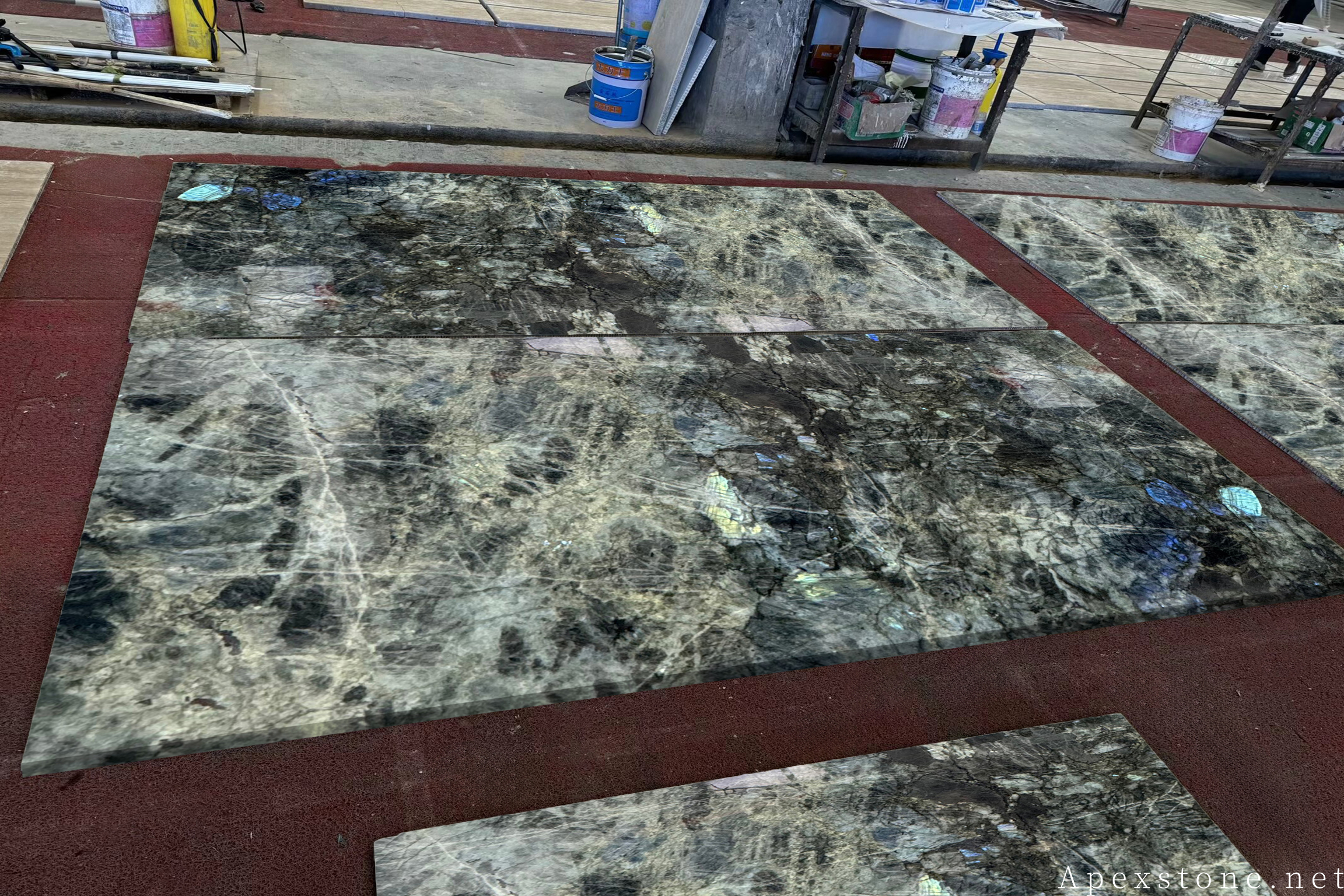
4. Application Guide
Feature Walls and Fireplace Surrounds
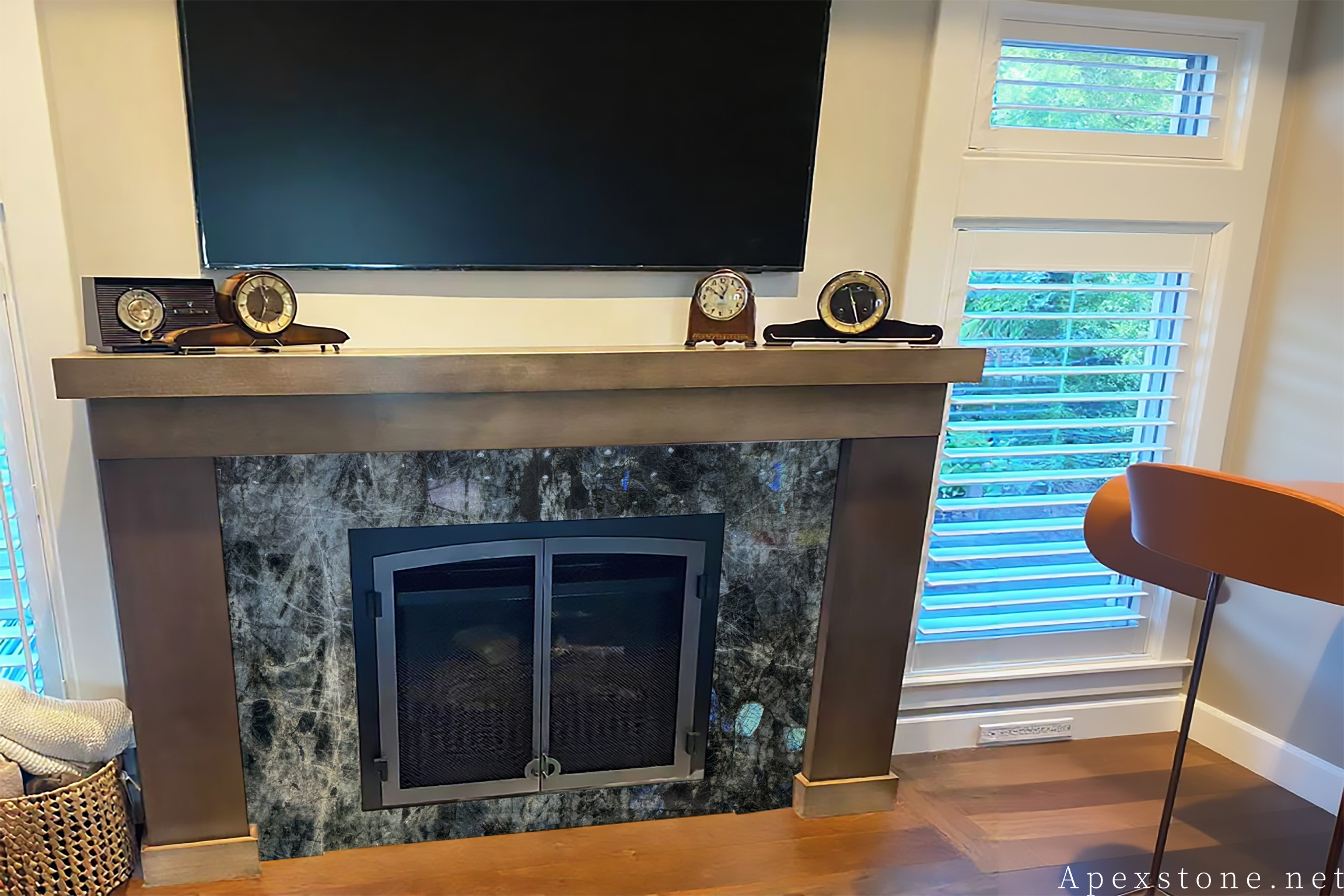
Blue Emerald Labradorite feature walls and fireplace surrounds create a dramatic focal point in living rooms and hospitality lounges. Large-format panels up to 3000x1800 mm (118x71 inch) minimize visible joints. For walls wider than 1800 mm (71 inch), book-matched slab pairs from the same block ensure vein and iridescence continuity across the seam. Polished finishes maximise the blue flash; honed finishes create a softer, more muted effect.
Countertops and Vanity Tops
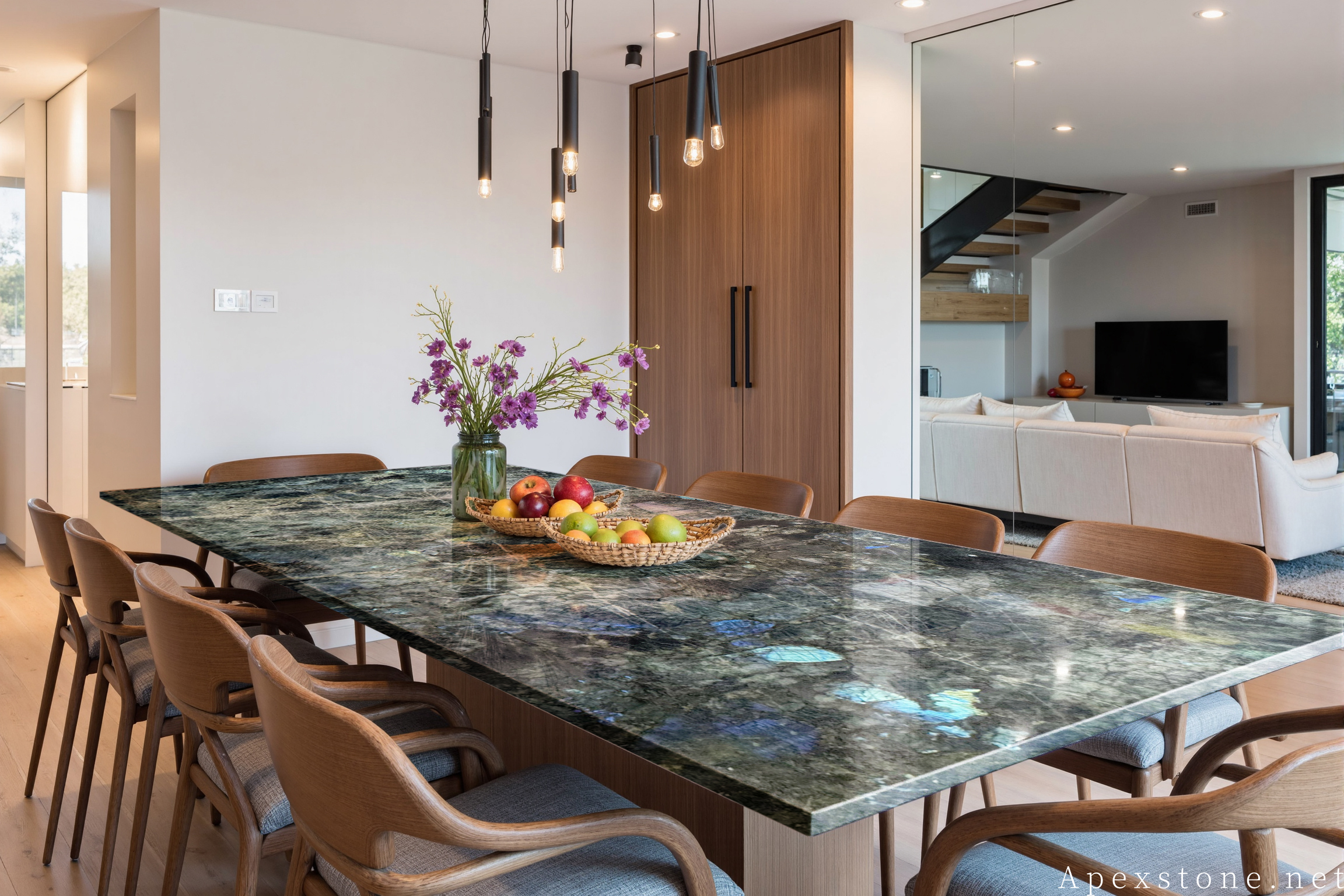
Blue Emerald can be fabricated into countertops and vanity tops. The deep black base with blue flash creates a statement surface that complements both modern and classical interiors. Specify sink and cooktop cutouts, edge profiles, reinforcement, joint positions, and support in the shop drawing. The stone is harder than marble and comparable to granite, making it suitable for kitchen and bathroom surfaces when properly sealed.
Stone Tables
Blue Emerald Labradorite stone table tops bring the dazzling blue iridescence to dining tables, coffee tables, console tables, and side tables. Available in rectangular, round, oval, and square shapes from 18-30 mm (3/4-1-1/4 inch) thickness. The deep black base with blue flash complements wood, brass, gold, and steel bases.
5. Physical Performance and Technical Data
Indicative values often quoted for Blue Emerald Labradorite include density around 2.7-2.8 g/cm³, water absorption below 0.5%, Mohs hardness around 6-6.5, and compressive strength around 150-200 MPa. These ranges are useful for early design, but they are not a substitute for a laboratory report tied to the supplied quarry batch and the test method required by the project. Where specifications require EN, ASTM, or another local standard, list the actual tests and acceptance thresholds.
6. Sealing, Cleaning, and Long-Term Maintenance
- Use a breathable penetrating sealer compatible with natural feldspar stone and the selected finish.
- Approve the sealer on a sample because it may deepen the black base and blue flash contrast.
- Clean with a pH-neutral stone cleaner; avoid acidic descalers, vinegar, and abrasive powders.
- Blot spills promptly on countertops and vanity tops.
- Reassess high-use wet zones more often than lightly used vertical walls. Resealing frequency depends on product, exposure, and cleaning - not a universal calendar claim.
7. How to Prepare a Purchase Specification
A complete enquiry should include more than square metres. Provide: application and project location; finish, thickness, dimensions, and quantity by item; edge profiles, cutouts, grooves, drips, and reinforcement; acceptable colour, iridescence, and base range with reference images; required standards, tests, and documentation; shop-drawing, dry-layout, and approval process; crating, pallet sequencing, shipping terms, and destination; and recommended spare quantity for installation and future repair.
8. Factory Quality-Control Checklist
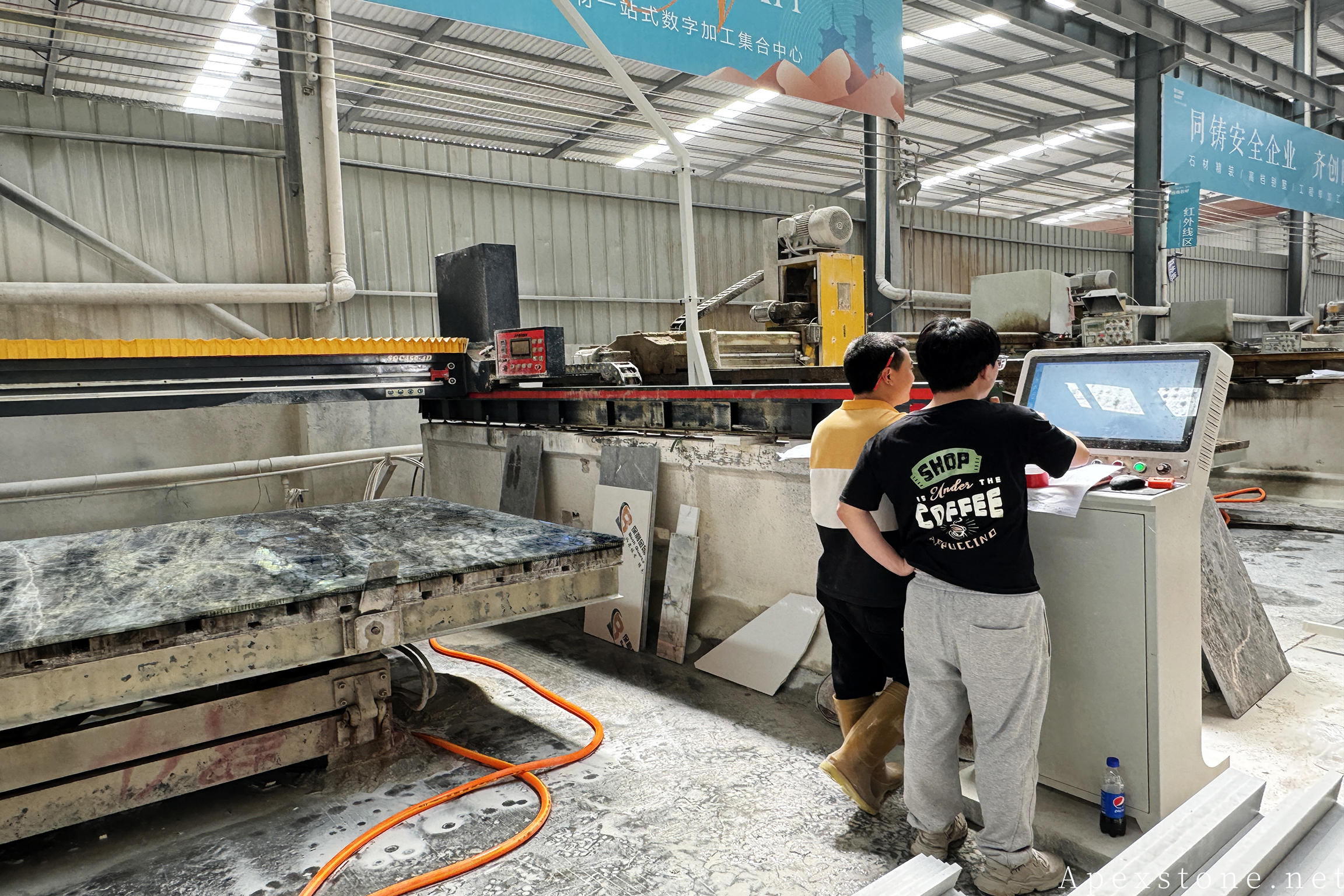
Before production, request slab or batch approval. During fabrication, control dimensions, thickness, squareness, flatness, finish consistency, edge quality, and visible repairs. For iridescence-sensitive walls, request a photographed dry layout with numbered pieces. Before shipment, review packing lists, crate markings, and loading photos.
9. Common Specification Mistakes
- Approving only a small sample: it cannot show the full iridescence range, base consistency, or flash direction.
- Calling every flash variation a defect: iridescence is intrinsic to labradorite; define unacceptable extremes instead.
- Using polished material in wet walking areas without testing: approve the final finish and sealer to the local slip requirement.
- Assuming sealer prevents etching: it helps with staining but does not stop acids reacting with feldspar stone.
- Ordering walls without a joint elevation: site crews then decide iridescence sequence and narrow cut locations under pressure.
- Comparing quotations with different inclusions: normalize grade criteria, fabrication, tests, dry layout, packing, and shipping terms.
10. Questions to Ask a Blue Emerald Supplier
- Is the offered batch from the same Madagascar quarry zone?
- What iridescence intensity and base range does the quotation include?
- Which finish and sealer are proposed?
- Can the supplier reserve one batch for all related surfaces?
- Which test reports correspond to the offered material?
- Can the factory provide shop drawings and numbered dry layouts?
- How are replacement pieces and future matching handled?
- What is included in the price and Incoterm?
- How are crates sequenced and protected for the destination?
Apexstone supplies Blue Emerald Labradorite slabs, feature wall panels, countertops, vanity tops, stone tables, and mosaics with cut-to-size fabrication. For an accurate proposal, send drawings, application, finish, thickness, quantity, delivery destination, and the visual range expected for the project.